MoSPI modernises National Sample Surveys with CAPI, AI chatbot and digital tools
Synopsis
India's statistics ministry has quietly overhauled how it counts and measures the country — replacing paper surveys with AI chatbots and CAPI platforms, revising the base years for GDP, CPI and IIP, and building a new SDG tracking framework. The changes, disclosed in Parliament, represent the most comprehensive upgrade to India's national statistical infrastructure in years.
Key Takeaways
MoSPI has adopted Computer Assisted Personal Interview (CAPI) platforms integrated with the e-sigma system for National Sample Surveys.
An AI-enabled chatbot and multilingual interfaces have been introduced to modernise field survey operations.
Base revisions have been undertaken for GDP , Consumer Price Index (CPI) , and Index of Industrial Production (IIP) .
The ministry has adopted National Metadata Structure (NMDS 2.0) and launched the Statistical Quality Assessment Framework (SQAF) .
PAIMANA has replaced the older OCMS-2006 infrastructure monitoring system, supported by a new Performance Monitoring Dashboard .
India's SDG-NIF has been developed in alignment with the UN Statistical Commission's Global Indicator Framework, customised for national priorities.
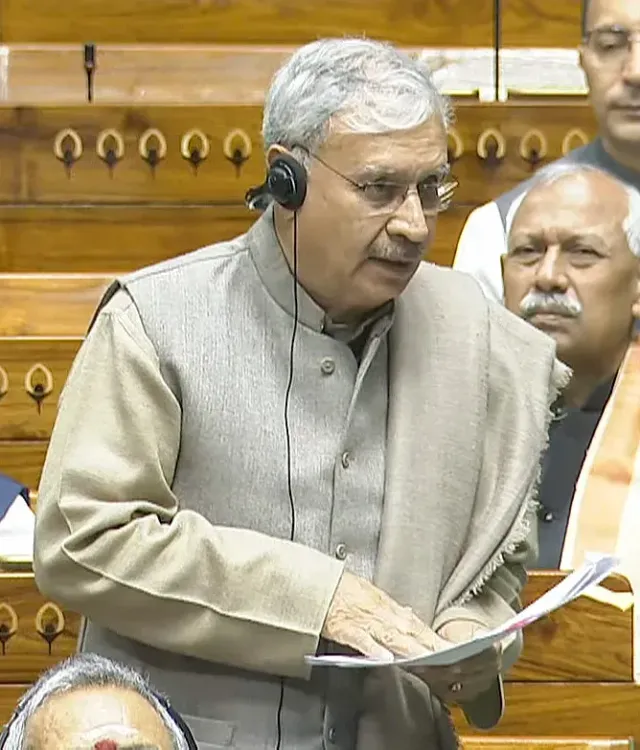
The Ministry of Statistics and Programme Implementation (MoSPI) has overhauled the way India conducts its National Sample Surveys, deploying Computer Assisted Personal Interview (CAPI) platforms, an AI-enabled chatbot, and multilingual digital interfaces, Parliament was informed on Monday, 3 August. The disclosure came in response to a question in the Rajya Sabha, marking a significant step in the modernisation of India's national statistical infrastructure.
Key Modernisation Initiatives
The CAPI platforms have been integrated with the e-sigma system, enabling real-time data capture during field surveys. Alongside, an AI-enabled chatbot and multilingual interfaces have been introduced to assist enumerators and respondents alike. MoSPI has also launched short-duration, high-frequency surveys to meet the growing demand for timely socio-economic indicators.
Administrative datasets have been integrated into sampling frames for select surveys, improving both efficiency and the speed of compilation of official statistics, according to the government's statement to Parliament.
What the Government Said
Minister of State for Statistics and Programme Implementation Rao Inderjit Singh told the Rajya Sabha that the reforms extend beyond survey methodology. Significant changes have been made to macroeconomic statistics, including a base revision of the Gross Domestic Product (GDP), Consumer Price Index (CPI), and Index of Industrial Production (IIP).
Singh also highlighted the adoption of the National Metadata Structure (NMDS 2.0), the introduction of the Statistical Quality Assessment Framework (SQAF), and alignment with national and international classification standards as part of advanced data harmonisation efforts.
SDG Tracking and Infrastructure Monitoring
MoSPI has developed the Sustainable Development Goals – National Indicator Framework (SDG-NIF) in close alignment with the UN Statistical Commission's Global Indicator Framework. While modelled on the global framework, the SDG-NIF customises indicators to reflect India's national priorities, policy contexts, and data ecosystems.
On the infrastructure side, the ministry has launched PAIMANA — Project Assessment, Infrastructure Monitoring and Analytics for Nation-building — replacing the older OCMS-2006 system. A Performance Monitoring Dashboard has also been rolled out, providing standardised indicators across key infrastructure sectors.
Why This Matters
India's statistical credibility has come under scrutiny in recent years, with debates over GDP methodology and data lag. This comprehensive overhaul — spanning survey technology, quality frameworks, and international alignment — signals an institutional effort to strengthen the accuracy, transparency, and credibility of official data. Notably, the integration of administrative datasets and the shift to high-frequency surveys could reduce the time gap between data collection and policy response, a persistent criticism of India's statistical system.
The ministry said it continuously examines global statistical standards for suitability in the Indian context, adapting them where necessary. With these reforms now on the parliamentary record, the next test will be whether the modernised systems translate into more reliable and timely data for policymakers and the public.
Point of View
Base-year revisions for GDP and CPI, a new quality framework, and an SDG tracking system — all announced in a single Rajya Sabha reply. That breadth suggests a coordinated institutional push, not incremental tinkering. Yet the credibility of these reforms will hinge on independent auditability. India's statistical debates — over GDP rebasing, unemployment data, and CPI methodology — have been politically charged. Announcing SQAF and NMDS 2.0 is one thing; publishing the underlying methodology and allowing external scrutiny is another. The real measure of this modernisation will be whether it narrows the gap between what the data says and what citizens and markets actually believe.
NationPress
3 Aug 2026
Frequently Asked Questions
What is the CAPI system adopted by MoSPI for National Sample Surveys?
Computer Assisted Personal Interview (CAPI) is a digital survey platform that replaces paper-based data collection. MoSPI has integrated CAPI with its e-sigma system, enabling real-time data capture during field surveys and improving the speed and accuracy of official statistics.
Why has MoSPI introduced an AI-enabled chatbot for surveys?
The AI-enabled chatbot is part of MoSPI's broader modernisation of National Sample Surveys, designed to assist enumerators and respondents through multilingual interfaces. It aims to reduce errors in data collection and make surveys more accessible across India's diverse linguistic landscape.
What macroeconomic statistics have been revised by MoSPI?
MoSPI has undertaken base revisions for three key macroeconomic indicators: Gross Domestic Product (GDP), Consumer Price Index (CPI), and Index of Industrial Production (IIP). These revisions are intended to better reflect current economic structures and improve the accuracy of official data.
What is PAIMANA and what does it replace?
PAIMANA — Project Assessment, Infrastructure Monitoring and Analytics for Nation-building — is MoSPI's new system for monitoring central sector infrastructure projects. It replaces the older Online Computerized Monitoring System (OCMS-2006) and is supported by a Performance Monitoring Dashboard with standardised sector indicators.
How does India's SDG-NIF relate to the UN's global framework?
MoSPI's Sustainable Development Goals – National Indicator Framework (SDG-NIF) is modelled on the UN Statistical Commission's Global Indicator Framework but customises indicators to suit India's national priorities, policy contexts, and data ecosystems. It enables India to track SDG progress in a manner aligned with both global standards and domestic realities.