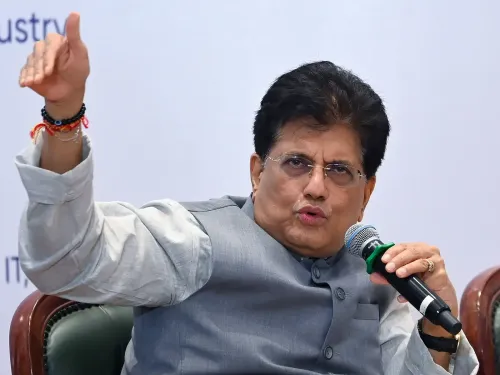
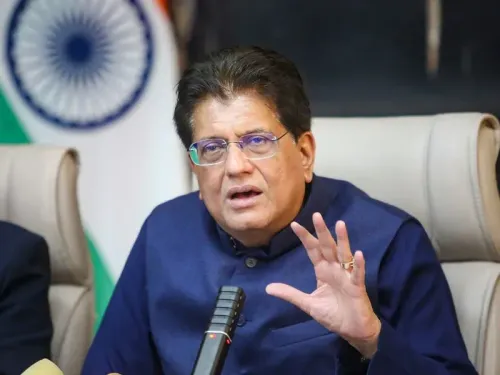
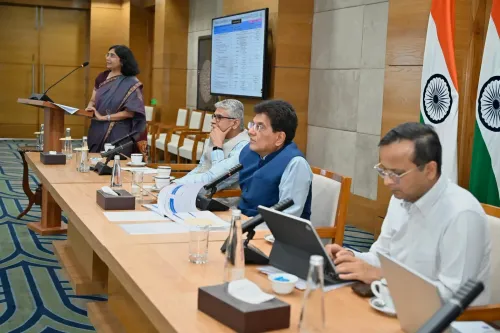
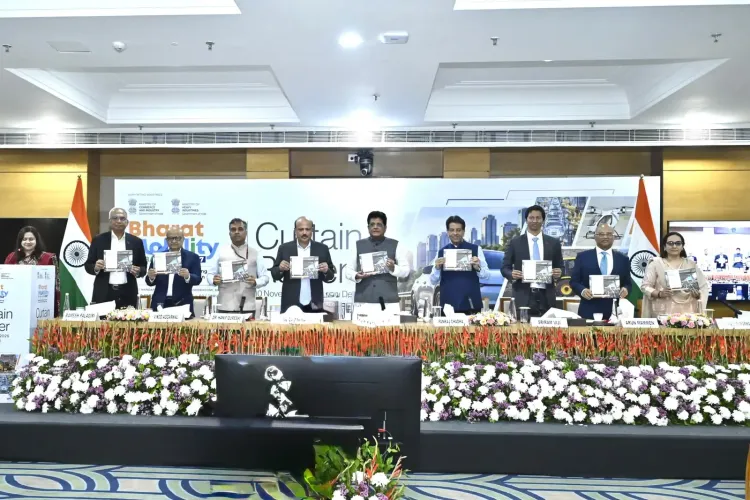
Piyush Goyal pitches India as global manufacturing hub at Bharat Mobility Expo
Synopsis
Commerce Minister Piyush Goyal used the Bharat Mobility Global Expo curtain raiser to make a sweeping pitch: India is not just a large consumer market — it must become the world's manufacturing base. With a $1 trillion export target, FTA-linked European auto production plans, and festive season car sales data cited as proof of demand depth, the government is pushing India's mobility sector as its most credible global manufacturing credential.
Key Takeaways
Commerce Minister Piyush Goyal addressed the curtain raiser of the third Bharat Mobility Global Expo in New Delhi on 11 November 2026 .
India is on track to achieve a $1 trillion export target this year, according to Goyal.
The expo is expected to draw 10 lakh visitors , with a target of at least 25,000 international attendees .
One million cars were sold during Navratri and 70,000 cars over two days of Dhanteras, cited as proof of India's market scale.
Under ongoing FTA negotiations , European automakers could first test demand in India, then set up production for domestic and export markets.
Goyal called for India to become a global hub for technology development and design , not just manufacturing.
Commerce and Industry Minister Piyush Goyal on 11 November 2026 called for positioning India as the world's premier manufacturing hub, anchored by global partnerships and export-led growth, asserting that the country is well on track to hit a $1 trillion export target this year. He made the remarks at the curtain raiser of the third edition of Bharat Mobility Global Expo in New Delhi.
Key Developments at the Expo Launch
Goyal highlighted the growing stature of the Bharat Mobility Global Expo and stressed the centrality of the mobility sector to India's manufacturing and global economic ambitions. He urged industry stakeholders across the mobility value chain to look beyond the domestic market and aggressively pursue international markets and export opportunities.
The minister called on organisers and industry to market the event extensively worldwide, with a specific target of attracting at least 25,000 international visitors out of an expected 10 lakh total visitors. He also emphasised that the expo should expand its reach beyond original equipment manufacturers (OEMs) to include tyre dealers, auto component manufacturers, suppliers, and the after-sales market.
India's Domestic Market as a Global Draw
Goyal underscored the sheer scale of India's domestic automobile market as a compelling case for global manufacturers. He noted that one million cars were sold during Navratri alone, while approximately 70,000 cars were sold over just two days of Dhanteras. According to the minister, this demand depth offers global manufacturers an ideal launchpad — produce in India, serve the world.
He argued that complementing India's large home market with international markets would allow businesses to achieve economies of scale and become globally price-competitive. Expressing confidence in Indian manufacturers already supplying to Japanese and European automobile companies, as well as the aerospace and defence sectors, Goyal said they already had the capability to meet world-class quality benchmarks.
FTA Negotiations and the European Opportunity
Referring to ongoing Free Trade Agreement (FTA) negotiations, the minister outlined a phased approach under which market access in India would initially allow European automobile manufacturers to introduce a limited number of models to test demand. Once commercially viable models are identified, manufacturers could establish production facilities in India — not just for domestic sales but also for exports to global markets.
This model, Goyal argued, would generate significant downstream opportunities for Indian component manufacturers, startups, steel and rubber industries, and others across the mobility ecosystem. He urged industry to seize these openings before competing nations did.
India as a Technology and Design Hub
Beyond manufacturing, Goyal called for India to emerge as a centre for technology development and design innovation, with talent-driven solutions anchored domestically. This comes amid intensifying global competition from China, Vietnam, and Mexico for manufacturing relocation driven by supply chain diversification trends post-pandemic.
Notably, the Bharat Mobility Global Expo in its current format consolidates segments that had historically held separate exhibitions at different times and venues — often drawing the same pool of visitors — into a single integrated platform. With the third edition now being planned, the government is clearly betting on the event as a marquee vehicle to project India's industrial ambitions on the global stage.
Point of View
But the FTA angle is where the real tension lies — opening India's automobile market to European imports, even on a phased basis, will face fierce pushback from domestic OEMs who have long benefited from high tariff walls. The festive season sales figures are genuine and impressive, but they reflect consumer credit appetite as much as underlying wealth. The harder question is whether India's component ecosystem — outside the top-tier suppliers already serving Japanese and European majors — can scale fast enough to capture the downstream jobs Goyal is promising before Vietnam and Mexico lock in those supply chains.
NationPress
11 Nov 2026
Frequently Asked Questions
What did Piyush Goyal say at the Bharat Mobility Global Expo 2026?
Commerce and Industry Minister Piyush Goyal called for positioning India as the world's manufacturing hub through global partnerships and export-led growth. He stated that India is on track to achieve a $1 trillion export target this year and urged industry to target international markets aggressively.
What is the Bharat Mobility Global Expo?
The Bharat Mobility Global Expo is a consolidated mobility industry exhibition in India that brings together different segments — including OEMs, component makers, tyre dealers, and after-sales players — that previously held separate events. The third edition is currently being planned, with an expected footfall of 10 lakh visitors.
How does the FTA affect European automakers in India?
Under the FTA framework being negotiated, European automobile manufacturers would initially be allowed to introduce a limited number of models into the Indian market to gauge demand. If viable, they could then establish production facilities in India for both domestic sales and exports to global markets.
Why is India's domestic auto market significant for global manufacturers?
India sold one million cars during Navratri alone and around 70,000 cars over the two days of Dhanteras, illustrating the scale of consumer demand. Goyal argued this makes India an ideal production base — manufacturers can serve a massive home market while also exporting competitively priced vehicles worldwide.
Who stands to benefit from India's manufacturing push in the mobility sector?
Indian component manufacturers, startups, steel and rubber industries, and participants across the mobility after-sales ecosystem are expected to benefit. The minister specifically noted that Indian suppliers already meeting quality standards for Japanese and European automakers, as well as aerospace and defence clients, are well-positioned to scale globally.