IIT Madras eCV Dialogue 2027 to speed electric trucking
Synopsis
IIT Madras will convene a national eCV Dialogue on 21-22 January 2027, under the Principal Scientific Adviser's office, to unblock electric trucking. Medium and heavy vehicles drive nearly 25 per cent of India's oil import bill, yet electric trucks are just 0.2 per cent of N3 sales and 3.14 per cent of early-FY2027 registrations.
Key Takeaways
IIT Madras will host the eCV Dialogue on 21 and 22 January 2027 in Chennai , under the Office of the Principal Scientific Adviser .
Medium and heavy-duty vehicles contribute nearly 25 per cent of India's oil import bill.
Electric trucks account for just 0.2 per cent of N3 commercial vehicle sales.
E-trucks were around 3.14 per cent of overall truck registrations in early FY2027 .
The Centre is using PM E-DRIVE incentives for N2 and N3 electric trucks; adoption is still largely closed-loop.
The conclave will seek SOPs for charging, battery and safety standards, and incentives including toll waivers.
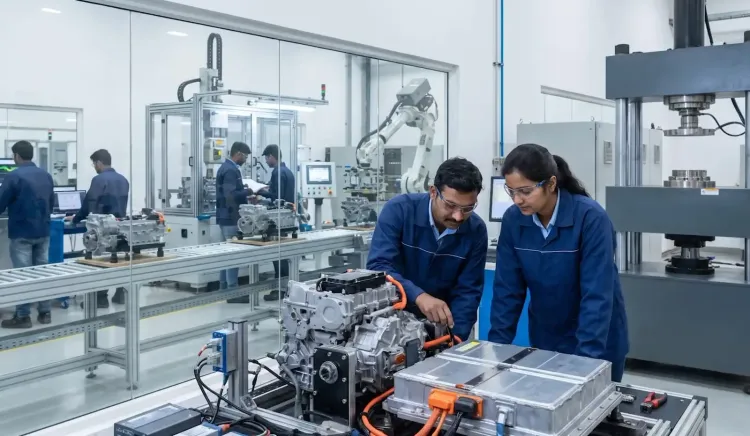
The Indian Institute of Technology Madras will host the eCV Dialogue on 21 and 22 January 2027 under the patronage of the Office of the Principal Scientific Adviser to the Government of India, to address bottlenecks slowing electric commercial vehicle adoption nationwide. The two-day national conclave in Chennai will examine why electric commercial vehicles have lagged passenger EVs and seek steps that go beyond technology to drive collective action on India's electric trucking transition.
Why electric trucks remain a rounding error
Medium and heavy-duty vehicles contribute nearly 25 per cent of India's oil import bill, making their electrification central to energy security. Yet electric trucks account for just 0.2 per cent of N3 commercial vehicle sales, IIT Madras said in a statement: “With medium and heavy-duty vehicles contributing nearly 25 per cent of India's oil import bill, accelerating their electrification is crucial to strengthening energy security. Yet, electric trucks account for just 0.2 per cent of N3 commercial vehicle sales.”
Despite policy support, electric trucks accounted for only around 3.14 per cent of overall truck registrations in India in early FY2027. This comes amid faster passenger EV uptake, underscoring a split market in which cars and two-wheelers have found a cost and charging path that freight has not.
Cost, credit and freight-rate barriers
Industry stakeholders point to steep upfront acquisition costs compared with diesel counterparts as a primary barrier to fleet replacement. Fleet operators contend that industrial shippers often offer lower per-tonne freight rates for electric transport than for diesel, squeezing operating margins, while banks remain cautious with less favourable lending terms.
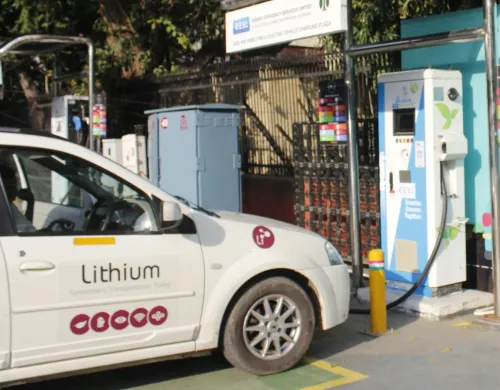
Because long-haul highway freight continues to face charging and vehicle utilisation constraints, current adoption remains largely confined to light goods vehicles and predictable, closed-loop operations such as ports, mining, cement transport and mid-mile logistics. Operators note that e-trucks remain best suited for fixed, repeatable routes supported by reliable depot charging or battery-swapping stations.
Heavy battery packs also pose payload-versus-range trade-offs, directly affecting cargo capacity and vehicle efficiency across varying terrains and load conditions. Notably, that physics problem is not solved by a purchase subsidy alone: every extra kilogram of battery is cargo that cannot be billed.
What the Centre has already put on the table
The Centre has sought to stimulate demand for N2 and N3 category electric trucks through incentives under the PM E-DRIVE scheme. Even so, operators say the vehicles work best where routes are known and depot power is guaranteed — a far cry from open-market highway haulage that still defines much of Indian trucking.
What the eCV Dialogue is designed to deliver
Bringing together policymakers, industry leaders, fleet operators and researchers, the deliberations will centre on policy frameworks, charging infrastructure, vehicle technologies, financing models and transition roadmaps. Drawing inspiration from the Indian tradition of Shastrartha, the event aims to channel diverse viewpoints into practical, implementable outcomes.
Rather than limiting discussions to broad concepts, participants will formulate concrete policy recommendations, standard operating procedures for charging networks, battery and safety standards, and financial incentives, including toll waivers and net-zero transition mechanisms. Who is affected spans OEMs, fleet owners, industrial shippers, lenders and the Union's oil-import arithmetic.
What happens next is the January 2027 conclave itself. The test after 22 January 2027 will be whether those SOPs, standards and incentive designs enter notifications, lending manuals and shipper contracts, or remain a well-intentioned communique. IIT Madras, with patronage from the Principal Scientific Adviser's office, has positioned the dialogue as a bridge from research to operational freight policy; closing a 0.2 per cent N3 gap will require that bridge to carry more than papers.
Point of View
Yet operators still face higher capex, weaker per-tonne rates and tighter credit, which means the market is rationing e-trucks to ports, mines and other closed loops. A Shastrartha-style dialogue is useful only if it produces bankable charging SOPs and freight-rate norms that lenders and shippers will honour; energy security will not wait for conference papers.
NationPress
25 Nov 2026
Frequently Asked Questions
What is the eCV Dialogue being hosted by IIT Madras?
It is a two-day national conclave at IIT Madras on 21 and 22 January 2027, under the patronage of the Office of the Principal Scientific Adviser, to tackle bottlenecks in electric commercial vehicle adoption. Participants will work on policy, charging, technology, finance and transition roadmaps for India's electric trucking shift.
Why are electric trucks lagging passenger EVs in India?
Electric trucks are just 0.2 per cent of N3 sales and about 3.14 per cent of overall truck registrations in early FY2027 because of high upfront costs, weaker per-tonne freight rates, cautious bank lending, highway charging gaps and payload-versus-range trade-offs. Adoption is largely limited to light goods vehicles and closed-loop work such as ports, mining, cement and mid-mile logistics.
When and where will the IIT Madras eCV Dialogue be held?
The eCV Dialogue will be held on 21 and 22 January 2027 at IIT Madras in Chennai. It is a national meeting of policymakers, industry leaders, fleet operators and researchers.
What is the PM E-DRIVE scheme's role in electric trucks?
The Centre has used PM E-DRIVE incentives to stimulate demand for N2 and N3 category electric trucks. Operators still say e-trucks work best on fixed, repeatable routes with reliable depot charging or battery-swapping, not yet on open long-haul highways.
What outcomes is the eCV Dialogue expected to produce?
Participants are expected to draft concrete policy recommendations, charging-network SOPs, battery and safety standards, and financial incentives including toll waivers and net-zero transition mechanisms. The stated aim is implementable instruments rather than broad concept papers.