India-UAE to boost defence, space, nuclear ties; $11.5 bn Odisha aluminium deal announced
Synopsis
On the sidelines of the 18th BRICS Summit in New Delhi, India and UAE didn't just exchange pleasantries — the UAE's International Holding Company committed $11.5 billion to build India's largest integrated aluminium project in Odisha, while both nations pledged to deepen ties in defence, space, and nuclear energy. The meeting signals a relationship evolving well beyond trade.
Key Takeaways
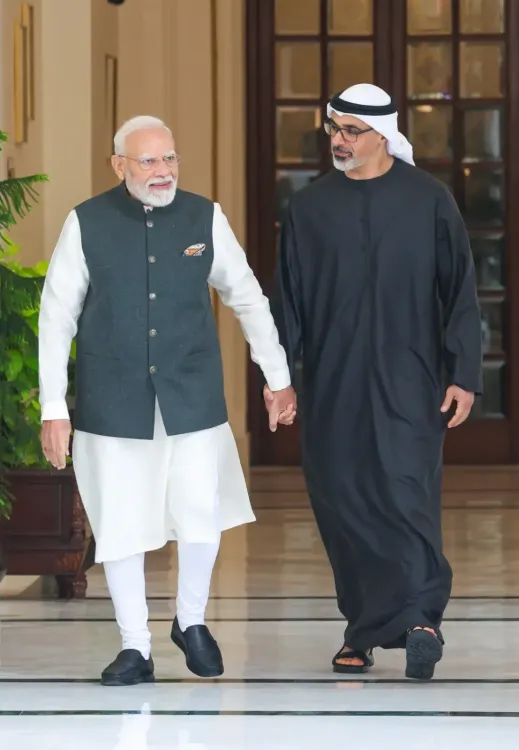
PM Narendra Modi met Abu Dhabi Crown Prince Sheikh Khaled bin Mohamed bin Zayed Al Nahyan on 12 September 2026 at the 18th BRICS Summit in New Delhi .
The UAE's International Holding Company announced a $11.5 billion integrated greenfield aluminium project in Odisha — India's largest such investment.
Both nations pledged enhanced cooperation in defence, space, nuclear energy, technology , and innovation .
Sovereign investment platform L'Imad was identified as a key vehicle for deepening the bilateral economic partnership.
The two countries also agreed to advance shared interests through the BRICS platform, of which both are members.
The visit follows a Modi–UAE President meeting on 16 June at the G7 Summit in Evian, France .
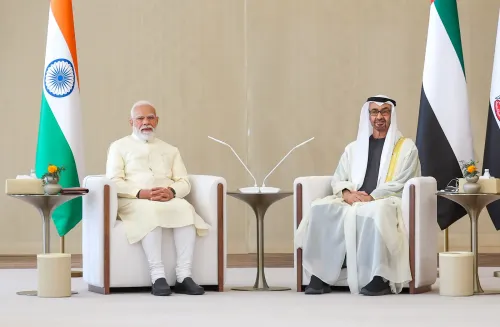
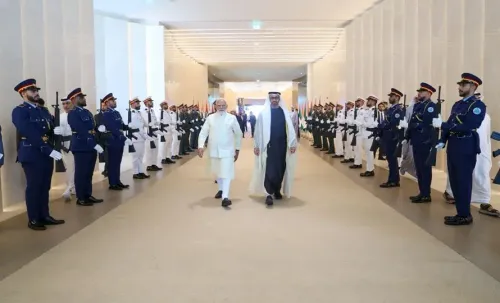
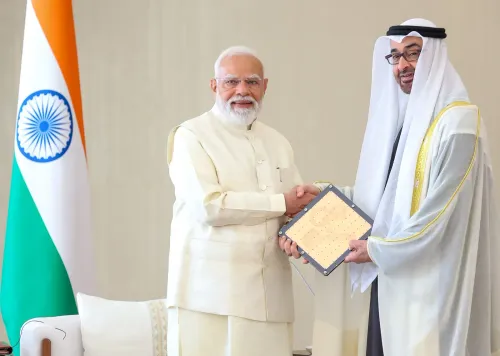
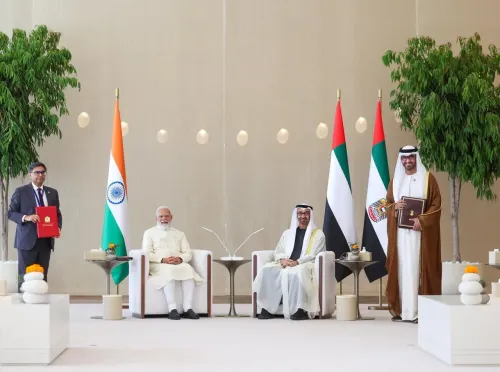
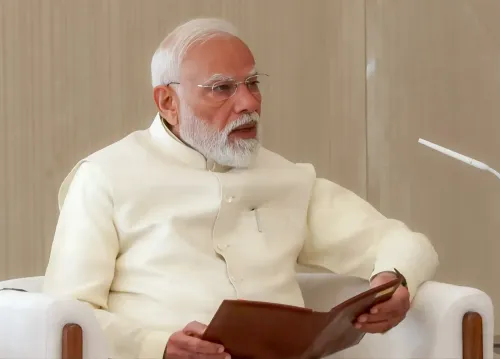
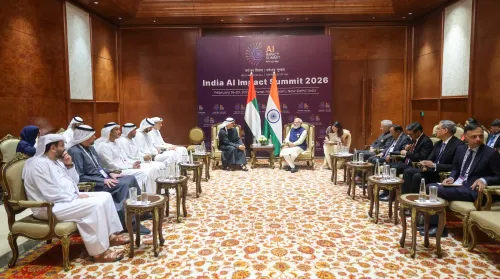
India and the United Arab Emirates (UAE) on Saturday, 12 September 2026 reaffirmed their Comprehensive Strategic Partnership and pledged deeper cooperation across emerging sectors including defence, space, nuclear energy, technology, and innovation. The commitment came as Prime Minister Narendra Modi held bilateral talks with Abu Dhabi Crown Prince Sheikh Khaled bin Mohamed bin Zayed Al Nahyan on the sidelines of the 18th BRICS Summit in New Delhi.
Key Developments from the Bilateral Meeting
The two leaders agreed to sustain close coordination through the BRICS platform to advance shared interests and acknowledged progress across a broad spectrum of bilateral sectors. A notable highlight was the announcement by the UAE's International Holding Company to invest in the development of a $11.5 billion integrated greenfield aluminium project in Odisha — described officially as India's largest integrated aluminium investment.
The project is expected to position Odisha as a global aluminium manufacturing hub, potentially transforming the eastern state's industrial profile and supply-chain linkages. The scale of the commitment signals sustained UAE confidence in India's industrial corridor ambitions.
Role of L'Imad Sovereign Investment Platform
Leaders also acknowledged the strategic importance of the sovereign investment platform L'Imad in further deepening the India-UAE partnership. The platform is seen as a structural vehicle for channelling long-term Emirati capital into Indian infrastructure, manufacturing, and technology verticals — moving bilateral investment beyond transactional deal flows toward institutionalised frameworks.
BRICS Context and Diplomatic Continuity
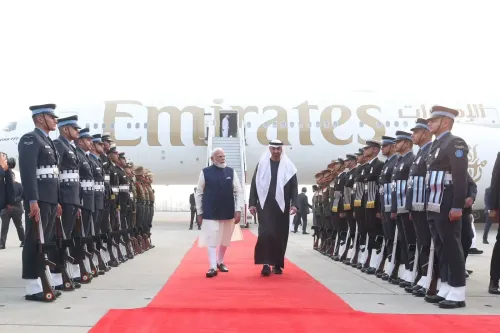
The Abu Dhabi Crown Prince arrived in New Delhi on Friday, 11 September to attend the 18th BRICS Summit, hosted by India under its current Chairship. BRICS currently comprises Brazil, China, Egypt, Ethiopia, India, Indonesia, Iran, Russia, Saudi Arabia, South Africa, and the UAE, with partner countries including Belarus, Cuba, Bolivia, Kazakhstan, Malaysia, Nigeria, Thailand, Uganda, Uzbekistan, and Vietnam.
This is not the first high-level touchpoint in recent months. PM Modi and UAE President Sheikh Mohamed bin Zayed Al Nahyan had met on the sidelines of the G7 Summit in Evian, France on 16 June, reinforcing what officials describe as a tradition of sustained leadership-level engagement.
According to the official statement, the Crown Prince's visit 'reaffirmed the tradition of regular leadership-level engagement and the generational continuity that underpins the enduring relationship between India and the UAE.'
What This Means for India
The aluminium investment alone positions Odisha at the centre of a potential export-oriented manufacturing corridor, as global demand for aluminium in electric vehicles and renewable energy infrastructure surges. Coupling that with cooperation in nuclear energy and space signals that the India-UAE relationship is maturing from trade-centric ties toward a technology and security partnership. Notably, this bilateral deepening occurs within a multilateral BRICS framework that now includes both nations — lending the partnership additional geopolitical weight.
As both sides look to operationalise commitments, the role of mechanisms like L'Imad and sectoral working groups will be closely watched in the months ahead.
Point of View
But the more consequential signal is the breadth of the agenda — defence, space, nuclear, technology — which marks a qualitative shift in a relationship historically anchored in trade and diaspora remittances. The inclusion of the L'Imad sovereign platform suggests Abu Dhabi is moving toward institutionalised, long-cycle investment rather than opportunistic deal flows. What remains to be seen is whether BRICS membership creates genuine multilateral synergies for India-UAE cooperation, or whether it simply provides a convenient diplomatic setting for bilateral conversations that would happen anyway. The real test will be in the implementation timelines for the aluminium project and in whether defence and nuclear cooperation translate into signed agreements.
NationPress
13 Sept 2026
Frequently Asked Questions
What did India and UAE agree on at the 18th BRICS Summit?
India and UAE reaffirmed their Comprehensive Strategic Partnership and agreed to deepen cooperation in defence, space, nuclear energy, technology, and innovation. They also pledged to use the BRICS platform to advance shared interests and noted a major $11.5 billion aluminium investment in Odisha.
What is the $11.5 billion aluminium project in Odisha?
The UAE's International Holding Company announced an investment of $11.5 billion to develop an integrated greenfield aluminium project in Odisha — officially described as India's largest integrated aluminium investment. The project is expected to establish Odisha as a global aluminium manufacturing hub.
What is the L'Imad platform and why does it matter?
L'Imad is a UAE sovereign investment platform that both leaders acknowledged could play an important role in deepening the India-UAE economic partnership. It is designed to channel structured, long-term Emirati capital into Indian sectors beyond traditional trade flows.
Who represented UAE at the BRICS Summit 2026 in New Delhi?
Abu Dhabi Crown Prince Sheikh Khaled bin Mohamed bin Zayed Al Nahyan represented the UAE at the 18th BRICS Summit in New Delhi, arriving on 11 September 2026. He held bilateral talks with PM Narendra Modi on the sidelines of the summit.
How frequently have India and UAE leaders been meeting in 2026?
India and UAE have maintained a high tempo of leadership engagement in 2026. PM Modi met UAE President Sheikh Mohamed bin Zayed Al Nahyan at the G7 Summit in Evian, France on 16 June, and the Abu Dhabi Crown Prince's New Delhi visit on 12 September marks the latest in this sustained dialogue.