US Develops Streamlined Tariff Refund System Expected in 45 Days
Synopsis
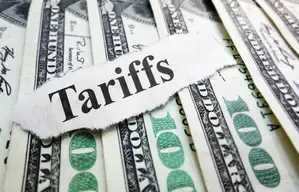
A new tariff refund system is on the horizon in the US, aiming to ease the refund process for companies affected by the Supreme Court's recent ruling on Trump's emergency duties. Expected to launch within 45 days, the initiative will require minimal documentation from importers.
Key Takeaways
The US government is developing a new tariff refund system.
Expected to be operational in 45 days.
Minimal documentation will be required from importers.
The CBP has collected US$166 billion in tariffs under the emergency program.
The Supreme Court's ruling has prompted changes in tariff policies.
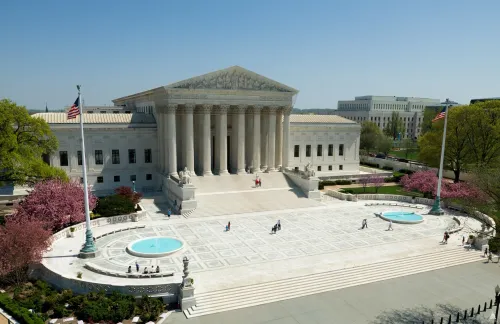
Washington, March 7 (NationPress) — A government agency in the United States is developing a novel system aimed at simplifying the tariff refund procedure, which is anticipated to be operational within 45 days. This initiative emerges as numerous businesses pursue refunds related to the emergency duties imposed during the Trump administration, which were invalidated by the Supreme Court last month.
Brandon Lord, the executive director overseeing trade policy and programs at U.S. Customs and Border Protection (CBP), disclosed that the new process will necessitate minimal paperwork from importers. This information was shared in a submission to the U.S. Court of International Trade, as reported by the Associated Press through Yonhap news agency.
According to the report, the CBP has amassed approximately US$166 billion in tariffs from over 330,000 importers as part of the emergency tariff program.
On February 20, the Supreme Court ruled against former President Donald Trump's employment of the 1977 International Emergency Economic Powers Act (IEEPA) to justify specific tariffs and other charges. However, the ruling did not provide a framework for any potential refund process.
In the same filing, Lord projected that the existing refund procedures would require over 4.4 million man-hours to finalize, highlighting the complexities involved with the current system.
Lord stated, “This new process will require minimal submission from importers,” as reported by the AP.
In response to the Supreme Court's decision, the Trump administration is actively pursuing a replacement for the emergency tariffs, introducing new duties under alternative legal justifications.
On February 24, the administration initiated a 10% global tariff under Section 122, which is predicted to escalate to 15%.
Additionally, it is utilizing Section 301 of the 1974 Trade Act to perform trade investigations, which U.S. Trade Representative (USTR) Jamieson Greer indicated would likely encompass “most major trading partners.” Section 301 empowers the USTR to probe “unfair” trade practices on a country-by-country basis.
Simultaneously, a chartered flight to repatriate South Koreans from the United Arab Emirates (UAE) is scheduled for this weekend amidst rising tensions in the Middle East, according to the foreign ministry's statement on Saturday.
The ministry announced arrangements for a 290-seat Etihad Airways chartered flight, set to depart from Abu Dhabi at noon on Sunday (local time).
Point of View
The development of a new tariff refund system reflects the government's commitment to addressing the complexities of international trade. This initiative, aimed at streamlining processes and reducing administrative burdens, could significantly impact businesses seeking refunds from previous tariffs. It underscores the importance of adapting trade policies to foster a more efficient economic environment.
NationPress
23 Sept 2026
Frequently Asked Questions
What is the purpose of the new tariff refund system?
The new system aims to simplify the tariff refund process for businesses seeking refunds on duties imposed by the Trump administration.
When is the new system expected to be operational?
The new tariff refund system is anticipated to be ready within 45 days.
How much in tariffs has the CBP collected?
The CBP has collected approximately US$166 billion in tariffs from more than 330,000 importers.
What did the Supreme Court rule regarding Trump's tariffs?
The Supreme Court ruled against Trump's use of the IEEPA to impose country-specific tariffs, invalidating those duties.
What will be the impact of the new system on importers?
The new system will require minimal documentation from importers, significantly easing the refund process.