Nvidia Brings Local AI Super Agents to the Desktop
Synopsis
Nvidia unveiled NemoClaw on DGX Station at SIGGRAPH 2026, an open local AI stack combining Nemotron 3 Ultra, Omniverse libraries, and OpenShell. The platform lets designers and engineers build and run domain-specific super agents on desktop hardware using their own data, marking a significant push toward on-premise AI execution.
Key Takeaways
Nvidia announced NVIDIA NemoClaw on DGX Station on 20 July 2026 , targeting designers and engineers.
The stack integrates Nemotron 3 Ultra , Omniverse libraries , and OpenShell as an open agent framework. 'Local AI' execution keeps data on-premise, enabling domain-specific customisation without cloud dependency.
The announcement was made in the context of SIGGRAPH 2026 , the premier computer-graphics conference.
The move continues Nvidia's multi-year strategy of shifting large-model inference from cloud to professional desktop hardware.
Third-party extensibility is implied by the open-stack design, allowing enterprises to layer their own models and workflows.
Chip giant Nvidia announced on Monday, 20 July 2026 that 'super agents have arrived on the desktop,' unveiling a new local AI stack called NVIDIA NemoClaw on the DGX Station that lets designers and engineers build, customise, and run domain-specific AI agents using their own data and workflows.
Context
In the post, Nvidia declared that the new stack brings together three components: Nemotron 3 Ultra, Omniverse libraries, and OpenShell, described collectively as an 'open agent stack.' The announcement was tied to #SIGGRAPH2026, the flagship annual conference of the ACM focused on computer graphics and interactive techniques, signalling that the primary audience is professionals in graphics-intensive industries such as design and engineering.
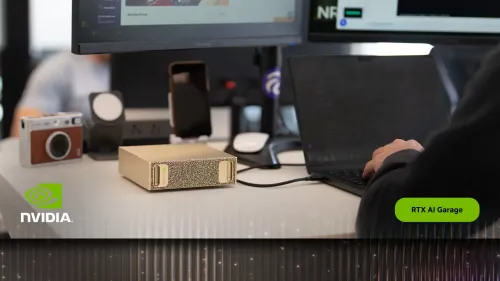
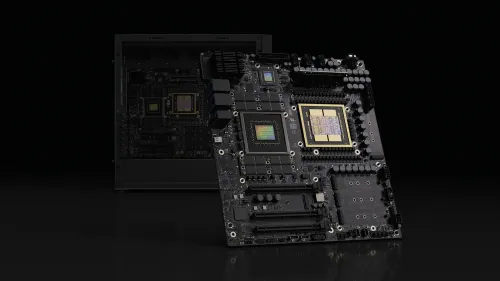
The emphasis on 'local AI' is deliberate: rather than routing workloads to the cloud, users run inference and agent logic directly on the DGX Station, Nvidia's compact deskside AI supercomputer. This keeps sensitive data on-premise and allows teams to customise agents against proprietary datasets and internal workflows.
Policy Backdrop
Nvidia introduced its DGX line in 2016 to bring data-centre-class GPU performance to enterprise AI and deep-learning research. The Omniverse platform followed in 2020 as a real-time 3D simulation and collaboration environment aimed at industrial and creative workflows, including digital-twin simulation.
The new NemoClaw release continues a pattern Nvidia has pursued for several years: folding large-model inference and simulation libraries into its professional hardware stack, gradually shifting from cloud-centric offerings toward desktop-local AI execution. The strategy prioritises data sovereignty and domain customisation for users who cannot or will not send sensitive assets to external servers.
Stakeholders and Impact
Designers and engineers are the named beneficiaries of the new stack. For studios, architecture firms, automotive OEMs, and industrial-simulation teams, local super agents could compress iteration cycles by running specialised AI assistance — such as geometry generation, material synthesis, or code scaffolding — without cloud latency or data-egress costs.
The open-stack framing, combining Nemotron 3 Ultra models with Omniverse libraries and the OpenShell interface, suggests Nvidia is positioning the platform for third-party extensibility, allowing enterprises to layer their own models and tooling on top of the base configuration. This mirrors wider industry momentum toward on-premise AI appliances that retain high-performance GPU acceleration.
What's Next
Technical sessions and product demonstrations at SIGGRAPH 2026 are expected to provide deeper detail on NemoClaw's capabilities, benchmarks, and availability. Observers will also watch for follow-on releases in the Nemotron model family and expanded Omniverse agent tooling that could extend the stack beyond graphics-centric use cases into broader enterprise verticals.
As AI infrastructure continues to migrate closer to the point of work, Nvidia's desktop-local agent push could accelerate enterprise adoption among teams that have been reluctant to commit sensitive workflows to cloud-based AI services — reshaping how professional AI tooling is procured, deployed, and governed.
Point of View
On-premise execution at the professional workstation level. By bundling a frontier model family, a mature simulation platform, and an open shell interface into a single deskside appliance, Nvidia is effectively raising the floor for what enterprise AI hardware must offer out of the box. For Indian technology services firms and design studios that process sensitive client assets, the data-sovereignty angle may prove as commercially compelling as the raw performance gains. The SIGGRAPH timing also underscores that the battleground for AI adoption in 2026 has moved decisively into creative and industrial verticals, not just cloud hyperscalers.
NationPress
21 Jul 2026
Frequently Asked Questions
What is Nvidia NemoClaw?
Nvidia NemoClaw is a local AI agent stack announced at SIGGRAPH 2026 that runs on the DGX Station, combining the Nemotron 3 Ultra model, Omniverse libraries, and OpenShell to let designers and engineers build and deploy domain-specific AI agents on desktop hardware.
What is the Nvidia DGX Station?
The DGX Station is Nvidia's compact, deskside personal AI supercomputer designed to deliver data-centre-class GPU performance to individual users or small teams without requiring cloud connectivity.
What does 'local AI' mean in the context of Nvidia's announcement?
Local AI means that AI model inference and agent logic run directly on the user's own hardware — in this case the DGX Station — rather than on remote cloud servers, keeping data on-premise and reducing latency.
What is SIGGRAPH and why is Nvidia announcing products there?
SIGGRAPH is the ACM's annual conference on computer graphics and interactive techniques, attended by designers, engineers, and researchers in visual computing. Nvidia chose the venue because NemoClaw targets exactly those creative and technical professionals.
How does Nvidia Omniverse relate to the new NemoClaw stack?
Omniverse is Nvidia's real-time 3D simulation and collaboration platform launched in 2020. In NemoClaw, Omniverse libraries provide the 3D-workflow and digital-twin simulation layer that AI agents can interact with and automate.