Nvidia Powers SpaceX Starmind AI1 Satellite with Vera Rubin NVL72
Synopsis
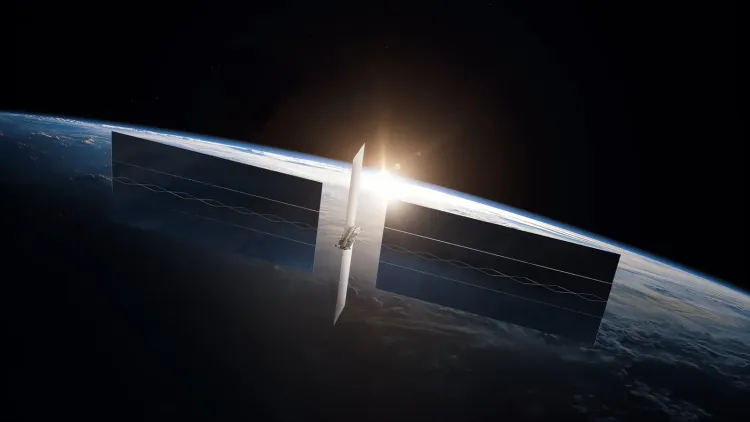
Nvidia revealed that SpaceX's Starmind AI1 satellite carries a Vera Rubin NVL72 compute payload, pushing AI factory-class processing into orbit and opening a new frontier for space-based AI infrastructure.
Key Takeaways
Nvidia's Vera Rubin NVL72 architecture, its post-Blackwell GPU platform, is powering the SpaceX Starmind AI1 satellite compute payload.
The deployment marks the first time Nvidia describes 'AI factory compute' as operating in an orbital environment.
Nvidia outlined the Vera Rubin chip roadmap in 2025 as the successor to its Blackwell generation.
The move extends the edge-computing trend to its furthest point yet — processing data in space rather than relaying it to ground stations.
SpaceX 's reusable launch expertise and satellite engineering underpin the mission's feasibility.
Subsequent Starmind launches and Rubin architecture deployment timelines are the key milestones to watch.
The data center is leaving the ground. Nvidia announced on Wednesday, August 5, 2026, that SpaceX's Starmind AI1 satellite compute payload runs on the Nvidia Vera Rubin NVL72 — marking what the chip giant calls the arrival of 'AI factory compute' in orbital space.
Vera Rubin NVL72 leaves the atmosphere
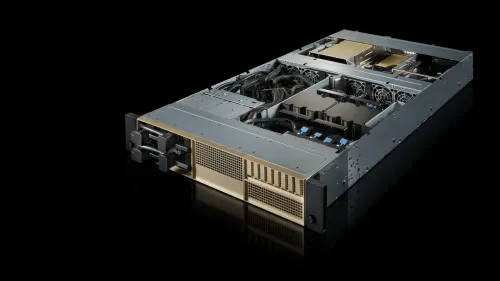
The Vera Rubin architecture is Nvidia's post-Blackwell GPU roadmap, first outlined in 2025 as the next leap in AI infrastructure silicon. The NVL72 configuration — a high-density, rack-scale compute unit — was designed for ground-based AI factories handling the heaviest training and inference workloads. Putting it aboard a satellite is a significant jump: orbital hardware must survive launch stress, vacuum, radiation, and extreme thermal swings while drawing power from solar arrays, not utility grids.
That Nvidia's newest architecture is already flying in space signals how rapidly semiconductor power efficiency has improved. What once required a climate-controlled warehouse now fits, at least in principle, inside a satellite bus.
Why orbit? The case for space-based AI compute
SpaceX has spent years building the launch cadence and satellite engineering expertise — through its own mega-constellation work — to make frequent, affordable orbital deployments possible. Pairing that capability with Nvidia's AI silicon opens a category that ground infrastructure simply cannot serve: real-time processing of data where it is collected, whether that is Earth-observation imagery, maritime traffic, or signals intelligence, without the round-trip latency of beaming raw data to a ground station.
The broader pattern here is edge computing taken to its logical extreme. For years, the industry has pushed compute closer to the data source — from cloud, to on-premise, to device-level inference. Orbit is the next boundary, and the Starmind AI1 payload is an early proof of concept that the boundary is crossable.
What this means for AI infrastructure investment
Nvidia's post on X framed the moment with deliberate ambition: 'The next chapter of AI infrastructure boldly goes where no AI compute has gone before.' The language is theatrical, but the underlying signal is commercial. If orbital AI compute proves viable — processing satellite sensor data in-situ, reducing ground-station bandwidth costs, enabling autonomous space operations — it creates a new market vertical for Nvidia's data center silicon that does not compete with its existing customers; it extends above them.
Investors and infrastructure firms will be watching subsequent Starmind launches and Nvidia's Rubin deployment timeline closely. The satellite-compute market is nascent, but the players now involved — the world's dominant AI chip maker and the world's most active launch provider — are not small bets.
From the server farm to low Earth orbit: if the Starmind AI1 payload performs, the ceiling on where AI infrastructure can operate just disappeared.
Point of View
Rather than waiting for widespread ground-level adoption, suggests the company sees satellite AI processing as a distinct market vertical, not a niche experiment. For the broader industry, this raises the competitive stakes: whoever establishes the dominant architecture for in-orbit inference will shape how satellite operators, defence agencies, and remote-sensing firms build their data pipelines for the next decade. The SpaceX partnership also reinforces a pattern of hyperscale infrastructure players vertically integrating compute and launch capability.
NationPress
5 Aug 2026
Frequently Asked Questions
What is the Nvidia Vera Rubin NVL72?
The Vera Rubin NVL72 is Nvidia's post-Blackwell GPU architecture, announced as part of the company's AI chip roadmap in 2025. The NVL72 is a high-density, rack-scale compute configuration built for intensive AI training and inference workloads.
What is SpaceX's Starmind AI1 satellite?
Starmind AI1 is a SpaceX satellite carrying an AI compute payload powered by Nvidia's Vera Rubin NVL72. It is designed to bring AI factory-class processing into orbital space, enabling in-orbit data processing rather than relying on ground stations.
Why is putting AI compute in space significant?
Orbital AI compute allows satellite operators to process data — such as Earth-observation imagery or signals — directly in space, reducing latency and the bandwidth cost of transmitting raw data to the ground. It represents the furthest extension of the edge-computing trend.
What is Nvidia's Vera Rubin architecture?
Vera Rubin is Nvidia's GPU architecture generation that follows Blackwell, first outlined on the company's roadmap in 2025. It is designed to power the next wave of AI data centers and, now, space-based AI infrastructure.
What should we watch for next in Nvidia's space compute plans?
Key milestones include subsequent satellite launches carrying AI payloads and updates on Nvidia's Vera Rubin architecture deployment timelines, both in orbit and in ground-based AI factories.