Nvidia Spotlights Isaac ROS Team's AI Robotics Work
Synopsis
Nvidia's official X account on 2 July 2026 spotlighted contributor Jaiveer and the Isaac ROS team, drawing attention to the company's GPU-accelerated robotics AI platform that merges the Robot Operating System with Nvidia's hardware ecosystem for perception, navigation, and automation tasks.
Key Takeaways
Nvidia's official X account on 2 July 2026 highlighted the work of Jaiveer and the Isaac ROS engineering team.
Isaac ROS combines the Robot Operating System with Nvidia's GPU-accelerated AI libraries for robotics perception, navigation, and manipulation.
Nvidia first launched the Isaac robotics initiative around 2018 as part of its expansion into full-stack AI platforms.
The platform serves robotics developers and industrial automation teams across logistics, manufacturing, and automotive sectors.
Nvidia's next major Isaac ROS announcements are expected at its annual GTC conference .
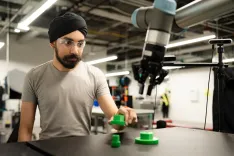
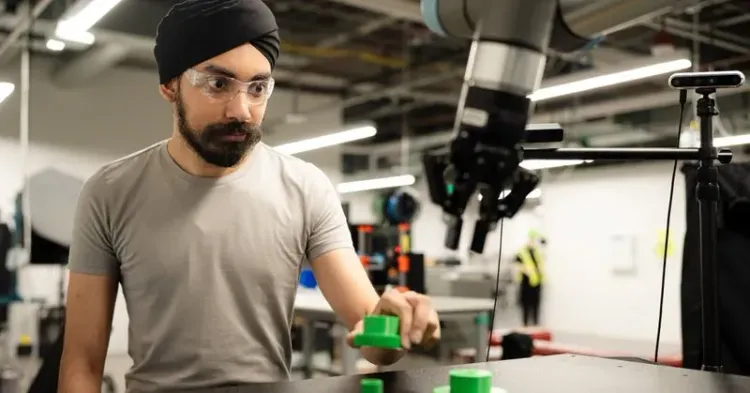
Chip giant Nvidia on Thursday, 2 July 2026 directed attention to the work of a contributor identified as Jaiveer and the Isaac ROS team, sharing a link to their latest developments in GPU-accelerated robotics software. The post, published from Nvidia's official corporate account on X, underscores the company's continued investment in open-source robotics infrastructure.
Context
The Isaac ROS platform is Nvidia's framework that merges the widely-used Robot Operating System (ROS) with GPU-accelerated AI libraries, enabling robotics developers to build faster perception, navigation, and manipulation pipelines. Nvidia first introduced the Isaac robotics initiative around 2018, positioning it as an end-to-end software layer sitting atop its hardware ecosystem. The shoutout to Jaiveer — whose specific role and title could not be independently confirmed — signals the company's practice of highlighting individual contributors within its engineering community.
Policy Backdrop
Nvidia's expansion into full-stack AI platforms reflects a broader strategic pivot by semiconductor companies away from pure chip supply toward integrated hardware-software ecosystems. By open-sourcing key components of Isaac ROS and building compatibility with standard robotics middleware, Nvidia has lowered the barrier for industrial automation teams and independent developers alike. This approach mirrors moves seen across the AI infrastructure sector, where platform lock-in through software tooling has become as strategically important as silicon performance.
Stakeholders and Impact
The primary beneficiaries of Isaac ROS advances are robotics developers, industrial automation teams, and companies building autonomous systems in logistics, manufacturing, and automotive sectors. GPU-accelerated ROS packages reduce compute latency in real-time perception tasks — a critical requirement for warehouse robots, autonomous mobile robots, and collaborative factory arms. For India's growing robotics and automation industry, access to Nvidia's open-source stack represents a meaningful resource for startups and research institutions building next-generation systems.
What's Next
Nvidia's annual GTC conference remains the primary venue where major updates to Isaac ROS — including new reference designs, expanded AI model libraries, and automotive partnerships — are typically announced. The company's steady cadence of contributor spotlights and documentation updates suggests ongoing development momentum. Observers will watch whether Nvidia deepens integrations with humanoid robotics platforms, an area drawing significant industry and investor attention through 2026.
Point of View
Reinforcing developer loyalty at a time when open-source robotics middleware is becoming a competitive battleground. By anchoring its robotics narrative around human engineers rather than just product specs, Nvidia is cultivating an ecosystem identity that rivals pure-hardware competitors cannot easily replicate. This fits a broader pattern of platform companies using developer advocacy to entrench their toolchains before industrial automation markets fully mature. For India's robotics sector, such visibility into Nvidia's engineering community also signals potential talent and collaboration pathways.
NationPress
2 Jul 2026
Frequently Asked Questions
What is Nvidia Isaac ROS?
Isaac ROS is Nvidia's robotics platform that combines the Robot Operating System with GPU-accelerated AI libraries, enabling developers to build faster perception, navigation, and manipulation systems for autonomous robots.
Who is Jaiveer mentioned in Nvidia's post?
Jaiveer is identified as a contributor to the Isaac ROS team at Nvidia. Specific details about their role or title could not be independently confirmed from available information.
When did Nvidia launch the Isaac robotics initiative?
Nvidia introduced the Isaac robotics initiative around 2018, with the goal of extending its GPU hardware strengths into end-to-end autonomous-system software.
How does Isaac ROS benefit robotics developers in India?
Isaac ROS provides open-source, GPU-accelerated robotics tools that reduce compute latency in real-time tasks, offering Indian startups and research institutions a powerful, accessible framework for building autonomous systems.
Where can I follow Nvidia's Isaac ROS updates?
Nvidia typically announces major Isaac ROS updates at its annual GTC conference and through its official developer documentation and social media channels.