Nvidia's Jensen Huang, Elon Musk push back on AI regulation at G20
Synopsis
Nvidia's Jensen Huang warned at a G20 meeting that nations failing to embrace AI will be 'left behind,' as US tech titans mount a coordinated push to roll back AI guardrails amid an intensifying rivalry with China.
Key Takeaways
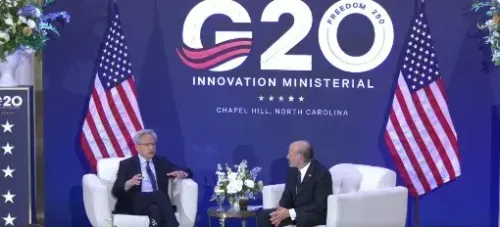
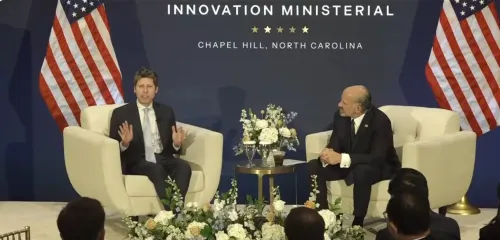
Nvidia CEO Jensen Huang addressed a G20 meeting in Chapel Hill, North Carolina on Wednesday, September 3, 2026 , urging AI regulation focused on 'actual and pragmatic harm.' Elon Musk joined Huang in pushing back against strict AI guardrails, framing heavy regulation as a threat to American innovation.
US Commerce Secretary Howard Lutnick appeared alongside tech executives at the G20 gathering, signalling deregulation as an official US policy priority.
Washington has been easing regulatory hurdles for domestic AI developers, drawing criticism from Beijing amid an intensifying US – China technology rivalry.
US executives are actively lobbying against potential bans on open-weight AI models, with companies including Meta Platforms and OpenAI framing open technology as vital to global leadership.
The European Union 's more restrictive AI Act stands in contrast to the deregulatory direction being advocated by US industry and the Trump administration.
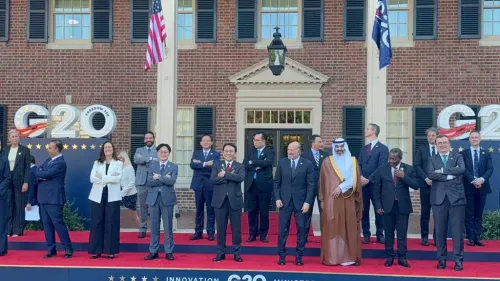
Nvidia CEO Jensen Huang and Tesla founder Elon Musk are mounting a high-profile campaign against stringent artificial intelligence regulations, warning global policymakers that excessive guardrails risk ceding the AI race to rivals — particularly China. The push came as US Commerce Secretary Howard Lutnick joined industry leaders at a G20 meeting in Chapel Hill, North Carolina, on Wednesday, September 3, 2026.
What Huang Said at the G20
Speaking at the Chapel Hill gathering, Huang called on policymakers to design AI regulations around 'actual and pragmatic harm' rather than 'hypothetical theoretical harm.' He framed overly cautious policy as an economic liability, warning that nations slow to embrace AI technology risk being permanently disadvantaged. 'The worst outcome is that you don't take advantage of it, that you are left behind,' the Nvidia chief said.
Why It Matters: The US-China AI Rivalry
The intervention arrives at a pivotal moment in the US–China technology rivalry. Washington has been moving to reduce regulatory friction for domestic AI developers, a shift that has drawn sharp criticism from Beijing. At the same time, US executives — including leadership at Meta Platforms and OpenAI — have been lobbying against potential bans on open-weight AI models, arguing that open technology is essential to sustaining global technological leadership.
The Competitive Backdrop
The debate over AI guardrails is unfolding against a broader geopolitical backdrop shaped by chip export controls, competing national AI strategies, and divergent regulatory philosophies. The European Union has taken a more restrictive posture through its AI Act, while companies such as Anthropic and OpenAI have advocated for safety-first frameworks domestically. Musk, whose ventures span electric vehicles, aerospace, and AI through his company xAI, has consistently positioned heavy regulation as a threat to American innovation.
Industry Voices and Broader Lobbying Push
The G20 appearance by Huang and the presence of Commerce Secretary Lutnick signals that deregulation of AI has become an explicit plank of US trade and technology policy under the Donald Trump administration. Industry analysts note that the lobbying effort against open-weight model restrictions is gaining momentum, with firms including Meta Platforms framing open-source AI as a strategic counterweight to closed, state-backed Chinese systems, reportedly including those broadcast and promoted through CCTV and state media channels.
What's Next
The outcome of this regulatory tug-of-war will shape how quickly US companies can deploy large-scale AI systems domestically and abroad. Policymakers at the G20 and in Washington face mounting pressure to strike a balance between innovation velocity and safety assurance. Firms with the most exposure — Nvidia, Meta Platforms, OpenAI, and Anthropic — will be watching closely as any new federal AI framework takes shape in the months ahead.
Point of View
Musk, and Commerce Secretary Lutnick at a G20 forum is less a spontaneous industry call and more a deliberate signal that deregulation has become US industrial policy in the AI era — mirroring how Washington once mobilised around semiconductor export controls, but in reverse. What mainstream coverage underplays is the implicit tension: the same executives lobbying against AI guardrails are also beneficiaries of the export restrictions that kneecap Chinese competitors, creating a selective deregulation posture that protects US dominance while keeping rivals constrained. The open-weight model debate is the real fault line — if Washington bans open-source AI exports, it hands Beijing a propaganda gift about American hypocrisy on 'open' technology. Investors in Nvidia, Meta Platforms, and OpenAI should watch whether the Trump administration translates this lobbying into concrete federal pre-emption of state-level AI rules, which would be the most consequential near-term regulatory outcome.
NationPress
3 Sept 2026
Frequently Asked Questions
What did Jensen Huang say about AI regulation at the G20?
Jensen Huang urged policymakers at a G20 meeting in Chapel Hill, North Carolina on September 3, 2026 , to limit AI rules to 'actual and pragmatic harm' rather than 'hypothetical theoretical harm.' He warned that excessive regulation could prevent countries from capturing the economic benefits of AI, saying: 'The worst outcome is that you don't take advantage of it, that you are left behind.'
Why are US tech executives pushing back on AI guardrails now?
US tech executives are pushing back because Washington is actively reconsidering its regulatory stance on AI amid an intensifying rivalry with China . Companies including Nvidia , Meta Platforms , and OpenAI are lobbying against potential bans on open-weight AI models, arguing that open technology is essential to maintaining global technological leadership.
How does the US-China AI rivalry relate to the deregulation push?
The deregulation push is directly tied to fears that heavy AI regulation will slow US innovation while China advances its own AI capabilities without equivalent restrictions. Washington has been easing regulatory hurdles for domestic developers — a move that has drawn sharp criticism from Beijing — and US executives are framing open AI technology as a strategic counterweight to state-backed Chinese systems.
What is the EU's position on AI regulation compared to the US?
The European Union has adopted a more restrictive approach through its AI Act, which stands in contrast to the deregulatory direction being advocated by US industry and the Trump administration. This divergence creates a fragmented global regulatory landscape that multinational AI companies must navigate simultaneously.
Which companies are most affected by the AI regulation debate?
The companies with the greatest exposure to the outcome of this regulatory debate include Nvidia , Meta Platforms , OpenAI , and Anthropic . Any federal AI framework — or the absence of one — will directly affect how quickly these firms can deploy large-scale AI systems domestically and in international markets.