Is Robust Urban Infrastructure Through Transit-Oriented Development the Key to Housing?
Synopsis
Discover how Transit-Oriented Development (TOD) can transform urban infrastructure and enhance housing accessibility in India. Union Minister Manohar Lal emphasizes the need for collaboration among stakeholders to meet the growing demand for affordable housing as urban populations rise.
Key Takeaways
Transit-Oriented Development (TOD) can enhance housing accessibility.
Collaboration among stakeholders is essential for affordable housing.
India's urban population is projected to exceed 850 million by 2050 .
Financial institutions play a key role in expanding housing stock.
The vision of Housing for All remains a priority for the government.
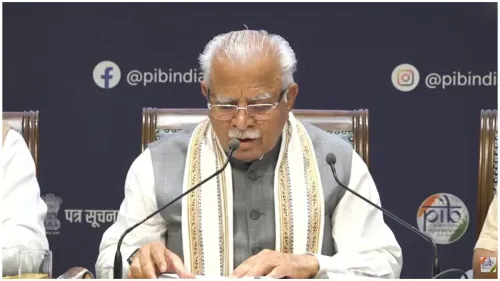
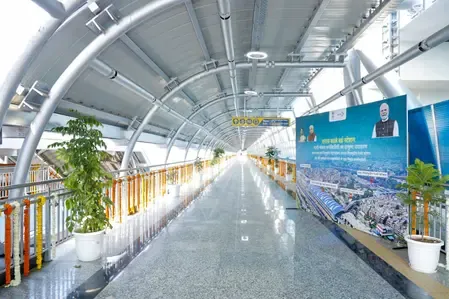
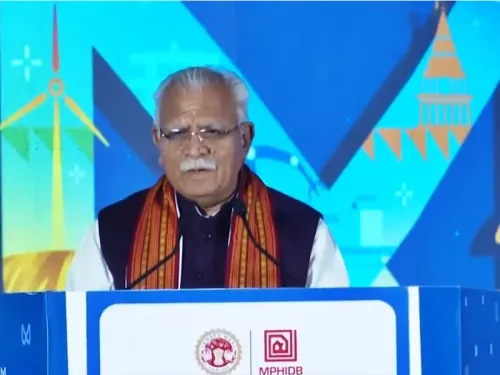
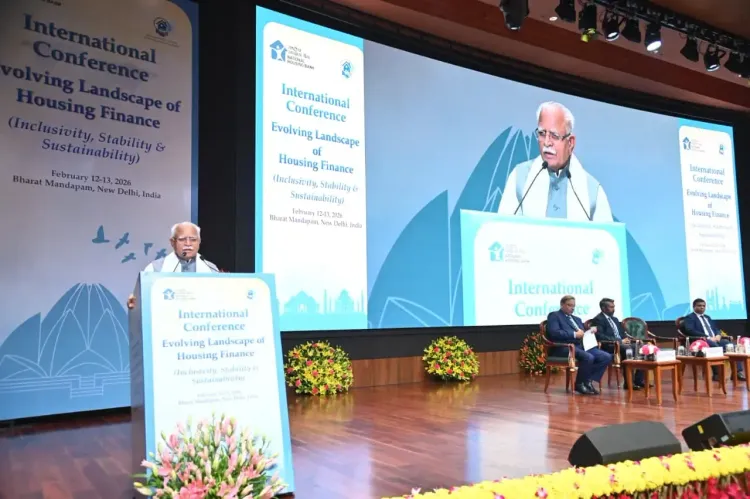
New Delhi, Feb 13 (NationPress) Union Minister Manohar Lal on Friday advocated for the creation of strong urban infrastructure via the Transit-Oriented Development (TOD) approach to enhance accessibility and sustainability in housing.
During a conference, the minister highlighted the necessity of uniting various stakeholders to ensure that housing finance is more accessible, affordable, and inclusive for all citizens.
He stressed the importance of integrated urban planning, which includes transport-linked housing development and innovative policy solutions.
Furthermore, Lal suggested investigating creative solutions such as a mechanism similar to a National Housing Exchange, supported by detailed data on available housing, enabling citizens to find homes near their workplaces and facilitating beneficial property exchanges to minimize commute times.
In reference to a collaborative study by NITI Aayog and the Ministry of Housing and Urban Affairs (MoHUA), which estimated India’s urban population at 500 million in 2021 and projected it to exceed 850 million by 2050, the minister noted that this demographic shift will significantly heighten the demand for affordable housing nationwide.
Moreover, he called upon financial institutions—comprising banks, housing finance companies, and the National Housing Bank—to join forces and provide enhanced credit support to expand the housing stock across the country.
Lal reiterated Prime Minister Narendra Modi's vision of guaranteeing that every eligible citizen has access to a dignified home, showcasing the government's steadfast commitment to Housing for All.
According to the ministry, the conference served as a venue for dialogue, knowledge sharing, and strategic collaboration, reaffirming India’s dedication to tackling the challenges and seizing the opportunities in affordable housing and urban development.
Meanwhile, the promise of shaping India’s urban future lies in developing cities that are economically vibrant, socially inclusive, environmentally sustainable, and institutionally capable, as stated in the Economic Survey 2025-26.
The Survey advocates for future urban policies to prioritize system performance rather than isolated projects—integrating housing, mobility, sanitation, climate resilience, and finance—while crafting livable, climate-ready cities that foster inclusion and long-term economic efficiency. It concluded that India is more urban in economic and functional terms than official definitions imply.
Point of View
It's imperative to recognize that urban infrastructure development is not merely an administrative task but a vital necessity for the welfare of our citizens. Embracing Transit-Oriented Development can significantly alleviate housing challenges, reflecting our national commitment to ensure that every individual has a safe and dignified home.
NationPress
19 Oct 2026
Frequently Asked Questions
What is Transit-Oriented Development?
Transit-Oriented Development (TOD) is a planning approach that focuses on creating compact, walkable communities centered around high-quality public transportation systems, promoting sustainable urban living.
Why is urban infrastructure important for housing?
Robust urban infrastructure is crucial for housing as it enhances accessibility, sustainability, and affordability, ensuring that citizens can live closer to their workplaces and essential services.
How can financial institutions support housing development?
Financial institutions can provide greater credit support and innovative financing mechanisms to help expand the housing stock and make homeownership more attainable for citizens.