Rare earth patents: US and Japan lead where China mines most
Synopsis
China mines most of the world's rare earths and processes nearly all of them — but a new study reveals it holds only a sliver of the patents that matter most. The US and Japan dominate intellectual property in permanent magnets, catalysts, and luminescent materials, the very technologies that turn raw minerals into trillion-dollar industries. Beijing's leverage is real but shallower than its supply-chain grip suggests.
Key Takeaways
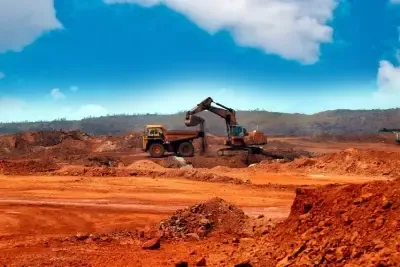
China controls about 70% of global rare earth mining and nearly 90% of processing capacity, yet holds only a limited share of high-value patents.
Downstream rare earth products account for more than 80% of all rare earth-related patents worldwide — the most commercially significant segment.
Japan leads in permanent magnet technology; the US leads in catalytic, luminescent, and polishing material patents.
China files many domestic patents but only a small proportion are international patents with genuine commercial value, the study notes.
Weak coordination among Chinese universities, industry, and IP management bodies limits translation of research into competitive patent portfolios.
Beijing has used upstream rare earth dominance as an economic statecraft tool, restricting exports to pressure Western defence and clean-energy supply chains.
Despite controlling roughly 70 per cent of global rare earth mining and nearly 90 per cent of processing capacity, China holds a surprisingly thin share of the high-value patents that govern what those materials actually do — with the United States and Japan dominating the intellectual property landscape for advanced rare earth functional technologies, according to a new study.
Where the Patent Power Actually Sits
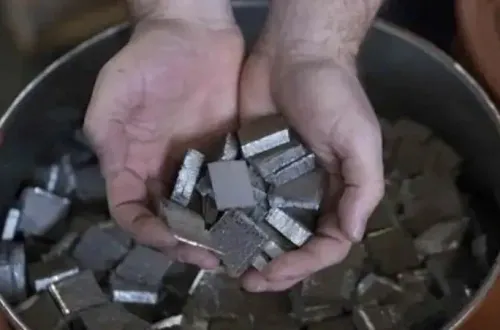
Downstream products derived from processed rare earths — including permanent magnets, catalysts, luminescent materials, and polishing materials — account for more than 80 per cent of all rare earth-related patents worldwide, the study found. These categories represent the most commercially significant applications across modern industry, from defence electronics to clean energy systems.
Japan retained an overall technological lead specifically in permanent magnets, while the US led across most core technologies in catalytic, luminescent, and polishing materials. China, by contrast, holds an edge in only a limited number of sub-technologies within these sectors and continues to trail both rivals in several critical manufacturing processes and material systems.
The Innovation Gap Beijing Has Not Closed
The study attributes part of this gap to structural weaknesses in China's innovation ecosystem. While China files a large volume of rare earth patents domestically, only a relatively small proportion qualify as international patents — the category that carries genuine commercial value in global markets. Coordination among universities, industry, and intellectual property management bodies remains weak, the research notes, meaning many scientific advances have yet to mature into commercially significant patent portfolios.
Notably, this is not a new observation. Critics of China's technology strategy have long pointed out that raw-material dominance and patent leadership are separate competitions — and that Beijing has historically excelled at the former while underinvesting in the latter.
China's Rare Earth Leverage — and Its Limits
China has nonetheless deployed its upstream dominance as a tool of economic statecraft. Beijing has periodically restricted rare earth exports to exploit Western dependencies on materials essential for defence systems — including fighter jets and guided missiles — as well as for renewable energy technologies, electric vehicles, and consumer electronics such as smartphones.
This comes amid an intensifying US-China technology rivalry in which access to critical minerals has become a front-line strategic concern. Washington and its allies have been accelerating efforts to diversify rare earth supply chains, with Japan — itself a major downstream processor — among the most active in building alternative sourcing arrangements.
What This Means for the Global Tech Race
The findings suggest that China's rare earth advantage is more fragile than its mining and processing figures imply. Control of the raw material pipeline does not automatically confer control over the value-added technologies that depend on it. For industries racing to secure supply chains for next-generation semiconductors, EV motors, and defence components, the patent landscape points to a continued dependence on US and Japanese innovation even as sourcing strategies shift.
Whether China can close the patent gap through accelerated domestic R&D and stronger university-industry linkages will be a key variable to watch in the coming decade of critical-minerals competition.
Point of View
Not over outcomes. The US and Japan have quietly built a patent moat around the functional materials that actually power modern defence and clean-energy systems. Until China can convert its massive domestic patent filings into internationally recognised, commercially valuable IP — and fix the university-industry coordination failure the study identifies — its rare earth dominance will remain a blunt instrument in what is increasingly a precision competition.
NationPress
5 Oct 2026
Frequently Asked Questions
Why does China's rare earth dominance have a structural weakness?
China controls the mining and processing of rare earths but holds only a small share of the high-value patents for advanced applications such as permanent magnets, catalysts, and luminescent materials. The US and Japan lead in these downstream technologies, which account for more than 80% of all rare earth patents globally.
Which countries lead in rare earth technology patents?
Japan holds the overall lead in permanent magnet technology, while the US leads in most core patents related to catalytic, luminescent, and polishing materials, according to the study. China trails both in several critical manufacturing processes and material systems.
Why does China file many patents but still lag in commercial rare earth IP?
The study attributes this to China filing a large volume of domestic patents, only a small proportion of which qualify as international patents with genuine commercial value. Weak coordination among universities, industry, and intellectual property management bodies also limits the conversion of research into competitive patent portfolios.
How has China used rare earth dominance as a strategic tool?
Beijing has periodically restricted rare earth exports to exploit Western dependencies on materials critical for defence systems such as fighter jets and missiles, as well as for electric vehicles, renewable energy technologies, and consumer electronics. This upstream control serves as a lever in its broader trade and strategic competition with the US.
What does the patent gap mean for global supply chain strategy?
It means that even as countries diversify rare earth sourcing away from China, they will still depend on US and Japanese intellectual property for the functional technologies built on those materials. Securing raw material supply does not automatically reduce dependence on the innovation leaders who hold the downstream patents.