VeloAlpha targets fusion energy's software gap with AI simulator
Synopsis
Beijing start-up VeloAlpha, founded by plasma physicist Xie Huasheng in April 2026, is deploying AI to crack fusion energy's long-standing software bottleneck — comparing its FusionAlpha simulator to the EDA tools that transformed the semiconductor industry.
Key Takeaways
VeloAlpha was founded in April 2026 in Beijing by fusion theorist Xie Huasheng .
The company's flagship product, FusionAlpha , is an AI-enhanced simulator designed to reduce costly physical experiments in reactor development.
Xie says performance across more than a dozen physics design and analysis models has improved sharply due to refined mathematics and AI.
Investors include Loongson Venture Capital , Legend Capital , and Oufang Angel ; institutional links span Peking University and Zhejiang University .
VeloAlpha draws an explicit parallel to EDA software in semiconductors, positioning fusion simulation as a foundational infrastructure layer.
ENN Energy Research Institute and the broader involvement of Google DeepMind in fusion AI underscore growing institutional interest in the sector.
VeloAlpha, a Beijing-based start-up founded in April 2026, is building an AI-powered fusion reactor simulation platform called FusionAlpha, aiming to cut the costly trial-and-error cycle that has long slowed progress toward commercially viable fusion energy. The company was founded by Xie Huasheng, a fusion theorist and plasma simulation scientist, who argues that smarter software — not just bigger machines — is the missing lever in the global race to harness fusion power.
The 'Impossible Triangle' of Fusion Software
According to Xie Huasheng, fusion simulation tools have historically been trapped in what he calls an 'impossible triangle': existing platforms tend to be either accurate but computationally expensive, fast but unreliable, or conceptually simple but too crude to guide next-generation reactor design. No single tool has managed to satisfy all three demands simultaneously.
Xie said the performance of more than a dozen physics design and analysis models has improved sharply, driven by refined mathematical structures and advances in artificial intelligence that have improved research efficiency. 'We are now at a turning point,' he said.
The EDA Analogy: Lessons from Semiconductors
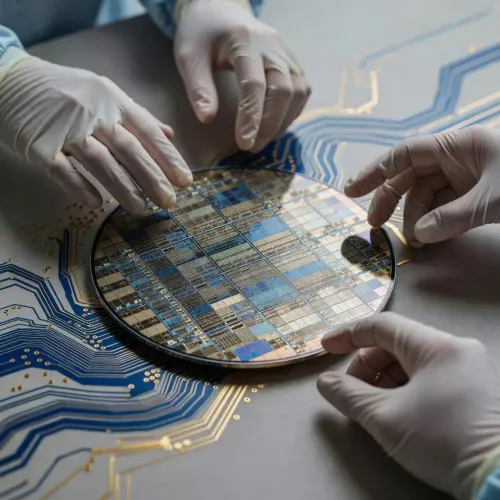
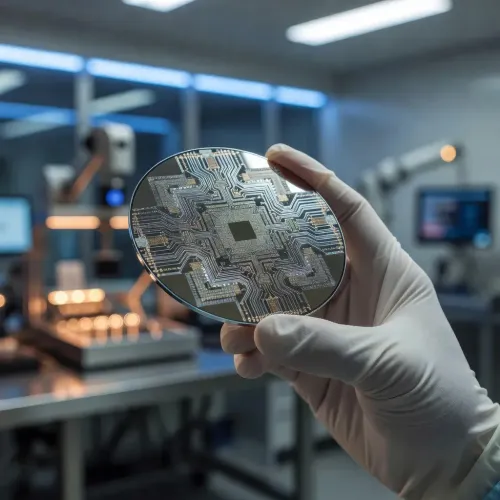
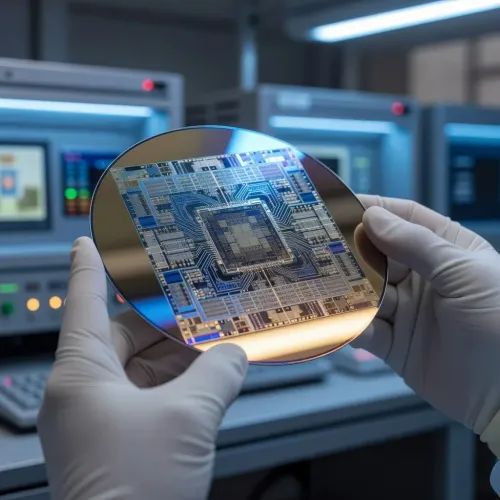
Xie likened FusionAlpha to electronic design automation (EDA) software in the semiconductor industry, where chipmakers simulate and optimise designs on computers long before committing to expensive wafer fabrication. The parallel is deliberate: EDA tools became a foundational layer of the chip industry, and VeloAlpha is betting fusion will follow the same trajectory.
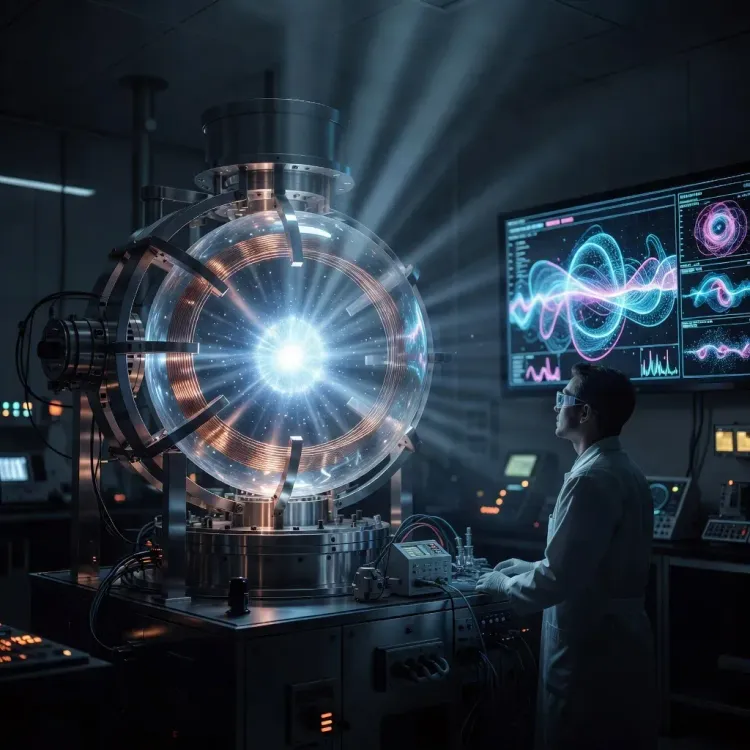
Fusion energy works by forcing nuclei of light atoms to collide and merge — the same reaction that powers the sun — releasing massive amounts of energy. To replicate this on Earth, scientists must heat fuel to extreme temperatures until it becomes plasma, an electrically charged gas, and hold it stable long enough to sustain the reaction. Simulating this process accurately and cheaply has remained one of the field's hardest unsolved engineering problems.
Backers and Institutional Links
The start-up has attracted backing from investors including Loongson Venture Capital, Legend Capital, and Oufang Angel, according to reports. VeloAlpha also has institutional ties to Peking University and Zhejiang University, and has drawn interest from energy-sector players including ENN Energy Research Institute. The involvement of Google DeepMind in the broader fusion AI ecosystem has also been noted by industry observers as a signal of how seriously frontier AI labs are treating the sector.
Why It Matters
Fusion has been described as perpetually '30 years away' for most of its modern history, but a convergence of private capital, AI tooling, and advances in plasma physics is compressing timelines in ways that were not plausible a decade ago. Simulation software that meaningfully reduces physical experimentation costs could shift the economics of fusion development, making smaller, better-capitalised teams competitive with state-backed programmes.
As the global fusion industry moves from proof-of-concept to engineering-scale challenges, the companies that own the simulation stack — much like EDA vendors in semiconductors — could capture outsized value regardless of which reactor design ultimately wins.
What's Next
The immediate test for VeloAlpha is whether FusionAlpha can demonstrate measurable accuracy gains over incumbent tools while remaining computationally tractable for commercial reactor developers. With seed funding secured and a founding team rooted in academic plasma physics, the company's next milestones will likely centre on pilot partnerships with reactor developers and further validation of its AI-enhanced models. The broader fusion software market is nascent but accelerating — and VeloAlpha is moving early.
Point of View
The software stack could prove as strategically important as the reactors themselves. What mainstream coverage tends to underplay is that China's fusion software push is unfolding in parallel with its domestic chip EDA push — both reflect a deliberate strategy to own foundational tooling rather than remain dependent on foreign platforms. The inclusion of Loongson Venture Capital, with its deep ties to China's domestic processor ecosystem, in VeloAlpha's cap table is worth watching as a signal of that broader industrial logic.
NationPress
19 Sept 2026
Frequently Asked Questions
What is VeloAlpha and what does it do?
VeloAlpha is a Beijing -based start-up founded in April 2026 by plasma simulation scientist Xie Huasheng . It is building FusionAlpha , an AI-powered simulator that allows fusion reactor developers to test and optimise designs on computers before committing to expensive physical experiments.
Why is fusion energy simulation software so difficult?
According to Xie Huasheng , existing fusion simulation tools face an 'impossible triangle' : they are either accurate but computationally expensive, fast but unreliable, or simple but too imprecise to guide next-generation reactor design. No current tool satisfies all three requirements simultaneously, making the development of new reactor concepts slower and costlier than it needs to be.
Who is funding VeloAlpha?
VeloAlpha has received backing from Loongson Venture Capital , Legend Capital , and Oufang Angel , according to reports. The company also has institutional ties to Peking University and Zhejiang University , and has drawn interest from ENN Energy Research Institute .
How does FusionAlpha compare to EDA software in semiconductors?
Xie Huasheng explicitly likens FusionAlpha to electronic design automation (EDA) tools used by chipmakers to simulate circuit designs before fabrication. The analogy suggests VeloAlpha sees itself as a potential foundational infrastructure provider for the fusion industry, much as EDA vendors became indispensable to the semiconductor supply chain.
What role does AI play in fusion energy research?
Artificial intelligence is being applied to improve the accuracy and speed of plasma physics simulations, helping researchers explore reactor design parameters that would be prohibitively expensive to test physically. Xie Huasheng said AI has already contributed to sharp performance improvements across more than a dozen physics design and analysis models, and organisations including Google DeepMind have also been active in the fusion AI space.