FIA declares heat hazard for Italian GP at Monza: What it means
Synopsis
The FIA has declared a heat hazard for the Italian GP at Monza — only the fourth time in F1 history — after forecasts showed temperatures hitting 35°C on Saturday. It's not just a safety footnote: with five drivers within 87 points of the lead, any physical or mechanical edge from the heat could reshape the tightest title fight in years.
Key Takeaways
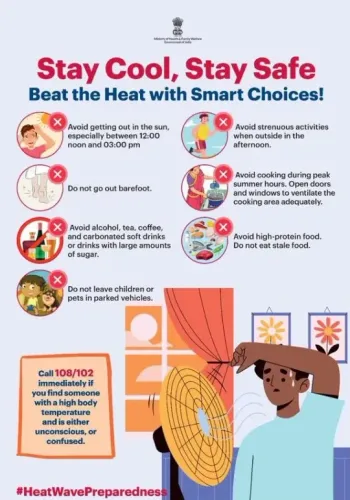
The FIA declared a 'heat hazard' for the Italian Grand Prix at Monza after forecasts predicted a Heat Index above 31.0°C .
The ruling activates the Driver Cooling System , delivering cold fluid via a fireproof vest; all core components must be fitted to the car.
Drivers may opt out of wearing the vest but must add 0.5 kg of ballast to the cockpit to compensate.
Monza temperatures are forecast at 34°C on Friday , 35°C on Saturday , and 34°C on Sunday , per AccuWeather .
This is the fourth heat hazard in F1, after the Singapore GP , United States GP (2025), and Austrian GP earlier this year.
Kimi Antonelli leads the 2025 championship with 242 points , with five drivers within 87 points of each other.
The Fédération Internationale de l'Automobile (FIA) has officially declared a 'heat hazard' for the Italian Grand Prix at Autodromo Nazionale Monza, citing forecasts that the Heat Index will exceed 31.0°C at some point during the race weekend. The declaration, issued on Thursday, triggers a set of mandatory cooling protocols under the FIA's Sporting Regulations.
What the Heat Hazard Declaration Means
Under Article B1.5.10 of the FIA F1 Sporting Regulations, a heat hazard is declared when the Official Weather Service forecasts a Heat Index greater than 31.0°C at any point during a race or sprint event. The FIA stated: 'In accordance with Article B1.5.10 of the FIA F1 Regulations, having received a forecast from the Official Weather Service predicting that the Heat Index will be greater than 31.0°C at some time during the Race at this Competition, a Heat Hazard is declared.'
The ruling activates the Driver Cooling System (DCS), a dedicated setup whose 'sole purpose' is providing additional cooling for drivers under such conditions. The system comprises a pump, plumbing, and a thermal store, with cold fluid delivered to drivers through a specially designed fireproof vest fitted with multiple tubes.
Driver Choice and Ballast Rules
While all core DCS components must be fitted to the car, drivers retain the option to decline wearing the cooling vest itself as the FIA continues fine-tuning the design. The regulations state: 'Any driver may elect not to wear any items of personal equipment that form part of the Driver Cooling System. In such circumstance, all other components, including any cooling medium of the Driver Cooling System, must be fitted.'
Drivers who opt out of the vest must compensate for the weight difference by fitting 0.5 kg of ballast in the cockpit, ensuring no competitive advantage is gained from the lighter load.
Weather Forecast for the Monza Race Weekend
According to AccuWeather, temperatures at Monza are expected to reach 34°C on Friday during practice, climb to 35°C on Saturday for Practice 3 and qualifying, and return to 34°C on Sunday for the main race. The sustained heat across all three days underlines the necessity of the declaration.
A Growing Pattern in F1
The Italian GP will become the fourth Formula 1 race to receive a heat hazard designation — following the Singapore GP and the United States GP in 2025, and the Austrian GP earlier this year. The FIA first began analysing the risks of competing in extreme weather after the Qatar Grand Prix in 2023, when drivers reported severe physical distress. Ahead of the 2025 season, the governing body formalised the threshold: a heat hazard would be issued whenever pre-weekend forecasts indicated temperatures reaching 31°C or higher during a race or sprint.
Title Battle Adds to the Stakes at Monza
The heat hazard arrives at a particularly charged moment in the 2025 F1 championship. Five drivers are separated by just 87 points heading into the Italian GP. Mercedes driver Kimi Antonelli leads the standings with 242 points, while teammate George Russell and Ferrari's Lewis Hamilton are joint second with 183 points each. McLaren's Lando Norris sits fourth on 159 points, and Charles Leclerc is fifth with 155 points.
Norris has won the previous two races following significant upgrades by the McLaren team, while home side Ferrari have also introduced upgraded engines ahead of their home race, intensifying the battle with the pace-setting Mercedes outfit. The combination of extreme heat and a tightly contested championship makes Monza one of the most consequential weekends of the season.
Point of View
Yet the driver cooling system remains optional at the vest level, which is precisely where it matters most. The ballast compensation rule is a reasonable workaround, but it also means some drivers will race in extreme heat without active cooling, a choice that could become a liability rather than a tactical decision. As the championship tightens, the FIA will need to decide whether 'optional' is still the right word when the Heat Index hits 35°C.
NationPress
18 Oct 2026
Frequently Asked Questions
What is a heat hazard in Formula 1?
A heat hazard in Formula 1 is an official FIA declaration issued when the Official Weather Service forecasts a Heat Index above 31.0°C at any point during a race or sprint event. It was formalised ahead of the 2025 season following concerns raised after the 2023 Qatar Grand Prix.
What happens when a heat hazard is declared at an F1 race?
When a heat hazard is declared, all cars must be fitted with the Driver Cooling System, which circulates cold fluid to the driver through a fireproof vest. Drivers may choose not to wear the vest but must add 0.5 kg of ballast to the cockpit to offset the weight difference.
How hot will it be at the 2025 Italian GP in Monza?
According to AccuWeather, temperatures at Monza are expected to reach 34°C on Friday, 35°C on Saturday during qualifying, and 34°C again on Sunday for the race — conditions that directly triggered the FIA's heat hazard declaration.
Which F1 races have previously received a heat hazard?
The Italian GP is the fourth F1 race to receive a heat hazard declaration, after the Singapore GP and the United States GP in 2025, and the Austrian GP earlier in the same year.
How does the Italian GP heat hazard affect the 2025 F1 title race?
The heat adds a physical dimension to an already tight championship, with five drivers — Kimi Antonelli (242 pts), George Russell (183), Lewis Hamilton (183), Lando Norris (159), and Charles Leclerc (155) — separated by just 87 points heading into Monza.