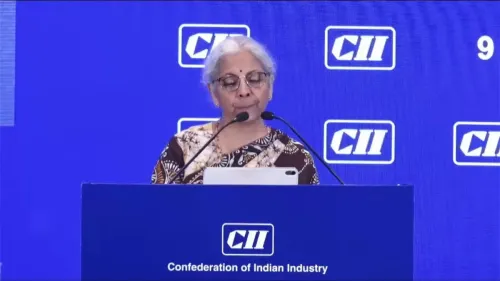
Manav Suthar: Adaptability key to SSC pitch in 2nd Test vs Sri Lanka

Synopsis
On a pitch far less helpful than Galle, India's Manav Suthar is relying on adaptability, captain Shubman Gill's sharp reading of batters, and relentless dot-ball pressure to keep India on top in the Colombo Test — a revealing look at how India's spin unit recalibrates when conditions stop doing the work for them.
Key Takeaways
Manav Suthar says the SSC pitch in Colombo is 'less supportive' compared to the spin-friendly surface in Galle during the first Test.
Suthar credited sustained dot-ball pressure and an attacking field for drawing a loose shot from Keshara Nuwantha in the first innings.
Captain Shubman Gill anticipated Pasindu Sooriyabandara might charge the pitch, alerting Suthar — a tip that led directly to the wicket.
India's plan against Sonal Dinusha centres on restricting scoring opportunities and building pressure through dot balls.
Suthar declined to rate his own performance, emphasising collective team growth across both Tests.
India's left-arm spinner Manav Suthar said adaptability has been the defining factor on the less responsive surface at the Sinhalese Sports Club (SSC) in Colombo, as the second Test between India and Sri Lanka enters its fifth day. Suthar noted that conditions at the SSC have been markedly different from the spin-friendly track India encountered in Galle during the first Test.
A Different Pitch, A Different Mindset
'100 percent, it was quite different. In the last Test match, the wicket was very supportive, you could say it was spin-friendly. This wicket is kind of less supportive, it is playing better and the experience has been good,' Suthar told broadcasters ahead of day five's play. He added that varying lines, altered pace, and pitch-specific planning had all been necessary adjustments on the SSC surface.
Dot-Ball Pressure and the Nuwantha Wicket
Suthar explained how India's first-innings strategy against the lower order centred on building dot-ball pressure with an attacking field. 'At that time, the main focus was to create as much pressure as possible. There was pressure from the field as well because we knew that maybe this could be the last batting pair,' he said. That sustained pressure eventually drew a loose shot from Keshara Nuwantha, handing India the breakthrough.
Captain Shubman Gill's Decisive Input
A mid-spell conversation with India captain Shubman Gill proved pivotal in dismissing Pasindu Sooriyabandara. Gill anticipated that Sooriyabandara might look to charge down the pitch, and Suthar was ready. 'As soon as I bowled that ball, he stepped out and I got the wicket. All kudos to the captain as well because he told me that maybe he could step out,' Suthar said. He acknowledged that instinct also played a role, given Sooriyabandara's aggressive approach at the crease.
Plan Against Sonal Dinusha
With Sonal Dinusha proving difficult to dislodge, Suthar outlined India's containment blueprint. 'The plan is to take as much help as possible from the wicket, and put a little bit of a check on his scoring shots. When the runs don't come, mostly the plan will be to create as much pressure as possible with dot balls,' he said. Suthar added that regardless of the opposition's defensive or attacking intent, India's focus remains on taking wickets as quickly as possible.
Team-First Outlook
Suthar declined to rate his personal performance, choosing instead to highlight collective growth. 'I wouldn't give myself any marks, but 100 percent I'm enjoying it because as a team we are also growing. We have been doing well over the last two Test matches, and here also it is going well,' he said. The second Test at the SSC is shaping up as a stern examination of India's spin attack on a surface that offers considerably less assistance than Galle did — and Suthar's adaptability will be central to the outcome on day five.
Point of View
Worlds apart in assistance — is a useful stress test for any spin attack. That Suthar is adjusting lines, pace, and field settings rather than defaulting to a single template suggests a maturity beyond his Test experience. The more pointed question is whether India can close out the match against Dinusha, whose resistance has complicated what looked like a straightforward position. If they cannot, the SSC pitch's relative flatness will be the story, not the adaptability.
NationPress
11 Oct 2026
Frequently Asked Questions
What did Manav Suthar say about the SSC pitch in the 2nd Test?
Suthar said the SSC pitch in Colombo is 'less supportive' and plays considerably better than the spin-friendly surface India encountered in Galle during the first Test. He noted that different lines, altered pace, and pitch-specific plans were all necessary adjustments.
How did Manav Suthar dismiss Pasindu Sooriyabandara?
Suthar dismissed Sooriyabandara after captain Shubman Gill warned him that the batter might look to charge down the pitch. Suthar bowled slightly wide, Sooriyabandara stepped out, and India took the wicket. Suthar credited both instinct and Gill's tactical input for the dismissal.
What is India's plan against Sonal Dinusha?
India's primary strategy against Dinusha is to restrict his scoring options using dot-ball pressure and an attacking field, forcing him into mistakes. Suthar said the focus is on taking wickets as quickly as possible regardless of the opposition's defensive intent.
How did Suthar create pressure against Keshara Nuwantha?
Suthar built dot-ball pressure with fielders placed up in attacking positions, knowing India was likely dealing with the final batting pair. The sustained pressure eventually drew a loose shot from Nuwantha, giving India the breakthrough.
How has Manav Suthar assessed his own form in the series?
Suthar declined to give himself a personal rating, saying he is focused on the team's collective growth. He expressed satisfaction with how India have performed across both Tests in the series.