AI cannot be decision-maker in courts: SC Justice Anjaria
Synopsis
At the India Digital ADR Summit-2026 in Gandhinagar, Supreme Court judge Justice N V Anjaria drew a clear boundary for legal tech: AI can identify trends across judicial records, but human discretion alone must decide individual cases. The warning came alongside the rollout of the IDDRC SAMYAK dispute platform.
Key Takeaways
Supreme Court judge Justice N V Anjaria stated that AI can assist the justice delivery system but must never act as a decision-maker.
The judge inaugurated the SAMYAK portal, an ADR initiative by the IDDRC at NFSU Gandhinagar .
Gujarat High Court Chief Justice Sunita Agarwal urged formal rules to segregate algorithmic tasks from human judicial discretion.
Attorney General R Venkataramani urged law students to build an investigative approach grounded in verification and questioning.
Prominent jurists including former SC judges Justice M R Shah and Justice Rajesh Bindal attended the summit.
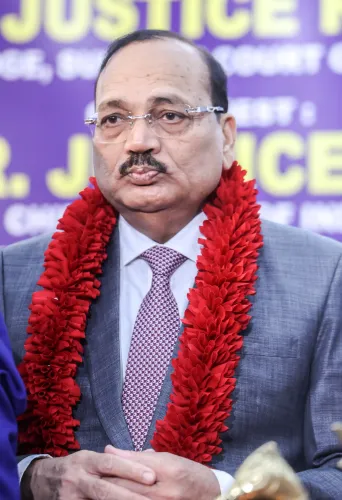
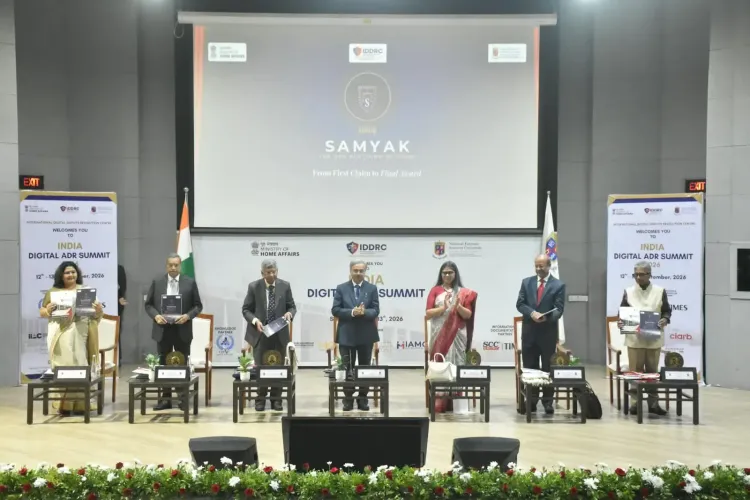
Artificial intelligence can process vast troves of judicial data and detect patterns invisible to the human eye, but it cannot determine the outcome of an individual case, Supreme Court judge Justice N V Anjaria said on 13 September. Delivering his inaugural address at the India Digital ADR Summit-2026 held at the National Forensic Sciences University (NFSU) in Gandhinagar, Gujarat, the apex court judge firmly drew the line between technological assistance and judicial adjudication.
Limits of Artificial Intelligence in Adjudication
Addressing legal luminaries, jurists, and law students, Justice Anjaria highlighted that while automated tools hold immense potential to streamline institutional workflows, human discernment must govern the bench. “If AI is to be used on a large scale in arbitration or any judicial process, certain essential aspects have to be taken into consideration. AI can be part of the justice delivery system, but cannot be the decision-maker,” Justice Anjaria said.
He noted that modern algorithms can aggregate insights across hundreds of legal proceedings, exposing sectoral anomalies and systemic bottlenecks that might otherwise escape human scrutiny. However, he warned against conflating analytical capability with discretionary adjudication, underscoring that sentencing, equity, and contextual legal reasoning demand human consciousness that machines simply cannot replicate.
Launch of SAMYAK Digital Dispute Platform
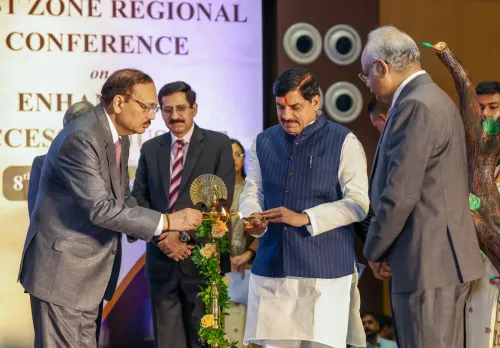
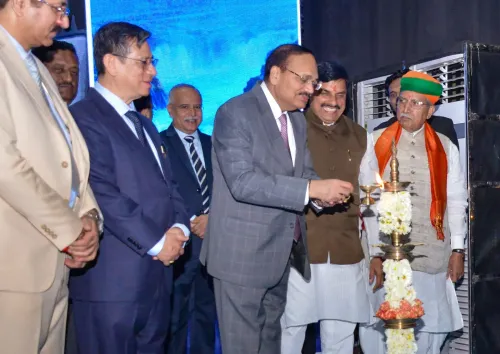
During the summit, Justice Anjaria also formally inaugurated the SAMYAK portal, an online dispute resolution platform conceived by the International Digital Dispute Resolution Centre (IDDRC) at NFSU. The portal is designed to facilitate digital alternative dispute resolution (ADR), expanding procedural access across commercial arbitration and pre-litigation mediation.
Gujarat High Court Chief Justice Sunita Agarwal congratulated the IDDRC on the initiative, terming the SAMYAK portal a “unique initiative”. She stressed that the deployment of emergent tools inside legal corridors requires enforceable guidelines to protect fundamental fairness.
“Such rules should clearly distinguish between tasks where AI could be used and those that must remain within the exclusive domain of human judgement and discretion in the dispute resolution process,” Chief Justice Sunita Agarwal asserted, arguing that technological integration without normative guardrails could compromise the core tenets of natural justice.
The Call for Scientific Rigour in Legal Education
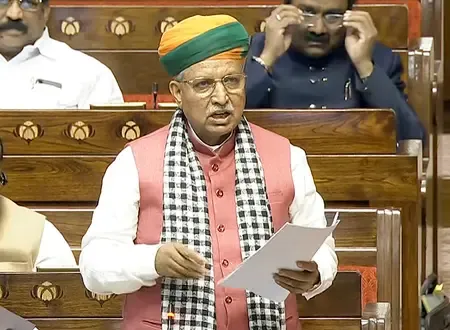
Attorney General of India R Venkataramani also addressed the delegates, focusing his remarks on the academic foundations required for the next generation of jurists. He urged legal scholars to adopt an investigative mindset rather than passively relying on modern computational outputs.
“Doubt, refutation and verification are the foundations of science and students must cultivate the habits of questioning, challenging and verifying information,” Venkataramani remarked. He noted that NFSU holds the strategic potential to evolve into an international centre of excellence, adding that its foundational milestones will secure its global academic standing.
The summit brought together several prominent figures from the Indian judiciary, including former Supreme Court judges Justice M R Shah and Justice Rajesh Bindal, Gujarat State Human Rights Commission Chairman Dr K J Thaker, former Gujarat High Court Chief Justice Justice Soniya Gokani, and former High Court judge Justice Dr A C Joshi.
Balancing Automation with Judicial Discretion
The deliberations in Gandhinagar come amid an accelerating institutional push across India’s judiciary to embrace technology, spanning virtual court hearings, digital filings, and algorithm-based document management. While computational utilities increasingly support transcription and legal research, the consensus among the higher judiciary remains firmly committed to maintaining human-in-the-loop oversight to protect constitutional guarantees.
Point of View
Justice is not an optimization problem solvable by predictive statistics. India’s higher judiciary must codify binding thresholds that keep discretion, empathy, and constitutional equity strictly in human hands.
NationPress
13 Sept 2026
Frequently Asked Questions
What did Justice N V Anjaria say about AI in courts?
Supreme Court judge Justice N V Anjaria stated that while AI can assist in analysing large volumes of judicial data and spotting patterns, it cannot decide individual cases or replace human decision-makers.
What is the SAMYAK portal launched at NFSU?
The SAMYAK portal is a digital dispute resolution platform developed by the International Digital Dispute Resolution Centre at the National Forensic Sciences University in Gandhinagar to assist in arbitration and alternative dispute resolution.
What guidelines did Chief Justice Sunita Agarwal suggest for AI in law?
Gujarat High Court Chief Justice Sunita Agarwal called for clear rules delineating tasks where AI can be deployed from core adjudicatory functions that must strictly remain within human judgment and discretion.
What advice did Attorney General R Venkataramani give to law students?
Attorney General R Venkataramani stressed the importance of questioning, doubting, and verifying facts, urging students to develop an investigative approach grounded in scientific scrutiny rather than accepting automated outputs at face value.