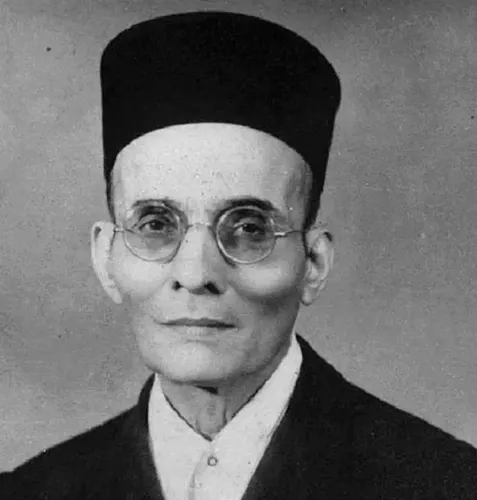
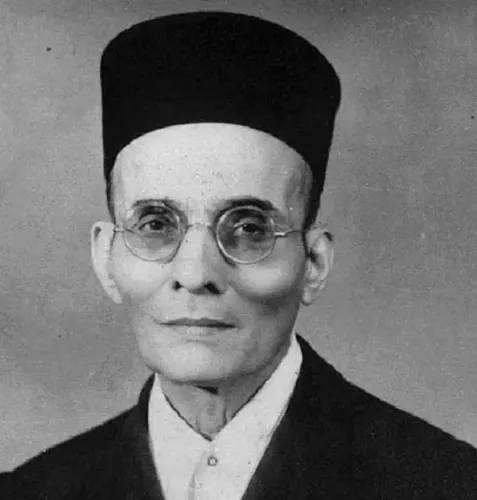
Savarkar archives reveal democrat, rationalist: Indian-American scholar
Synopsis
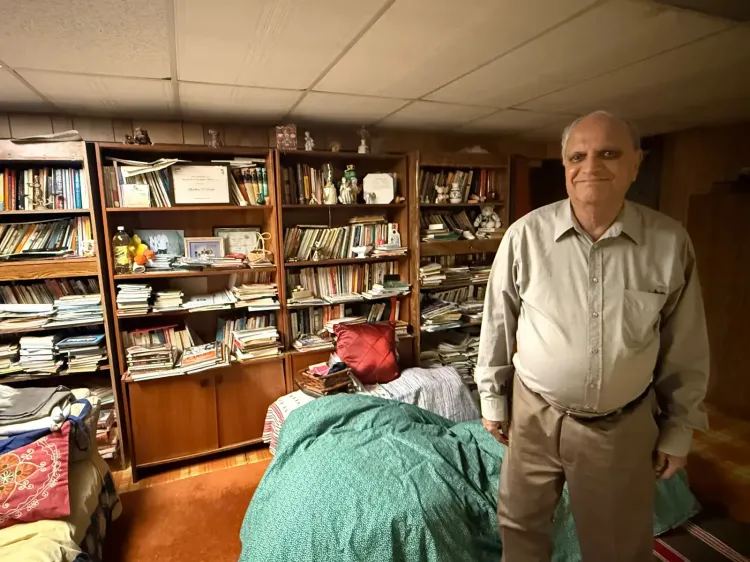
An Indian-American scholar has spent 15 years and 30,000-plus archival pages building a case that the real Savarkar — democrat, agnostic, social reformer — is buried under partisan myth. A 1906 London document envisioning one person, one vote, and a US diplomatic cable suggesting prosecutors knew their assassination case was weak, are among his most striking finds.
Key Takeaways
Damle , 84, has examined more than 30,000 pages of archival material from India, Britain and the US for a forthcoming book on Vinayak Damodar Savarkar .
A 1906 London document , found on microfilm at the University of Chicago , reportedly envisioned an independent India built on democracy, equality before law and one person, one vote.
A US diplomatic record Damle uncovered quotes the government's chief prosecutor as saying Savarkar would likely be freed in the Gandhi assassination trial due to insufficient grounds.
Damle describes Savarkar as an agnostic and rationalist who regarded all religious texts as human creations and held science as the final authority.
Approximately 850 pages of Mumbai CID material related to Savarkar remain inaccessible to Damle, whom he attributes to bureaucratic obstacles.
Damle plans to place his full documentation online for public access once the manuscript is complete.
More than a decade of archival research across India, Britain and the United States has led Indian-American scholar Sridhar D. Damle to a portrait of Vinayak Damodar Savarkar that he says diverges sharply from the political images — both reverential and condemnatory — built around one of modern India's most contested historical figures. Damle, who is completing a book on Savarkar after examining more than 30,000 pages of archival material, says the documents reveal a man of significantly greater complexity than public discourse typically allows.
The Scope of the Research
Damle, 84, is a long-time scholar of the Rashtriya Swayamsevak Sangh (RSS) and co-author of two major works on that organisation. His Savarkar research began in 2010 and has since expanded to encompass British intelligence records, US diplomatic papers, banned literature, court-related material, Indian police files, and Irish-American press archives. The material, he says, documents how governments, diplomats and police across multiple countries perceived Savarkar across different phases of his life.
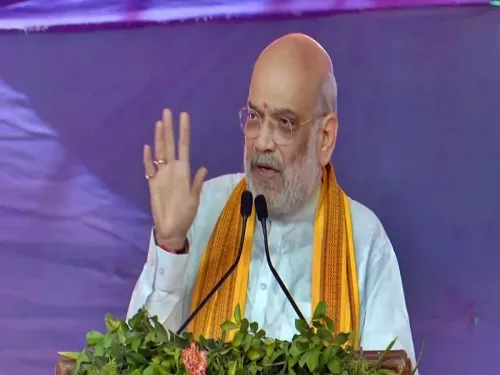
Damle spoke at length about his findings in an interview conducted in Chicago, where he is based.
A 1906 Document and the Democratic Vision
One discovery Damle regards as particularly significant is a 1906 document from Savarkar's London years — a copy of which survived in British-confiscated material and which Damle later located on microfilm at the University of Chicago. According to Damle, the document envisaged an independent India founded on democracy, equality before law, merit-based public employment and one person, one vote, leaving the choice between a president and a monarch to a future constituent assembly.
'That India will be free, there will be democracy, there will be one man, one votes, equality before the law, job according to merits,' Damle said, describing the document's contents. For the scholar, this text is central to understanding a Savarkar whose image is today shaped almost entirely by later debates over Hindutva, Hindu nationalism, Partition and the assassination of Mahatma Gandhi.
Rereading the Prison Petitions
Damle also challenges the widely circulated characterisation of Savarkar's petitions to British prison authorities as straightforward acts of capitulation. He argues the petitions must be read within the legal categories the colonial system applied to him. Savarkar's position, according to Damle's reading of the archival record, was that if the British classified him as an ordinary criminal, he was entitled to the rights such prisoners received; if they classified him as a political prisoner, he was entitled to those corresponding protections.
'He ask as a prisoner, I write I'm asking. And all the papers, the six papers are there. British refusing,' Damle said, summarising what he found in the records.
The Gandhi Assassination Case: What Archival Records Show
A substantial portion of Damle's research concerns the Gandhi assassination case of 1948. Savarkar was prosecuted but acquitted by the trial court. Damle says he found a report in Washington recording that, early in the trial, the government's chief prosecutor told the American ambassador that Savarkar was likely to be freed because the prosecution lacked sufficient grounds against him.
'Daptari told American Ambassador Sauerka will be free very soon because there is no ground,' Damle said, recounting what he says the diplomatic document recorded. He argued that the archival trail raises serious questions about efforts to implicate Savarkar personally in the assassination, distinguishing political association from direct personal responsibility.
An Agnostic, a Democrat and a Social Reformer
Damle presents additional dimensions of Savarkar that receive less attention in mainstream accounts. He describes Savarkar as an agnostic and rationalist who regarded religious texts as human rather than divine creations. 'He believe all the religions are manmade, all the holy books are manmade,' Damle said, adding that Savarkar held science and human welfare as the ultimate standards of judgement. 'Final word will be science, humanitarian-based science,' he said.
Damle also recounts a personal encounter: as a college student, he met Savarkar on 14 January 1960, after drawing his attention to a derogatory reference in a biography. Expecting a brief meeting, he found Savarkar spent roughly an hour with him. When Damle asked why Savarkar had criticised the dismissal of Kerala's elected Communist government, Savarkar reportedly replied that accepting democracy meant accepting election results and changing governments through elections rather than executive action. 'Democracy is the best way in all, all of the form of government,' Damle recalled him saying.
On social reform, Damle points to Savarkar's campaigns against untouchability and caste barriers, his support for inter-caste marriage and reconversion, and his efforts to popularise accessible Marathi terminology for modern public life — coining, Damle says, scores of new terms. The scholar also notes Savarkar's documented exchanges with B.R. Ambedkar over the Partition question and his recorded warnings about China's strategic intentions and the implications of developments in Tibet.
The Fight Over Mumbai CID Records
Damle says he has located approximately 850 pages of Mumbai CID material relating to Savarkar but has so far been unable to obtain copies. Among the documents he is seeking is a four-page CID record relating to Savarkar's arrest in 1950. 'The problem is still the bureaucracy,' he said. Once his research is complete, Damle intends to place the full documentation online for students, journalists and other researchers. 'My goal, after as soon I get a documentation, I want to put all my documentation online,' he said. The manuscript remains in progress.
Point of View
If it holds up to peer scrutiny, would fundamentally complicate the narrative that Hindutva ideology was always Savarkar's primary frame. More consequential is the US diplomatic cable on the Gandhi assassination trial: if prosecutors privately believed the case was weak, the question of why Savarkar was charged at all — and what political pressures shaped that decision — deserves serious historiographical attention that has largely been avoided. The bureaucratic blockade over Mumbai CID records is itself a story: if these files are as significant as Damle suggests, their continued inaccessibility is a failure of the archival transparency that mature democracies owe their own histories.
NationPress
5 Oct 2026
Frequently Asked Questions
Who is Sridhar D. Damle and what is his Savarkar research about?
Sridhar D. Damle is an 84-year-old Indian-American scholar based in Chicago, best known for co-authoring two major works on the RSS. His Savarkar research, begun in 2010, involves more than 30,000 pages of archival material from India, Britain and the United States and aims to present a historically grounded portrait of Vinayak Damodar Savarkar distinct from the partisan images that dominate public debate.
What is the 1906 London document that Damle considers significant?
According to Damle, it is a document from Savarkar's London years that envisioned an independent India built on democracy, equality before law, merit-based public employment and one person, one vote. Damle found a surviving copy on microfilm at the University of Chicago, preserved in British-confiscated material.
What does the archival evidence show about Savarkar and the Gandhi assassination case?
Damle says he found a US diplomatic record in Washington indicating that the government's chief prosecutor told the American ambassador, early in the trial, that Savarkar was likely to be acquitted because the prosecution lacked sufficient grounds. Savarkar was indeed acquitted by the trial court. Damle argues the archival trail raises serious questions about the attempt to implicate him personally.
Did Savarkar support democracy after Indian independence?
According to Damle, yes. He recounts a personal 1960 meeting in which Savarkar argued that accepting democracy meant honouring election results rather than removing elected governments through executive action. Damle also cites Savarkar's view that secret societies and political violence had no place in a post-independence democratic country.
Why is Damle still unable to complete his manuscript?
Damle says he is still trying to obtain certain archival documents, including approximately 850 pages of Mumbai CID material relating to Savarkar, access to which has been blocked by bureaucratic obstacles. He has identified a four-page CID record from Savarkar's 1950 arrest as among the papers he particularly wants. Once his research is complete, he plans to make all documentation publicly available online.