Ramdas Athawale outlines welfare push for marginalised communities in Chandigarh
Synopsis
Union Minister Ramdas Athawale used a Chandigarh press meet to showcase the Centre's social welfare agenda — from MUDRA Yojana to Make in India — while asserting India is on course to become the world's third-largest economy. No new schemes were announced, but the briefing signals the government's intent to amplify its outreach on social empowerment ahead of the political calendar.
Key Takeaways
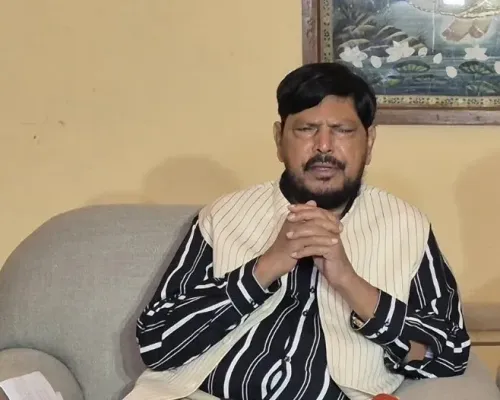
Ramdas Athawale , Union Minister of State for Social Justice and Empowerment, addressed a press conference in Chandigarh on 3 November 2026 .
He highlighted Make in India and the Pradhan Mantri MUDRA Yojana as key drivers of entrepreneurship and employment for marginalised groups.
Athawale stated India is currently the world's fourth-largest economy and expressed confidence it could rise to third position .
The minister emphasised that economic growth must be paired with social empowerment to ensure benefits reach every section of society.
No new schemes were announced; the briefing focused on existing Ministry of Social Justice programmes.
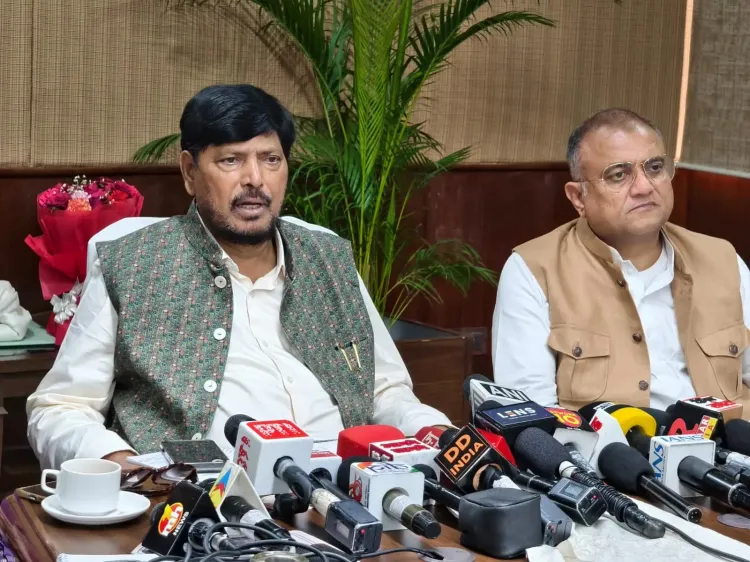
Union Minister of State for Social Justice and Empowerment Ramdas Athawale on Tuesday, 3 November 2026, outlined key welfare measures and initiatives undertaken by the Union government for the upliftment of disadvantaged sections during a press interaction in Chandigarh. The minister underscored the Centre's commitment to inclusive development, social equality, and improving the socio-economic conditions of marginalised communities.
Key Programmes Highlighted
Athawale spotlighted flagship programmes including Make in India and the Pradhan Mantri MUDRA Yojana, describing how these initiatives have encouraged entrepreneurship, bolstered small businesses, and contributed to employment generation. He said the ministry's core focus remains on creating opportunities for weaker sections through education, skill development, and employment generation.
India's Economic Standing
Speaking on India's broader economic trajectory, Athawale noted that India currently ranks as the world's fourth-largest economy. He expressed confidence that the country could advance to the third position in the near term, citing the pace of economic development and the government's sustained reform efforts. Athawale was speaking in an individual capacity at the press meet and did not present official economic projections.
Social Empowerment Must Match Growth
The minister stressed that economic expansion must be accompanied by social empowerment to ensure its benefits reach every section of society. He reiterated that inclusive development, equal opportunities, and welfare-oriented policies are central to building a more equitable nation — a position he said the Narendra Modi-led National Democratic Alliance (NDA) government has consistently pursued.
Broader Ministry Mandate
The press conference provided a platform to highlight the Ministry of Social Justice and Empowerment's ongoing efforts, spanning education subsidies, vocational training schemes, and community welfare interventions aimed at Scheduled Castes, Other Backward Classes, and other marginalised groups. Officials present noted that the ministry is working to streamline benefit delivery through direct benefit transfer mechanisms. All policy measures referenced by Athawale are existing government programmes, and no new announcements were made at the briefing.
Point of View
In effect, political outreach dressed as a policy briefing — standard practice ahead of electoral cycles. Athawale's claim that India is on course for third place in global GDP rankings is plausible directionally, but the timeline remains contested among economists and was not attributed to any official projection. The deeper question mainstream coverage tends to skip: whether the Ministry of Social Justice's programmes have measurably shifted outcomes for Scheduled Castes and OBCs, or whether disbursement data and ground reality continue to diverge. Welfare optics and welfare outcomes are not the same thing.
NationPress
3 Nov 2026
Frequently Asked Questions
What did Ramdas Athawale announce at the Chandigarh press conference?
Athawale did not announce any new schemes; he highlighted existing Union government welfare programmes for marginalised communities, including Make in India and the Pradhan Mantri MUDRA Yojana. The briefing focused on education, skill development, and employment generation initiatives under the Ministry of Social Justice and Empowerment.
What is the Pradhan Mantri MUDRA Yojana that Athawale referred to?
The Pradhan Mantri MUDRA Yojana is a central government scheme that provides collateral-free micro-loans to small and micro enterprises. Athawale cited it as a key tool for encouraging entrepreneurship among weaker sections and supporting employment generation.
What did Athawale say about India's economic ranking?
Athawale stated that India currently ranks as the world's fourth-largest economy and expressed confidence that it could move to the third position, reflecting the government's reform momentum. He did not cite a specific official projection or timeline for this advancement.
Which communities are the focus of the Ministry of Social Justice and Empowerment?
The ministry primarily serves Scheduled Castes, Other Backward Classes, and other marginalised groups, through schemes covering education subsidies, vocational training, and community welfare. Athawale reiterated that inclusive development and equal opportunities remain the ministry's core mandate.