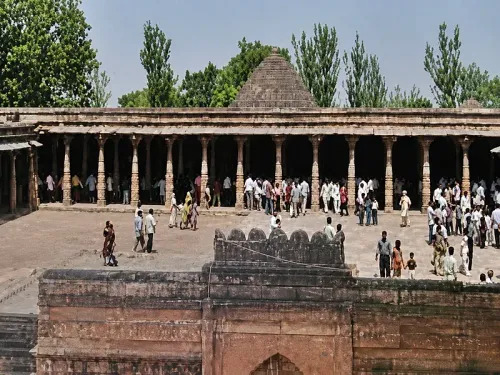
Bhojshala declared Hindu temple: Petitioners vow to reinstall Goddess Vagdevi idol
Synopsis
The Madhya Pradesh High Court has ruled that Bhojshala in Dhar is a Hindu temple and King Bhoj’s property, scrapping the ASI’s shared-access arrangement. Hindu petitioners are now moving to reinstall a replica of the Goddess Vagdevi idol — while the court has separately asked the government to pursue repatriation of the original from the British Museum.
Key Takeaways
The Madhya Pradesh High Court on 15 May declared the Bhojshala complex in Dhar a Hindu temple and property of King Bhoj .
The court set aside the ASI order permitting Muslims to offer namaz at the site.
Hindu petitioners Kuldeep Tiwari and Rajesh Bijwe announced plans to reinstall a replica of the Goddess Vagdevi (Saraswati) idol.
The court directed the government to formally pursue repatriation of the original Saraswati idol from the British Museum, London .
Of six writ petitions, only two — by the Hindu Front for Justice and Kuldeep Tiwari — were allowed; petitions by Muslim and Jain communities were rejected.
The ruling followed a four-year legal battle and a 2,100-page ASI survey report .
The Madhya Pradesh High Court on Friday, 15 May recognised the Bhojshala complex in Dhar as a Hindu temple and the property of King Bhoj, setting aside an earlier Archaeological Survey of India (ASI) order that had permitted Muslims to offer namaz at the site. In the immediate aftermath, Hindu petitioners declared they would reinstall the idol of Goddess Vagdevi (Saraswati) at Bhojshala, marking what they called the culmination of a four-year legal battle.
Key Developments in the Ruling
The court recognised the Bhojshala-Kamal Maula Mosque complex as a centre of Sanskrit learning, a Hindu temple, and the heritage property of King Bhoj of the Parmar dynasty, who is believed to have originally established the site between 1010 and 1055 AD. The bench allowed only two of the six writ petitions placed before it — one filed by the Hindu Front for Justice and another by petitioner Kuldeep Tiwari. The remaining four petitions, filed by Muslim and Jain communities, were rejected.
The court also directed the government to make formal efforts to repatriate the ancient idol of Goddess Saraswati currently housed at the British Museum in London — a statue that, according to historical accounts, was originally installed by King Bhoj and later removed by the British.
What the Petitioners Said
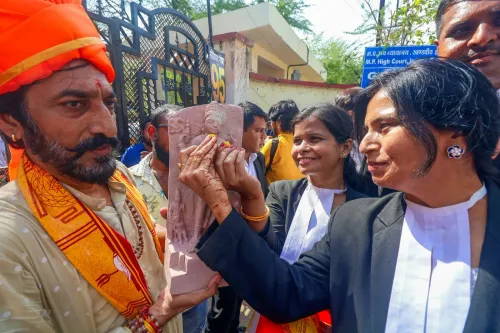
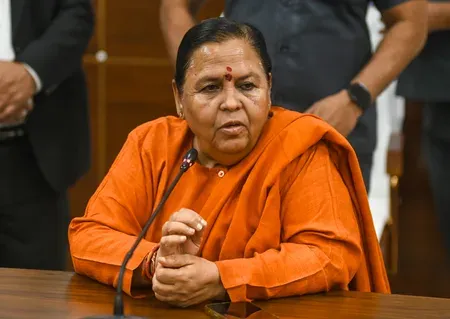
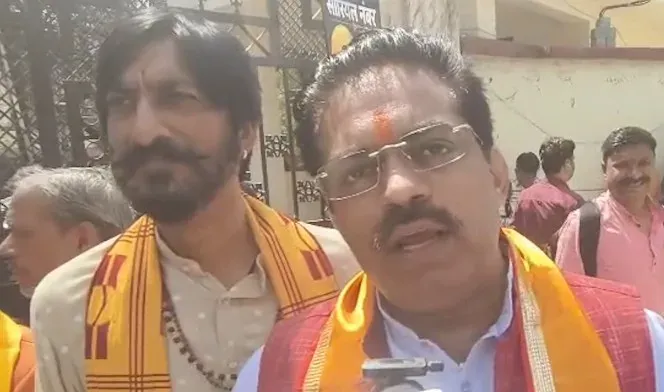
Petitioner Kuldeep Tiwari said: “The idol of Goddess Vagdevi (Saraswati) can be found in the homes of all devotees of the Goddess. It is believed to be the same kind of idol that Maharaja Bhoj had installed when the temple was originally established.” He added that many such idols were damaged or destroyed during historical invasions, and that the idol currently with petitioners is a replica of the original held in the British Museum.
Fellow petitioner Rajesh Bijwe confirmed that preparations are underway to place the replica inside the complex. “We have now brought a replica of that idol here, and preparations are underway to place it inside again. The kind of evidence that has been presented reflects the historical significance of the site, and this has now been established,” he said, asserting: “We will reinstall the idol of Goddess Vagdevi at Bhojshala. This is a symbolic idol.”
Legal Background and the ASI Survey
Advocate Vishnu Shankar Jain, who represented the Hindu front, described the ruling as “historic,” noting it followed four years of litigation and was informed by a 2,100-page ASI survey report. The earlier ASI arrangement had allowed Muslims to offer Friday prayers at the site while Hindus observed Tuesday as a day of worship — a shared-access formula that the court has now set aside.
This comes amid a broader national pattern of legal disputes over sites claimed by both Hindu and Muslim communities, including the Gyanvapi mosque in Varanasi and the Shahi Eidgah in Mathura, where similar ASI surveys have been ordered or completed in recent years.
What Happens Next
According to advocate Jain, the court has directed that if the Muslim community requires space for a mosque, they may file an appeal to the government, which will then decide on providing alternative land. The Jain community’s petition was also rejected by the court. With the replica idol reportedly ready and petitioners signalling imminent reinstallation, the situation in Dhar is expected to remain closely watched by authorities and both communities in the days ahead.
Point of View
100-page report here did what political assertions alone could not. Yet the repatriation directive — asking the government to negotiate with the British Museum — sets an almost impossible diplomatic bar; London has consistently refused to return contested artefacts, from the Elgin Marbles to the Kohinoor. The Muslim community’s recourse now depends entirely on government discretion over alternative land, a process with no fixed timeline or legal guarantee. The broader question — whether shared-access arrangements at contested sites can survive judicial scrutiny — appears to be getting a definitive answer, one case at a time.
NationPress
1 Oct 2026
Frequently Asked Questions
What did the Madhya Pradesh High Court rule about Bhojshala?
The Madhya Pradesh High Court declared the Bhojshala complex in Dhar a Hindu temple and the property of King Bhoj, setting aside the ASI order that had allowed Muslims to offer namaz at the site. The ruling came after a four-year legal battle supported by a 2,100-page ASI survey report.
Who is Goddess Vagdevi and why is her idol significant at Bhojshala?
Goddess Vagdevi is another name for Goddess Saraswati, the Hindu deity of learning and knowledge. The idol is significant because King Bhoj of the Parmar dynasty is believed to have originally installed it at Bhojshala between 1010 and 1055 AD, when the site functioned as a renowned Sanskrit learning centre.
Where is the original Bhojshala idol of Goddess Saraswati?
The original idol of Goddess Saraswati from Bhojshala is currently housed at the British Museum in London. The Madhya Pradesh High Court has directed the government to make formal efforts to repatriate it.
What will happen to the Muslim community’s access to the site?
The court has ruled that if the Muslim community requires space for a mosque, they may appeal to the government, which will decide on providing alternative land. The existing shared-access arrangement permitting Friday namaz at Bhojshala has been set aside.
Which petitions were allowed and which were rejected by the court?
The court allowed two petitions — one by the Hindu Front for Justice and one by petitioner Kuldeep Tiwari. The remaining four petitions, filed by Muslim and Jain communities, were rejected.