BJP Fears AAP's Gujarat Rise: Anurag Dhanda After Chadha's Exit
Synopsis
AAP leader Anurag Dhanda fired back at the BJP on April 25, calling the ruling party 'afraid' of AAP's Gujarat rise — even as Raghav Chadha and 6 Rajya Sabha MPs formally merged with BJP. AAP's Sanjay Singh has now moved to get the defectors disqualified, setting up a high-stakes constitutional showdown.
Key Takeaways
Raghav Chadha and six other AAP Rajya Sabha MPs formally merged with the BJP on Friday, April 24, 2025 , citing constitutional merger provisions.
AAP leader Anurag Dhanda alleged in Rohtak on April 25 that the BJP is acting out of fear due to AAP's rapid expansion in Gujarat .
Dhanda claimed AAP's Instagram and Facebook accounts in Gujarat have been blocked, calling it an "attack on freedom of speech." Sanjay Singh has written to the Rajya Sabha Chairperson demanding termination of membership of the seven defecting MPs under the Tenth Schedule .
AAP's Rajya Sabha strength has fallen from 10 to approximately 3 members , severely limiting its parliamentary influence.
AAP won 5 seats and 12.9% vote share in the 2022 Gujarat Assembly elections , marking its first major foothold in BJP's stronghold state.
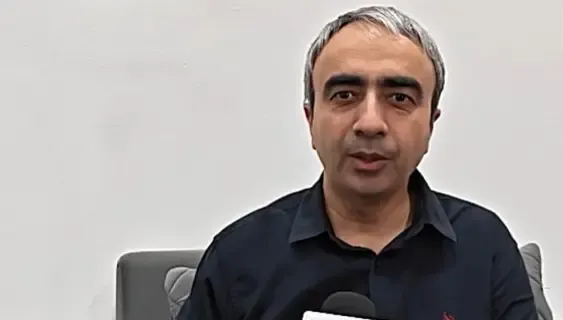
Rohtak, April 25: Aam Aadmi Party (AAP) leader Anurag Dhanda on Saturday accused the Bharatiya Janata Party (BJP) of acting out of fear following AAP's rapid expansion in Gujarat, even as Rajya Sabha MP Raghav Chadha and six other AAP parliamentarians formally merged with the BJP. Dhanda made the remarks in Rohtak, asserting that the ruling party's actions — from alleged agency pressure to social media censorship — reflect desperation rather than political confidence.
AAP's Gujarat Surge Triggers BJP's 'Fear Tactics', Claims Dhanda
Speaking to news agency IANS, Anurag Dhanda said the BJP is rattled by AAP's accelerating footprint in Gujarat, a state the BJP has governed uninterrupted since 1995. "The BJP is afraid of the Aam Aadmi Party. The way AAP is rapidly progressing in Gujarat has unnerved them," he stated.
Dhanda alleged that the BJP has deployed investigative agencies, intimidation tactics, and coercion against AAP members to stall the party's growth. He framed these alleged actions as a systemic attempt to destabilize an opposition party gaining ground in BJP's most prized electoral territory.
This is not the first time AAP has raised such allegations. Arvind Kejriwal's arrest in the Delhi liquor policy case in March 2024 was similarly described by AAP as political persecution, a charge the BJP and central agencies have consistently denied.
Social Media Accounts Allegedly Blocked in Gujarat
Dhanda also alleged that AAP's digital presence in Gujarat has been actively suppressed, with Instagram and Facebook handles linked to the party reportedly blocked. "This is an attack on freedom of speech. They want to silence us, but no matter what they do, they cannot stop Arvind Kejriwal," he declared.
If verified, the blocking of social media accounts would represent a significant escalation in the political battle for Gujarat. AAP had made a notable debut in the 2022 Gujarat Assembly elections, winning 5 seats and securing a 12.9% vote share — a performance that alarmed the BJP establishment despite falling short of a breakthrough.
Dhanda invoked the legacy of Mahatma Gandhi, Subhas Chandra Bose, and Bhagat Singh, drawing a parallel between AAP's current struggle and India's freedom movement, arguing that history honours those who resist rather than those who capitulate.
Sanjay Singh Seeks Termination of Defecting MPs' Membership
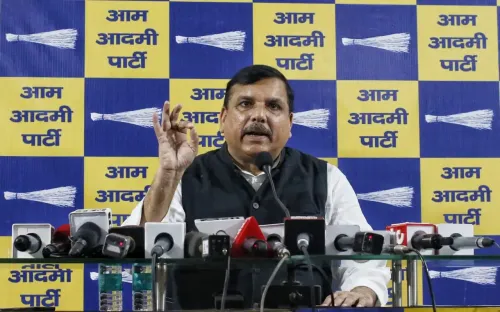
AAP leader Sanjay Singh has written to the Rajya Sabha Chairperson demanding the termination of membership of the seven MPs who have joined the BJP. Singh argued that the defecting members have forfeited their legal right to continue in the Upper House under the Tenth Schedule of the Constitution, which governs anti-defection provisions.
The move is legally significant. Under the Tenth Schedule, a merger is valid only if two-thirds or more of a party's legislative group joins another party. AAP currently has 10 Rajya Sabha members, meaning at least 7 must merge for the constitutional provision to apply — which is precisely what Chadha and his colleagues claim to have done.
Legal experts note this is a grey area: whether a parliamentary group merger also triggers a formal party merger, or merely protects individual members from disqualification, remains subject to interpretation by the Rajya Sabha Chairman.
Raghav Chadha Formally Announces BJP Merger
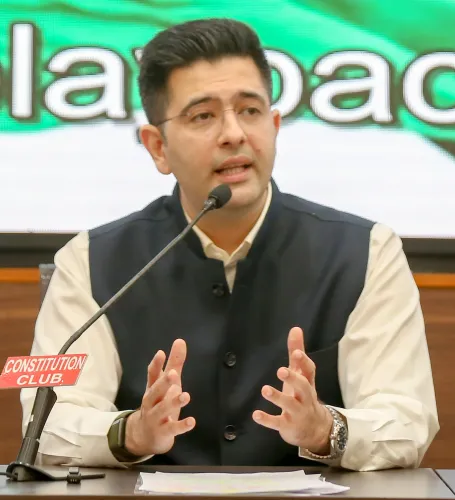
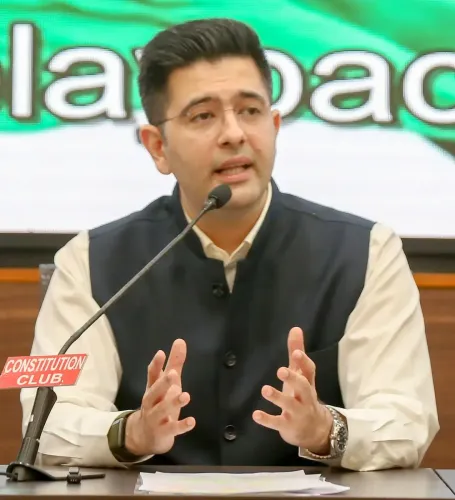
On Friday, April 24, Raghav Chadha — the Rajya Sabha MP from Punjab — officially announced the merger at a press conference flanked by his colleagues. "We, the two-thirds members belonging to AAP in the Rajya Sabha, have decided to exercise provisions of the Constitution of India and merge ourselves with the BJP," he said.
The announcement came after months of reported friction between Chadha and the AAP central leadership. Chadha, once among AAP's most prominent faces and a close aide of Kejriwal, had been conspicuously absent from key party events in recent months, fuelling speculation about an impending split.
The defection is a significant blow to AAP's parliamentary presence. With seven of its ten Rajya Sabha members now aligned with the BJP, the party's ability to raise issues or block legislation in the Upper House is severely diminished.
Bigger Picture: What This Means for AAP and Indian Politics
The mass defection exposes a deepening crisis within AAP that goes beyond Gujarat. The party, which swept Delhi in 2020 with 62 of 70 seats, has faced a string of setbacks — including its 2025 Delhi Assembly defeat, leadership arrests, and now the haemorrhaging of its Rajya Sabha bloc.
Critics argue that AAP's narrative of victimhood — blaming the BJP for every internal fracture — risks losing credibility with voters who expect accountability from a party that built its identity on transparency and anti-corruption. The BJP, on the other hand, gains both parliamentary numbers and a powerful symbolic victory by absorbing AAP's own MPs.
With Gujarat local body elections and Bihar Assembly elections on the horizon, the political fallout from this defection will be closely watched. Whether AAP can sustain its grassroots momentum in Gujarat despite losing its parliamentary voice — and whether Sanjay Singh's disqualification petition gains traction — will shape the party's trajectory in the months ahead.
Point of View
Arrests, and electoral losses as external conspiracies. The deeper irony is that the BJP's alleged campaign to weaken AAP in Gujarat may inadvertently keep the party's martyrdom narrative alive — the very fuel that powered AAP's 2022 Gujarat debut. What happens next in the Rajya Sabha Chairman's office will set a precedent for how India handles parliamentary group mergers in the age of competitive coalition politics.
NationPress
30 Sept 2026
Frequently Asked Questions
Why did Raghav Chadha and AAP MPs join the BJP?
Raghav Chadha and six other AAP Rajya Sabha MPs cited constitutional provisions allowing a two-thirds parliamentary group to merge with another party. The move followed months of reported tensions between Chadha and the AAP central leadership.
What is AAP's response to the Raghav Chadha defection?
AAP leader Anurag Dhanda alleged the BJP is acting out of fear due to AAP's growing influence in Gujarat, and accused the ruling party of using agencies and social media censorship to suppress the opposition. AAP's Sanjay Singh has also written to the Rajya Sabha Chairperson seeking disqualification of the defecting MPs.
Can the defecting AAP MPs be disqualified under the anti-defection law?
Under the Tenth Schedule of the Constitution, a merger is valid if at least two-thirds of a party's parliamentary group joins another party. With 7 of AAP's 10 Rajya Sabha members merging, the constitutional threshold is met — but the Rajya Sabha Chairman must rule on whether this constitutes a valid merger or a disqualifiable defection.
What is AAP's current strength in the Rajya Sabha after the defection?
After seven MPs merged with the BJP, AAP's Rajya Sabha strength has dropped to approximately three members, significantly weakening its ability to participate in parliamentary proceedings or block legislation in the Upper House.
How has AAP performed in Gujarat elections?
In the 2022 Gujarat Assembly elections, AAP won 5 seats and secured a 12.9% vote share — its first significant electoral footprint in the state. The party has been trying to consolidate this base ahead of future elections, which the BJP views as a direct threat to its 30-year dominance in Gujarat.