What Does the Launch of Citadel Campus Mean for India’s Defence Manufacturing?
Synopsis
The launch of the Citadel Campus by Raghu Vamsi Aerospace Group marks a transformative moment for India's defence manufacturing, showcasing indigenous capabilities and advanced technologies. This initiative not only enhances production but also signifies India's growing self-reliance in defence innovations.
Key Takeaways
Citadel Campus signifies a leap in India's defence manufacturing capabilities.
Integrates various processes of defence system development under one roof.
Aims to foster self-reliance and reduce dependency on imports.
Introduces advanced unmanned and autonomous systems designed for modern warfare.
Establishes strategic partnerships to enhance innovation in the defence sector.
New Delhi, Dec 28 (NationPress) A significant milestone in India’s defence manufacturing evolution is unfolding just outside Hyderabad.
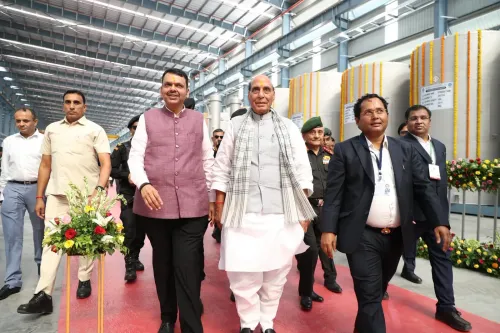
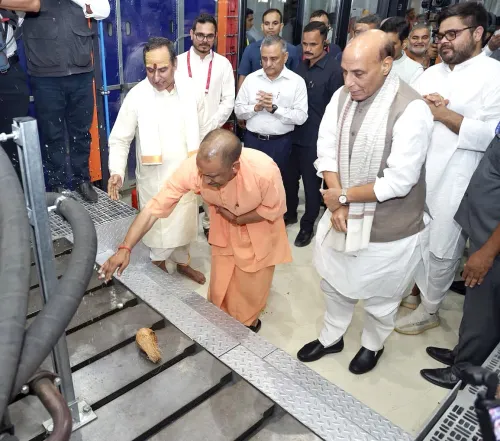
The Raghu Vamsi Aerospace Group has inaugurated its new Citadel Campus at Hardware Park, located near the international airport, marking a crucial development for the nation’s burgeoning private defence sector.
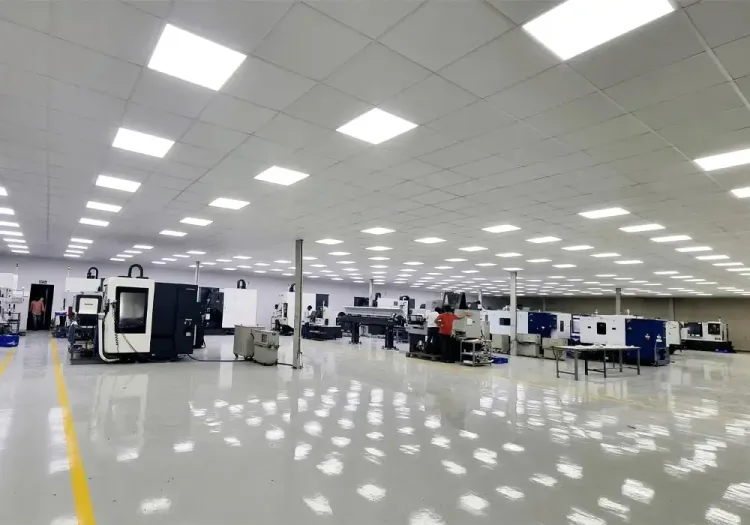
Covering an area of 25,000 square feet and built at an investment exceeding Rs 100 crore, the Citadel Campus transcends the notion of a typical industrial site.
This facility integrates design, manufacturing, assembly, testing, and validation of defence systems, showcasing the advancements in India’s defence ecosystem.
What was once confined to licensed production and basic assembly has evolved into full-scale, indigenous capabilities.
The new campus bolsters Raghu Vamsi Aerospace Group's involvement in strategic defence initiatives. The company already operates ten manufacturing sites across three countries and employs over 1,000 skilled professionals.
It provides critical aero-engine and missile subsystems to both global aerospace firms and Indian defence public sector units. With the establishment of the Citadel Campus, the group aims to enhance production efficiency, expand manufacturing, and tackle more intricate defence projects.
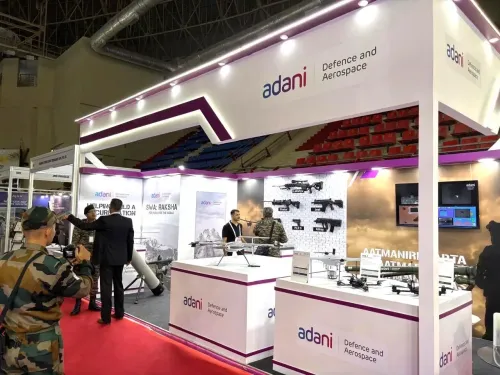
During the launch event, the company introduced a variety of indigenously developed unmanned and autonomous defence systems, including jet-powered loitering munitions, long-endurance kamikaze drones, tethered surveillance platforms, and autonomous ground combat systems.
Built for contemporary warfare, these platforms can execute tasks such as surveillance, deep-strike missions, battlefield logistics, and mission support. Some systems boast operational ranges exceeding 300 kilometres and speeds up to 650 km/h, underscoring India’s increasing prowess in cutting-edge defence technologies.
The new offerings, branded as RV Astra, RV Maya, RV Lakshya, RV Rudra, RV Indra, RV Yodha, and RV Drishti, signify a departure from dependence on imported unmanned systems.
They illustrate that Indian companies are now equipped to design and manufacture sophisticated platforms tailored to the challenges of future battlefields.
In addition to infrastructure and product advancements, Raghu Vamsi Aerospace Group announced several strategic partnerships to fortify India’s defence innovation landscape.
A notable agreement was reached with the Indian Army’s 515 Army Base Workshop to collaboratively design, develop, test, and validate advanced drone technologies.
This partnership will assist the workshop in becoming a system integrator and establishing dedicated drone manufacturing capabilities.
Another significant collaboration was formed with Bharat Dynamics Limited to co-develop and supply fully indigenized engines in the 200 kgf thrust class for future autonomous fighter aircraft.
This alliance is viewed as a pivotal move towards enhancing India’s capabilities in aero-engine propulsion, an essential aspect of advanced air combat systems.
The company also forged partnerships with academic and research institutions, including an agreement with IIIT Hyderabad aimed at developing artificial intelligence-based autonomy, intelligent perception, and swarm technologies for defence UAVs.
A separate MoU with the International Advanced Research Centre for Powder Metallurgy and New Materials (ARCI) seeks to advance technologies like additive manufacturing, laser cladding, and thermal barrier coatings for aero-engines.
Point of View
It's evident that the establishment of the Citadel Campus is a strategic move that aligns with India's vision of becoming a self-sufficient defence powerhouse. This development not only strengthens our defence capabilities but also fosters innovation and collaboration within the private sector, ultimately benefiting the nation.
NationPress
21 Sept 2026
Frequently Asked Questions
What is the Citadel Campus?
The Citadel Campus is a new facility launched by Raghu Vamsi Aerospace Group, designed to integrate the design, manufacturing, testing, and validation of defence systems, marking a significant step in India's defence manufacturing landscape.
What technologies are being developed at the Citadel Campus?
The campus focuses on advanced defence technologies, including unmanned systems like jet-powered loitering munitions, kamikaze drones, and autonomous ground combat systems, designed for modern warfare.
How does Citadel Campus contribute to India's defence sector?
The Citadel Campus enhances production speed, fosters self-reliance, and enables Indian companies to design and manufacture sophisticated defence platforms, reducing dependence on imports.
What partnerships have been established with the Citadel Campus?
Raghu Vamsi Aerospace Group has signed agreements with the Indian Army for drone development and with Bharat Dynamics Limited for co-developing indigenized engines for future fighter aircraft.
What is the significance of the investments made in Citadel Campus?
The investment of over Rs 100 crore signifies a commitment to advancing India's defence capabilities and establishing a robust infrastructure for innovative defence solutions.