CJI Surya Kant Advocates for Sustainable Energy and Growth in India’s Future

Synopsis
In a compelling address, Chief Justice Surya Kant emphasizes the importance of aligning India's economic growth with ecological sustainability as the nation looks forward to 2047. He advocates for a balanced approach to energy justice and the crucial role of law and innovation in achieving these goals.
Key Takeaways
Energy justice is essential for equitable development.
India's growth must align with environmental sustainability .
Bengaluru exemplifies the coexistence of tradition and transformation .
The judiciary must ensure adherence to constitutional standards .
Proactive measures are key to preventing environmental damage .
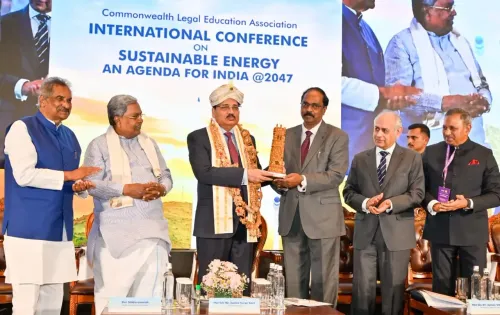
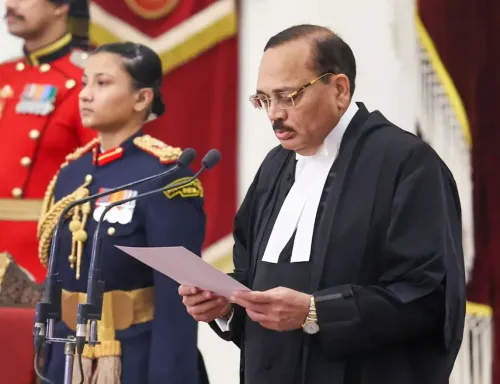
Bengaluru, April 18 (NationPress) Chief Justice of India (CJI) Surya Kant articulated the necessity for a fresh perspective on law, policy, and innovation to foster energy justice. He asserted that as India approaches 2047, its trajectory of development must ensure a balance between economic growth and environmental sustainability.
In his keynote address at the Commonwealth Legal Education Association (CLEA) International Conference on Sustainable Energy, themed "An Agenda for India @ 2047", he highlighted that realizing energy justice necessitates a meticulous balancing act between developmental aspirations and a commitment to a greener future.
The CJI cited Bengaluru as a prime example of how tradition and transformation can thrive concurrently.
He observed that contemporary infrastructure, such as software parks, exists in harmony with green spaces, illustrating a model for reconciling progress with environmental preservation.
This harmonious coexistence, he noted, emphasizes the potential for crafting an equitable energy future through the fair distribution of both benefits and responsibilities, transparent decision-making, and acknowledgment of vulnerable communities.
According to the Chief Justice, India's vision for 2047 should align economic growth with ecological responsibility.
He underscored that safeguarding the environment and achieving economic success should not be viewed as mutually exclusive, particularly for a developing nation.
He portrayed energy justice as a moral framework that facilitates growth without infringing upon citizens' rights to clean air, water, and a sustainable future.
In addressing concerns about harmonizing development with environmental conservation, the Chief Justice asserted that these objectives are not incompatible.
Drawing from constitutional principles, he highlighted that India's legal framework necessitates that development and environmental protection advance in tandem.
Referring to Article 21, he pointed out that both the right to development and the right to a clean environment are integral to its provisions, thus laying the groundwork for balance.
He urged the reinforcement of existing commitments rather than diverging from them and stressed that transitions should be tailored to the capabilities of vulnerable communities.
Furthermore, the Chief Justice emphasized the Judiciary's role in ensuring that development decisions conform to constitutional standards of fairness, transparency, and accountability.
He remarked that while courts have historically intervened to safeguard the environment, there is a need for a more nuanced approach now.
He warned against viewing all development projects with skepticism, while also cautioning against complacency that undermines environmental protections.
Instead, he called for a transition from a reactive stance to one that incorporates environmental protection into the planning of development initiatives.
The Chief Justice noted the evolution of environmental jurisprudence, stating that the focus has shifted from post-damage liability to proactively preventing pollution.
He emphasized that the pivotal question now is whether all reasonable measures have been taken to avert pollution from the outset.
Point of View
Chief Justice Surya Kant's address highlights the intersection of law, policy, and sustainability in shaping India's energy future. His emphasis on energy justice reflects a growing recognition of the need for equitable development that respects both economic aspirations and environmental imperatives. This balanced approach is crucial for India as it strives towards its centenary of independence in 2047.
NationPress
21 Sept 2026
Frequently Asked Questions
What is energy justice?
Energy justice refers to the fair distribution of both the benefits and burdens of energy production and consumption, ensuring access to clean and sustainable energy for all.
Why is balancing growth and sustainability important?
Balancing growth and sustainability is vital to ensure that economic development does not compromise environmental health, thus safeguarding resources for future generations.
How does the Chief Justice propose to achieve energy justice?
The Chief Justice suggests a reimagining of laws and policies to integrate environmental protections into development initiatives, ensuring a fair distribution of benefits and responsibilities.
What role does the judiciary play in environmental protection?
The judiciary plays a critical role by ensuring that development decisions adhere to constitutional standards of fairness, transparency, and accountability, thus protecting environmental rights.
What is the significance of Article 21 in this context?
Article 21 of the Indian Constitution guarantees the right to life and personal liberty, which includes the right to a clean environment and sustainable development.