Delhi Health Minister on pollution: 'Magic doesn't happen in a single day'
Synopsis
Delhi Health Minister Pankaj Kumar Singh defended the government's anti-pollution record on Wednesday, saying results take time and 'magic doesn't happen in a single day' — even as GRAP Stage III was revoked following an AQI improvement. With BS4 vehicle curbs, a growing EV bus fleet, and ₹1 lakh support for 500 PUCC centres, the government is betting on a layered long-term fix over quick wins.
Key Takeaways
Delhi Health Minister Pankaj Kumar Singh on 18 November 2026 said anti-pollution measures take time, warning that 'magic does not happen in a single day.' The government has restricted entry of BS4 vehicles from outside Delhi to reduce vehicular pollution during winter.
Dedicated beds, nebulisation facilities, and medicines have been arranged at all hospitals since October for pollution-related illnesses.
The CAQM Sub-Committee revoked GRAP Stage III on Tuesday, citing an improving AQI trend in Delhi.
The Delhi Cabinet approved ₹1 lakh one-time assistance for each of around 500 eligible PUCC locations across the city.
Delhi reportedly now operates the largest fleet of EV buses in the country, according to the Minister.
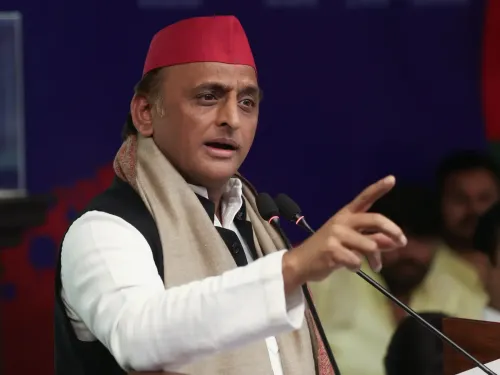
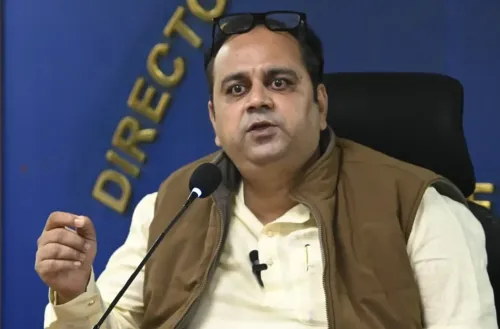
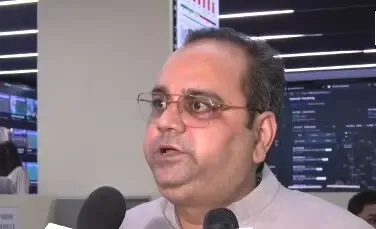
Delhi Health Minister Pankaj Kumar Singh on Wednesday, 18 November 2026, said the state government has taken significant steps to curb air pollution in the national capital, while cautioning that such measures require time to deliver results. 'Magic does not happen in a single day; it takes some time to fix what has been ruined,' Singh told reporters in New Delhi.
Key Statements by the Health Minister
Addressing the media, Singh said collective effort is essential for achieving cleaner air in Delhi. He pointed to the seasonal pattern of pollution spikes — particularly during winter and around Diwali — attributing part of the problem to the influx of BS4 vehicles from outside the city. 'Since outside vehicles — especially BS4 vehicles — enter the city, given their fitness levels, so many vehicles coming in further add to pollution,' he said, adding that the Delhi government has restricted the entry of such vehicles for now.
Health Preparedness for Pollution-Related Illnesses
On the Rekha Gupta-led government's health readiness, Singh asserted that the Delhi government's Health Department is fully prepared. He said instructions had been issued since October for dedicated bed arrangements and doctors across all facilities. 'If any patient arrives with breathing difficulties, adequate medicines, nebulisation facilities, and beds are available in every hospital to stabilise and comfort them,' the Minister said. He added: 'I want to ensure the residents of Delhi that there will be no negligence when it comes to their health.'
GRAP Stage III Revoked as AQI Improves
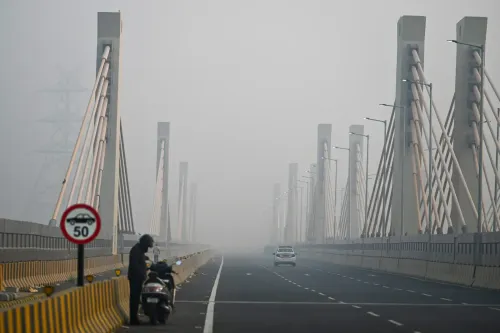
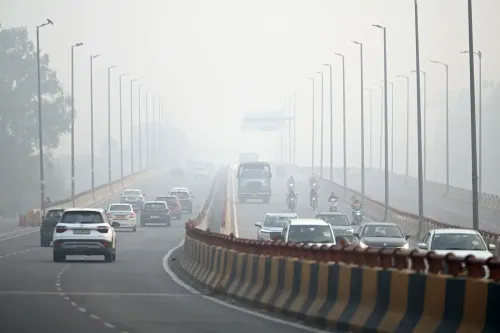
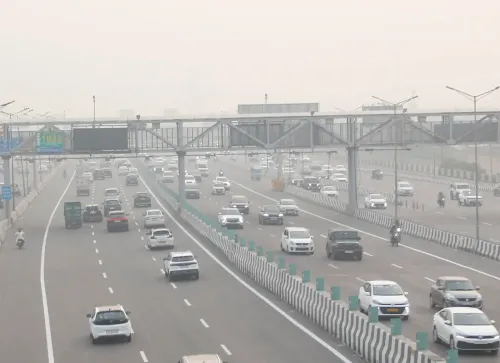
This comes amid a development on the regulatory front: the Sub-Committee on Graded Response Action Plan (GRAP) of the Commission for Air Quality Management in NCR and Adjoining Areas (CAQM) on Tuesday decided to revoke GRAP Stage III and shift to a less stringent set of restrictions, citing an improving trend in Delhi's Air Quality Index (AQI). The move signals a modest easing of emergency-level pollution curbs that had been in force across the capital region.
EV Push and Transport Pollution Controls
Reacting to the GRAP Stage III revocation, Singh highlighted the role of Delhi's Electric Vehicle (EV) Policy and urged more residents to transition to electric vehicles. 'The contribution of EVs in this regard is quite significant. We want people to comfortably adopt the EV policy and switch their vehicles to EVs in the coming days,' he said. The Minister noted that pollution from cars, two-wheelers, and three-wheelers is being controlled considerably, and added that Delhi's bus fleet is also being converted to EVs. 'Delhi now has the largest fleet of EV buses,' Singh said.
Financial Support for PUCC Centres
The Health Minister also disclosed that the Delhi Cabinet has approved a one-time financial assistance of ₹1 lakh for each of around 500 eligible Pollution Under Control Certificate (PUCC) locations across the city. The measure is intended to strengthen the pollution check infrastructure at the ground level. 'We are working towards a cleaner Delhi,' he said. With GRAP restrictions easing and EV adoption being pushed as a long-term fix, the government's anti-pollution strategy now hinges on sustained enforcement and behavioural change among residents.
Point of View
But it also defers accountability — Delhi's winter air quality crisis is a recurring, predictable event, not a surprise. The GRAP Stage III revocation is welcome news, but it reflects weather-driven AQI shifts as much as policy impact. The EV bus fleet claim is worth scrutinising: fleet size alone does not translate into reduced on-road emissions unless operational coverage and routes are verified. The ₹1 lakh PUCC support is a marginal intervention in a city where enforcement of existing norms remains patchy. Long-term credibility on air quality will require Delhi to publish verifiable, source-wise emission reduction data — not just announce schemes.
NationPress
18 Nov 2026
Frequently Asked Questions
What did Delhi Health Minister Pankaj Kumar Singh say about air pollution measures?
Singh said the Delhi government has taken significant steps to curb pollution but that results take time, stating 'magic does not happen in a single day.' He was speaking to reporters on 18 November 2026 in New Delhi.
Why was GRAP Stage III revoked in Delhi?
The CAQM Sub-Committee revoked GRAP Stage III on Tuesday, citing an improving trend in Delhi's Air Quality Index (AQI). The decision switches the city to a less stringent set of pollution-control restrictions.
What health preparations has the Delhi government made for pollution season?
The Delhi government issued instructions since October for dedicated bed arrangements, doctors, nebulisation facilities, and medicines at all hospitals to treat patients with breathing difficulties caused by pollution.
What is the Delhi government doing to curb vehicular pollution?
The government has restricted entry of BS4 vehicles from outside Delhi, is converting its bus fleet to electric vehicles — claiming the largest EV bus fleet in the country — and is promoting its EV Policy to encourage residents to switch to electric vehicles.
What is the ₹1 lakh financial assistance for PUCC centres?
The Delhi Cabinet has approved a one-time financial assistance of ₹1 lakh for each of approximately 500 eligible Pollution Under Control Certificate (PUCC) locations across the city to strengthen ground-level pollution check infrastructure.