ECI rejects voter deletion fears, clarifies SIR notice affects 32 lakh Delhi voters
Synopsis
The Election Commission has served notices to nearly 32 lakh Delhi voters — including senior ministers, former CMs, and a former Vice President — as part of electoral roll verification. Despite viral claims, the ECI says receiving a notice does not mean deletion; voters have until 29 November 2026 to respond.
Key Takeaways
The ECI issued a clarification on 20 September 2026 , rejecting social media claims that SIR notices equal voter name deletion from Delhi rolls.
Notices have been sent to nearly 32 lakh Delhi voters with data discrepancies or unresolved links to the last Intensive revision.
No name can be deleted without a hearing and a speaking, appealable order, the ECI stated.
Prominent recipients include Delhi CM Rekha Gupta , External Affairs Minister S.
Jaishankar , former CM Arvind Kejriwal , and former VP Jagdeep Dhankhar .
All notices must be disposed of by 29 November 2026 ; the Final Electoral Roll will be published on 4 November 2026 .
Affected voters can submit replies and documents to their ERO or BLO; the prescribed documents list is indicative, not exhaustive.
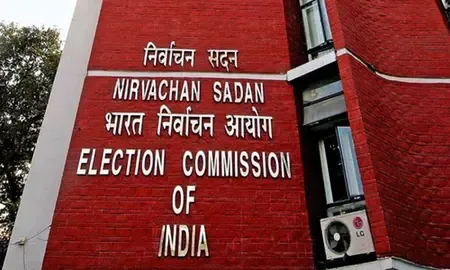
The Election Commission of India (ECI) on Sunday, 20 September 2026, moved to counter a wave of misinformation circulating on social media, firmly clarifying that system-generated notices issued under the Special Intensive Revision (SIR) 2026 process do not translate to deletion of voters' names from Delhi's electoral rolls. The clarification comes as reports emerge that notices have been served to nearly 32 lakh voters in the national capital, including several prominent political figures.
What the SIR Notices Actually Mean
The Commission stated unequivocally that notices are being issued to only two categories of voters whose names appear in the Draft Electoral Rolls. The first category comprises those who could not be linked with the electoral roll of the last Intensive revision, and the second covers those with logical discrepancies in their linking with that roll.
'No name can be deleted without giving an opportunity of being heard and a proper speaking and appealable order. Therefore, there is no existential crisis as is being brought out in Social and Print Media,' the ECI said in an official statement.
How Affected Voters Can Respond
Voters who have received notices can submit a reply or requisite documents to the Electoral Registration Officer (ERO) or the Booth Level Officer (BLO) concerned. The ECI clarified that the list of prescribed documents is indicative, not exhaustive — meaning officials retain discretion to consider available evidence.
'EROs, being the statutory authority, will take a final decision based on the available documents and report of BLO,' the Commission noted. A full list of electors served notices is publicly accessible on the websites of the Chief Electoral Officer (CEO), Delhi, and District Election Officers, as well as at Voter Centres.
Key Deadline: November 29
The disposal of all notices is to be completed by 29 November 2026, as per the SIR 2026 schedule. The names of electors successfully responding to notices will be included in the Final Electoral Roll, set for publication on 4 November 2026. This compressed timeline underscores the administrative urgency of the exercise.
Notable Names on the Notices List
The scale and reach of the notices have drawn attention given the profile of those named. Among those whose draft-roll entries carry discrepancies and have been issued notices are Delhi Chief Minister Rekha Gupta, Union External Affairs Minister S. Jaishankar, former Deputy Prime Minister L.K. Advani, Bharatiya Janata Party (BJP) MP Bansuri Swaraj, former Delhi Chief Minister Arvind Kejriwal, and former Deputy Chief Minister Manish Sisodia.
Notices have also reportedly been served to Congress MP Abhishek Singhvi, former Vice President Jagdeep Dhankhar, former Army Chief General Upendra Dwivedi, and former Election Commissioner S.S. Sandhu. The ECI has emphasised that receiving a notice carries no automatic consequence — it is the start of a procedural verification, not an order for deletion.
Context: Why the Clarification Was Needed
The SIR process is a periodic exercise to clean up electoral rolls by verifying voter data in the ECINET system. This round, however, appears to have triggered unusual anxiety online, with social media posts reportedly suggesting that notices were a precursor to mass disenfranchisement. The ECI's statement is a direct pushback against that narrative. Notably, this is the first SIR since the 2025 Delhi Assembly elections, making any roll revision exercise politically sensitive in a city that has seen closely contested electoral cycles.
As the November deadline approaches, the Commission's ability to process nearly 32 lakh notices efficiently — while maintaining procedural fairness — will be closely watched by political parties and civil society alike.
Point of View
But the optics of issuing notices to nearly 32 lakh voters — including a sitting Chief Minister, a Union Cabinet minister, and a former Vice President — were always going to invite political controversy in a city as electorally charged as Delhi. What the Commission has not addressed is why the ECINET data gaps are so extensive that even well-documented public figures have unresolved linkages. That structural question, about the reliability and maintenance of electoral databases, is more consequential than the immediate misinformation cycle. The November 29 deadline is tight; a process that prioritises speed over diligence risks replacing one controversy with another.
NationPress
20 Sept 2026
Frequently Asked Questions
Does receiving an ECI SIR notice mean your name will be deleted from Delhi's voter rolls?
No. The Election Commission has explicitly clarified that issuance of a notice under SIR 2026 does not mean an elector's name will be deleted. No deletion can happen without a hearing and a speaking, appealable order.
Who has been issued SIR notices in Delhi?
Nearly 32 lakh Delhi voters have been issued notices. Among prominent recipients are Delhi Chief Minister Rekha Gupta, External Affairs Minister S. Jaishankar, former Deputy PM L.K. Advani, former CM Arvind Kejriwal, former Deputy CM Manish Sisodia, Congress MP Abhishek Singhvi, former Vice President Jagdeep Dhankhar, former Army Chief General Upendra Dwivedi, and former Election Commissioner S.S. Sandhu.
Why has the ECI issued these notices?
Notices are issued to two categories of voters: those whose names could not be linked to the electoral roll of the last Intensive revision, and those with logical discrepancies in that linkage. The exercise is part of SIR 2026, a periodic process to clean and verify voter data in the ECINET system.
What should voters do if they receive a SIR notice?
Affected voters should submit a reply and any requisite documents to their Electoral Registration Officer (ERO) or Booth Level Officer (BLO). The ECI has clarified that the prescribed documents list is indicative, not exhaustive, giving EROs discretion on available evidence.
What is the deadline for the SIR 2026 notice process in Delhi?
All notices must be disposed of by 29 November 2026. The names of electors who respond successfully will be included in the Final Electoral Roll, scheduled for publication on 4 November 2026.