Ex-Kerala CEO Teeka Ram Meena: CEC Gyanesh Kumar violated poll law on Form 6
Synopsis
A former Kerala Chief Electoral Officer has gone public with serious allegations against Chief Election Commissioner Gyanesh Kumar — accusing him of bypassing majority rule within the three-member Election Commission and violating the Representation of the People Act, 1950 through unilateral changes to Form 6. The charge strikes at the heart of the poll body's constitutional independence.
Key Takeaways
Former Kerala CEO Teeka Ram Meena alleged on 26 September 2026 that CEC Gyanesh Kumar acted arbitrarily on Form 6 changes.
Meena claimed the changes violated the Representation of the People Act, 1950 and Election Rules of 1961 .
He wrote formally to both Gyanesh Kumar and Election Commissioner Sukhbir Singh Sandhu , his IAS batchmates, flagging his concerns.
Meena asserted that decisions by the three-member ECI must reflect a majority view , not a unilateral order.
He warned the Election Commission must resist pressure from any quarter, including the Prime Minister , citing full constitutional immunity.
The Election Commission of India had not issued a public response as of the time of reporting.
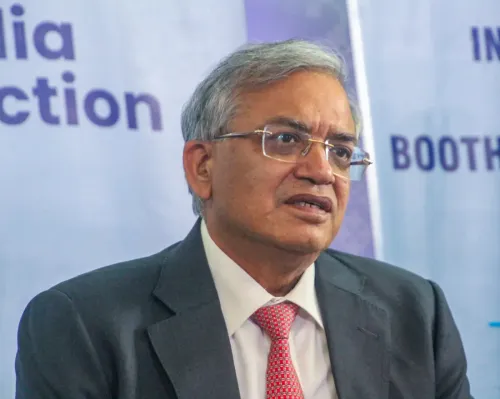
Former Kerala Chief Electoral Officer Teeka Ram Meena, a retired IAS officer, has alleged that Chief Election Commissioner (CEC) Gyanesh Kumar acted arbitrarily while pushing through changes related to Form 6 — the document used for inclusion of names in electoral rolls — bypassing the collective decision-making process mandated by the three-member Election Commission of India (ECI).
What Meena Alleged
Speaking on Saturday, 26 September 2026, from Thiruvananthapuram, Meena said the changes made to Form 6 were contrary to the Representation of the People Act, 1950 and the Election Rules of 1961. He argued that alterations with a statutory bearing could not legally be introduced through a mere executive order.
'The Election Commission is taking independent decisions. With three members, the majority view has to be taken. But Gyanesh acted arbitrarily,' Meena said.
He further alleged: 'Transparency was flouted by Gyanesh,' adding that the manner in which the changes were introduced marked a departure from the ECI's established functioning.
Letters to Fellow Batchmates
Meena confirmed he had formally written to both CEC Gyanesh Kumar and Election Commissioner Sukhbir Singh Sandhu — both of whom are his IAS batchmates — flagging his concerns. He stressed that the other two Election Commissioners had every right to place on record their differences with the CEC, and that failing to do so would itself be a breach of constitutional duty.
'I wrote to both my batchmates pointing out these issues,' Meena said, underscoring that the matter involved not merely a clash of opinion but the interpretation and application of statutory provisions.
Commission Must Resist All Pressure, Including From PM
In a pointed remark, Meena said the Election Commission, as an independent constitutional body, must resist pressure from any quarter — including from the Prime Minister. 'The Election Commission just cannot succumb to any sort of pressure, even from the Prime Minister, as they are given full immunity,' he said.
This is a notable escalation in public discourse around the ECI's independence, as critics have long argued that the appointment process for Election Commissioners leaves the body vulnerable to executive influence. Notably, this is not the first time the internal functioning of the Election Commission has drawn scrutiny — differences within multi-member benches have surfaced periodically since the panel was expanded to three members.
Broader Context: ECI Under Scrutiny
Meena's remarks come at a time when the three-member Election Commission has been under intense public and judicial scrutiny over reported differences within the panel, particularly regarding the procedure for the inclusion of names in electoral rolls. Critics argue that unilateral changes to voter registration processes — if proven — could have significant downstream effects on electoral integrity ahead of state and general elections.
The Election Commission has not issued a public response to Meena's allegations as of the time of this report. How the Commission addresses questions around internal majority-rule and statutory compliance is likely to shape public confidence in the poll body going forward.
Point of View
That is not just an internal disagreement — it is a constitutional question. The specific allegation that Form 6 changes were pushed through by executive order, bypassing the Representation of the People Act, deserves legal scrutiny, not just political commentary. What mainstream coverage risks missing is that this is part of a larger pattern: since the Election Commission was expanded to three members, the design was meant to prevent unilateral action — and yet the accountability mechanism for enforcing that remains opaque. The Commission's silence in response to a former senior officer's formal letters is itself a disclosure failure.
NationPress
26 Sept 2026
Frequently Asked Questions
What is Teeka Ram Meena's allegation against CEC Gyanesh Kumar?
Teeka Ram Meena, a retired IAS officer and former Kerala Chief Electoral Officer, has alleged that CEC Gyanesh Kumar introduced changes to Form 6 — used for voter roll inclusions — unilaterally, ignoring the other two Election Commissioners and violating the majority-view requirement of the three-member panel. He also alleged the changes breached the Representation of the People Act, 1950.
What is Form 6 and why does it matter?
Form 6 is the official application form used by citizens to register their names in the electoral rolls. Any changes to its format or procedure carry statutory weight and directly affect who can vote. Meena's allegation is that changes of this significance cannot be made through a mere executive order.
Did Meena formally raise these concerns with the Election Commission?
Yes. Meena confirmed he wrote formally to both CEC Gyanesh Kumar and Election Commissioner Sukhbir Singh Sandhu — both his IAS batchmates — outlining his differences of opinion and flagging the procedural and legal concerns.
Why does Meena's reference to the Prime Minister matter?
Meena explicitly said the Election Commission 'cannot succumb to any sort of pressure, even from the Prime Minister,' invoking the constitutional immunity granted to the poll body. The remark signals concern that external pressure may be influencing the Commission's internal decisions, though he did not cite any specific instance.
How has the Election Commission responded to these allegations?
As of the time of this report, the Election Commission of India had not issued a public response to Meena's allegations. The absence of a reply to his formal letters to fellow commissioners has itself been flagged by him as a transparency concern.