Is Good Governance a Fundamental Right, as Dr. PK Mishra Claims at National Human Rights Conference?
Synopsis
Dr. PK Mishra, Principal Secretary to the Prime Minister, declared good governance as a fundamental right during the National Conference on Public Services and Dignity for All. His remarks, made on World Human Rights Day, explore the essential role of dignity in daily life and the importance of effective governance for every citizen.
Key Takeaways
Good governance is a fundamental right.
Efficiency and transparency are essential for dignity.
Access to basic needs is crucial for realizing human rights.
Poverty alleviation is a vital human rights intervention.
Future challenges include climate justice and digital rights.
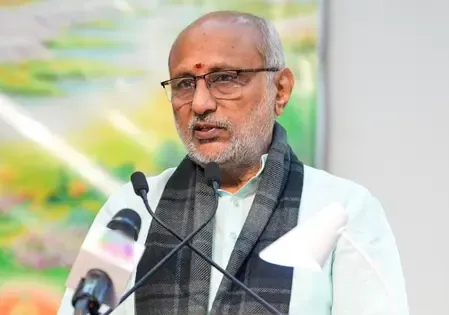
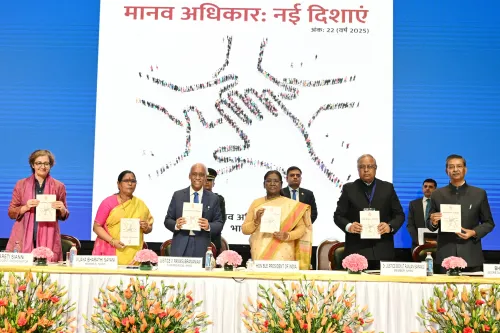
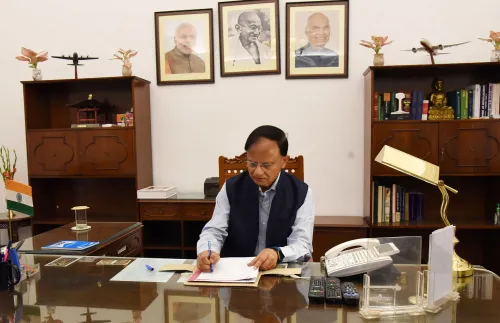
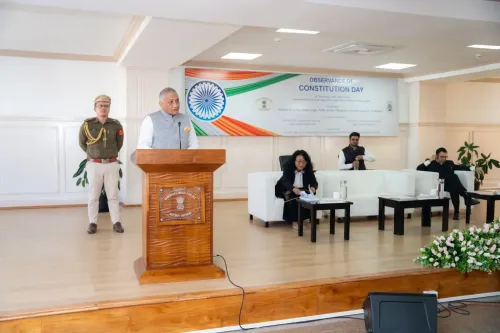
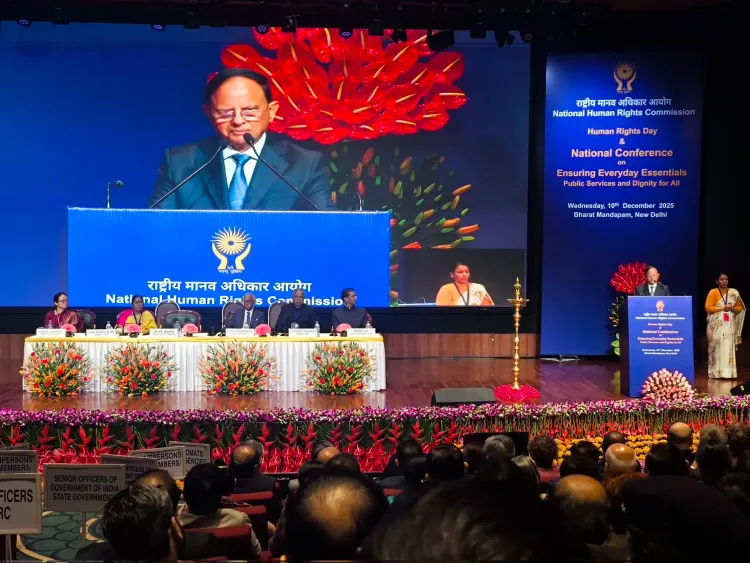
New Delhi, Dec 10 (NationPress) Dr. PK Mishra, the Principal Secretary to the Prime Minister, inaugurated the National Conference on ‘Ensuring Everyday Essentials – Public Services and Dignity for All’ at Bharat Mandapam in New Delhi. He emphasized that good governance should be considered a fundamental right.
He pointed out that efficiency, transparency, grievance redressal, and prompt service delivery are not merely administrative tasks but are essential to maintaining human dignity within a democratic framework.
During his address on World Human Rights Day at the conference, he urged attendees not to view the event as just a formality but as an opportunity to contemplate how dignity is realized in daily life through access to food, clean water, shelter, education, justice, and, increasingly, privacy, mobility, a healthy environment, and digital inclusivity.
Dr. Mishra stated that good governance itself should be recognized as a fundamental right. He reiterated that the principles of efficiency, transparency, grievance redressal, and timely service delivery are foundational to human dignity in a modern democracy. His keynote address coincided with World Human Rights Day, which he described as a moment for reflection on how dignity plays out in daily life.
He referenced Article 25(1) of the Universal Declaration of Human Rights from 1948, which affirms the right to a standard of living adequate for health and well-being, encompassing food, clothing, housing, medical care, and social security in vulnerable times. He recalled India's pivotal role in shaping this Declaration, especially the contributions of Dr. Hansa Mehta, who helped assert that “all human beings are born free and equal,” marking a significant progress for gender equality.
He contended that rights must be realized through access to essential needs like food, water, shelter, education, and justice, and noted that the understanding of human rights has broadened from civil and political liberties to include social, economic, and cultural rights, encompassing technology, digital ecosystems, environmental issues, and emerging vulnerabilities.
Dr. Mishra observed that today’s notion of dignity is influenced not just by freedoms but also by access to privacy, mobility, a clean environment, and digital inclusion. He framed this vision within India’s rich civilizational ethos, highlighting concepts such as dharma, nyaya, karuna, and seva, which advocate for righteous living and welfare, while ahimsa promotes restraint and “vasudhaiva kutumbakam” nurtures a sense of belonging to a larger human family. These ideals have shaped the Constitution, from universal suffrage to enforceable rights and directive principles prioritizing education, health, livelihood, and welfare.
Reflecting on the decade leading up to 2014, he noted that India adopted a rights-based approach through laws like the Right to Education Act, MGNREGA, and the National Food Security Act, but stressed that merely enacting rights without effective delivery undermined trust. Since 2014, the government has focused on a saturation approach to ensure that no eligible beneficiary is overlooked. This marked a transition from theoretical rights to actualized rights, bolstered by digital infrastructure, direct benefit transfers, and outreach efforts like the Viksit Bharat Sankalp Yatra.
He highlighted that poverty alleviation is the most impactful human rights intervention, with 250 million Indians lifted out of poverty in the last decade, as corroborated by the Household Consumption Expenditure Survey 2023–24.
In conclusion, Dr. Mishra called upon institutions to establish frameworks to tackle new challenges as India progresses towards Viksit Bharat 2047. He pointed out pressing issues such as climate change, environmental justice, data protection, algorithmic fairness, responsible AI, gig work vulnerabilities, and digital surveillance.
He envisioned a modern, inclusive nation with livable cities and flourishing villages, underscoring the need for citizen-centered governance, responsible technology usage, and collective efforts to guarantee dignity, justice, and development for everyone.
Point of View
I believe that Dr. PK Mishra's assertions at the National Conference highlight a crucial aspect of governance that resonates deeply with the people. His emphasis on dignity and rights reflects a commitment to ensuring that the benefits of democracy reach all citizens, making this a significant dialogue in our ongoing pursuit of justice and equality.
NationPress
1 Oct 2026
Frequently Asked Questions
What did Dr. PK Mishra say about good governance?
Dr. PK Mishra stated that good governance should be regarded as a fundamental right, emphasizing its importance in ensuring human dignity.
How does good governance impact human dignity?
Good governance impacts human dignity by ensuring efficiency, transparency, grievance redressal, and timely service delivery in a democratic society.
What are the key components of ensuring dignity in public services?
Key components include access to food, water, shelter, education, justice, privacy, mobility, and a clean environment.
What historical significance did Dr. Mishra mention?
Dr. Mishra highlighted India's role in the Universal Declaration of Human Rights, particularly the contributions of Dr. Hansa Mehta in promoting gender equality.
What challenges did Dr. Mishra identify for the future?
Dr. Mishra identified challenges such as climate change, digital privacy, and social justice that need to be addressed as India moves towards Viksit Bharat 2047.