Gujarat adds field and off-road vehicle categories to govt procurement policy
Synopsis
Gujarat has quietly overhauled how its field officers get their vehicles. The new Category-F and Category-F1 additions move the state beyond rank-based entitlements to duty-based procurement — and for the first time, put EVs in the hands of enforcement and field inspection officers, not just desk-bound officials.
Key Takeaways
The Gujarat government amended its vehicle procurement policy to add Category-F (field inspection and enforcement) and Category-F1 (off-road operations).
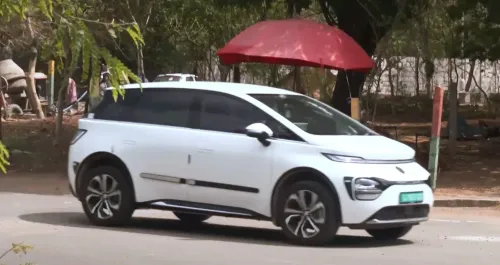
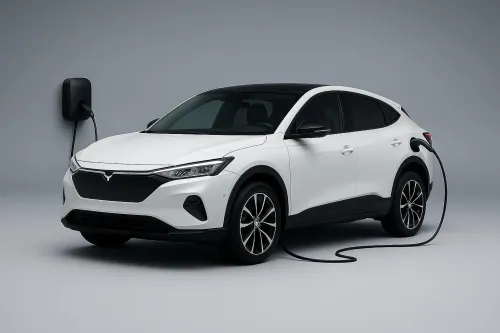
Category-F includes SUVs and electric vehicles , extending EV eligibility beyond office duties to active fieldwork.
Category-F1 covers officers in 8 departments including Home, Forest and Environment, and Revenue, working in difficult terrain.
The revision builds on the 11 April 2023 policy, which had 6 categories (A to E) based on designation.
All procurements must continue via the Government e-Marketplace (GeM) ; exceptions require prior government approval.
The Gujarat government has revised its official vehicle procurement policy to introduce two new categories — Category-F for field inspection and enforcement duties and Category-F1 for off-road operations — while also expanding the scope of electric vehicles (EVs) in the state's government fleet. The amendment, announced on Monday, 13 October 2025, builds on the existing framework established on 11 April 2023.
What the New Categories Cover
Category-F permits government departments to procure SUVs, including electric variants, for field inspection and enforcement work. This marks an expansion of EV eligibility beyond routine office duties to active fieldwork. Category-F1 is specifically designed for officers performing off-road duties, catering to the demanding terrain encountered in forests, remote regions, mineral belts, and construction or development project sites.
Departments falling under Category-F1 include Home; Forest and Environment; Industries and Mines; Narmada, Water Resources, Water Supply and Kalpsar; Panchayats and Rural Housing; Ports and Transport; Roads and Buildings; and Revenue. Each department has been provided a list of approved vehicles from which they may choose based on operational needs.
How the Existing Framework Has Evolved
The 2023 policy — itself a replacement for the 2019 framework — established six main categories, A through E, plus the A1 subcategory. Under that structure, Category-A covered ministers and the Chief Secretary, while A1 was reserved for VVIP state guests. Category-B applied to heads of constitutional bodies, boards, and corporations. Category-C addressed district-level officials, including Collectors, District Development Officers, and Superintendents of Police. Category-D covered heads of departments, and Category-E provided staff cars for government offices.
The revised policy retains all existing designation-based categories intact, layering the two new duty-based categories on top of the existing hierarchy. Notably, this is the first time the procurement policy explicitly recognises operational terrain and the nature of field duties — rather than only rank or designation — as a basis for vehicle entitlement.
Procurement Rules and EV Push
Vehicles must continue to be purchased through the Government e-Marketplace (GeM) at prevailing market prices. Any purchase falling outside the prescribed policy requires approval from the competent authority, supported by specific circumstances and valid justification, along with prior government approval.
The inclusion of EVs in Category-F aligns with Gujarat's broader push to green its government operations, extending the state's electric vehicle adoption from administrative offices to active enforcement and inspection roles. This comes amid a wider national trend of state governments integrating EVs into official fleets to meet sustainability targets.
Impact on Field Officers
The amendment directly addresses a long-standing operational gap. Officers posted in forest areas, remote locations, mineral-rich regions, and infrastructure project sites often faced a mismatch between the vehicles they were entitled to under designation-based categories and the terrain they were required to navigate. The new categories formalise a practical accommodation that reportedly had to be handled through special approvals earlier.
With guidelines now in place, departments can move to procurement through GeM without seeking case-by-case exemptions, potentially streamlining fleet management across several field-intensive departments. How quickly departments actualise procurement under the new categories will be a key indicator of the policy's on-ground impact.
Point of View
Particularly for departments like Forest and Mines where a designation-appropriate sedan is simply the wrong tool. The EV inclusion in Category-F is the more interesting signal: it tests whether Gujarat can make electric vehicles operationally credible in enforcement contexts, not just in air-conditioned secretariat garages. If field officers report satisfactory range and serviceability in remote areas, it could become a template for other states. If not, it risks becoming a compliance box-tick that departments quietly route around via the special-approval clause.
NationPress
12 Oct 2026
Frequently Asked Questions
What are the new vehicle categories introduced in Gujarat's procurement policy?
Gujarat has introduced Category-F for field inspection and enforcement vehicles, including SUVs and electric vehicles, and Category-F1 for officers requiring vehicles suited to off-road operations. Both categories are additions to the existing six-category framework established in 2023.
Which government departments are covered under Category-F1?
Category-F1 covers officers in eight departments: Home; Forest and Environment; Industries and Mines; Narmada, Water Resources, Water Supply and Kalpsar; Panchayats and Rural Housing; Ports and Transport; Roads and Buildings; and Revenue. These departments frequently deploy staff to remote or difficult terrain.
How does the revised policy change the role of electric vehicles in Gujarat's government fleet?
The revised policy expands EV eligibility beyond regular administrative duties to field inspection and enforcement work under Category-F. Previously, EV options under the 2023 policy were more closely associated with standard office-based use.
How must departments procure vehicles under the new policy?
All vehicle purchases must be made through the Government e-Marketplace (GeM) at prevailing market prices. Any purchase outside the prescribed policy requires approval from the competent authority, with valid reasons and prior government sanction.
What was the earlier vehicle procurement framework in Gujarat?
Gujarat's previous policy, introduced on 11 April 2023 to replace a 2019 framework, had six designation-based categories — A through E plus A1. Category-A covered ministers and the Chief Secretary, A1 was for VVIP state guests, and subsequent categories addressed constitutional body heads, district officials, department heads, and staff cars.