Karnataka elephant drive resumes in Hassan after 2 deaths; 7 trained elephants deployed
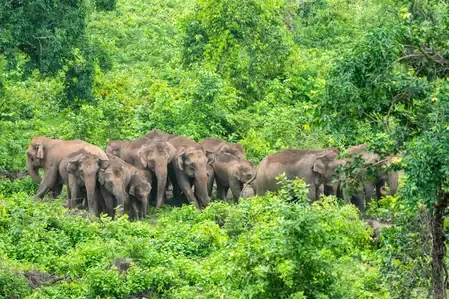
Synopsis
Two deaths in three days, wild herds that refuse to budge, and a relocation plan sparking backlash from the very district meant to receive the elephants — the Karnataka Forest Department's crisis in Hassan lays bare just how difficult India's human-elephant conflict has become to manage, especially when political and seasonal pressures collide.
Key Takeaways
The Karnataka Forest Department resumed its elephant-driving operation in Hassan district on 18 November 2026 , deploying 7 trained elephants from the Bikkodu Elephant Training Camp .
55-year-old Hafeez-Ur-Rehman was killed at Nagenahalli village on Monday; Jayamma was killed on 14 November — two deaths in three days triggered the emergency response.
During Tuesday's operation, wild elephants moved only 200 metres before returning, forcing a suspension and resumption of the drive.
The department plans to relocate 56 wild elephants to Bhadra Wildlife Sanctuary in Chikkamagaluru , but residents and BJP leaders from Chikkamagaluru have strongly opposed the move.
BJP MP Kota Srinivasa Poojary and former MLA Jeevaraj sought Forest Minister Ramalinga Reddy's intervention to withdraw the relocation order.
The ongoing arecanut and coffee harvest season raises additional safety concerns for thousands of plantation workers in the conflict zone.
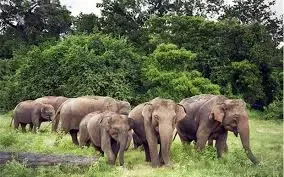
The Karnataka Forest Department on Wednesday, 18 November resumed its elephant-driving operation in Hassan district, deploying seven trained elephants from the Bikkodu Elephant Training Camp after two fatal wild elephant attacks struck the region within three days. The renewed push comes amid mounting public anger in Belur taluk, where villagers and farmers' organisations are demanding a permanent resolution to escalating human-elephant conflict.
How the Operation Unfolded
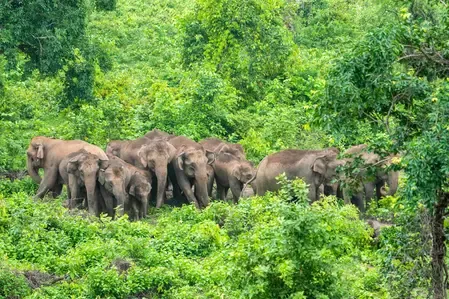
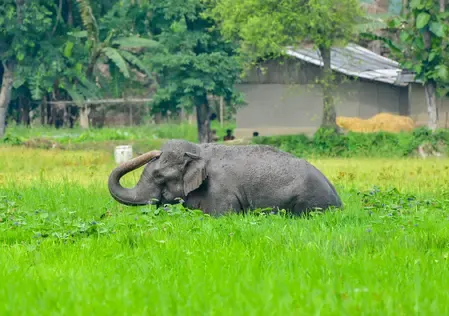
The operation, which first began on Tuesday, was suspended after a three-hour exercise produced negligible results — the wild elephants moved barely 200 metres before returning to their original position. Forest personnel relaunched the drive on Wednesday morning, attempting to push the wild herds from Chowdaahalli towards Gagaboranahalli in Belur taluk.
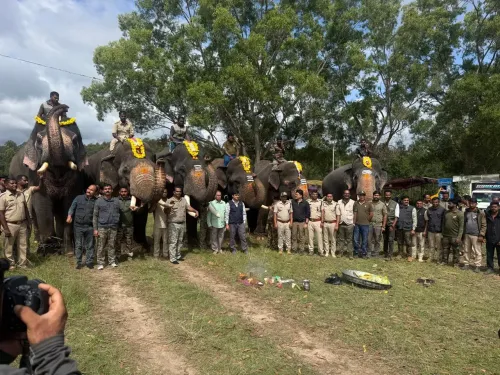
Tamed elephant Prashanth is leading the deployment team. Eight additional trained elephants from the Sakrebailu Elephant Camp are also expected to join the operation. The department hopes the tamed animals will guide the wild herds away from the roughly 40 to 50 villages situated along the forest fringes of Hassan district.
The Two Fatal Attacks That Triggered the Crisis
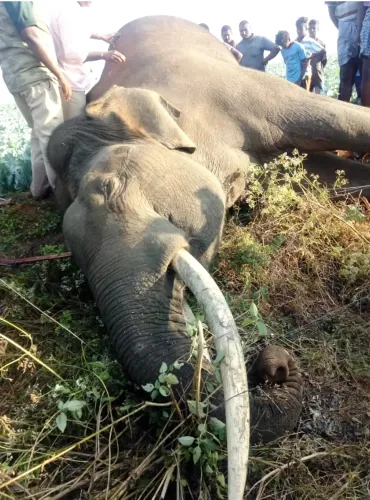
On Monday, 55-year-old Hafeez-Ur-Rehman was killed by a wild elephant at Nagenahalli village while reportedly travelling to work at a coffee estate. Earlier, on 14 November, a woman identified as Jayamma was killed in a similarly unprovoked attack. The two deaths within three days triggered protests by local villagers and farmers' organisations, who accused the Forest Department of failing to act decisively after the first fatality despite assurances that wild elephants would be pushed back into forests.
Relocation Plan Faces Opposition From Chikkamagaluru
In response to the crisis, the Forest Department has drawn up a proposal to relocate 56 wild elephants from the Hassan region to the Bhadra Wildlife Sanctuary in Chikkamagaluru district. The plan, however, has triggered strong resistance from residents of Chikkamagaluru, particularly those from the Sringeri Assembly constituency.
Former Bharatiya Janata Party (BJP) MLA Jeevaraj has opposed the proposed transfer and demanded the state government withdraw the decision. BJP MP Kota Srinivasa Poojary from the Chikkamagaluru-Udupi Lok Sabha constituency also raised concerns and sought the intervention of Forest Minister Ramalinga Reddy.
Poojary questioned the rationale of shifting elephants out of the region while claiming that 50 to 60 elephants had already been relocated there in earlier rounds. Residents of Chikkamagaluru argued that Hassan district was effectively transferring its problem rather than solving it. 'Even cattle do not go where we ask them to, so how can we expect elephants to do so? Bhadra Wildlife Sanctuary in Chikkamagaluru district is nearly 100 km from Belur. Is it child's play to drive 50 elephants over a distance of 100 km?' residents were quoted as saying.
Harvesting Season Adds to the Urgency
Residents of Mudigere taluk and surrounding areas stressed that the current period is critical for arecanut and coffee harvesting, with thousands of plantation workers active in the fields. They demanded that the elephants be captured and relocated — not simply driven away — warning that the proposed operation could endanger workers and create equivalent conflict in Chikkamagaluru. BJP leaders cautioned that their party would launch an agitation if the state government failed to reconsider the relocation decision.
What Happens Next
The Forest Department has made operational preparations at the Bikkodu Elephant Camp in Belur, and senior officials conducted rituals for the trained elephants prior to deployment. With wild herds proving resistant to movement and political opposition hardening against the Bhadra relocation, forest authorities face the dual challenge of containing immediate conflict while navigating a longer-term solution that is acceptable to all affected communities. How the department resolves this impasse will likely set the template for managing Karnataka's chronic human-elephant conflict.
Point of View
Not a solution — Chikkamagaluru residents are right to ask why they should absorb a conflict that Hassan's land-use decisions created. Without a credible long-term corridor restoration plan and faster judicial clearance for problem-animal capture, Karnataka will keep cycling through this same crisis after every fatality.
NationPress
18 Nov 2026
Frequently Asked Questions
Why did the Karnataka Forest Department resume elephant-driving operations in Hassan?
The department resumed operations on 18 November after two fatal wild elephant attacks in Hassan district within three days — the deaths of Jayamma on 14 November and Hafeez-Ur-Rehman on Monday. The operation aims to push wild herds away from roughly 40 to 50 villages along the forest fringe in Belur taluk.
How many elephants are being deployed and where are they from?
Seven trained elephants from the Bikkodu Elephant Training Camp are leading the operation, with tamed elephant Prashanth heading the team. Eight additional trained elephants from the Sakrebailu Elephant Camp are expected to join, bringing the total deployment to fifteen.
What is the plan to relocate elephants to Bhadra Wildlife Sanctuary?
The Karnataka Forest Department has drawn up a proposal to relocate 56 wild elephants from the Hassan region to Bhadra Wildlife Sanctuary in Chikkamagaluru district. The plan has faced sharp opposition from local residents and BJP leaders in Chikkamagaluru, who argue it transfers Hassan's problem rather than solving it.
Who has opposed the relocation plan and why?
Former BJP MLA Jeevaraj and BJP MP Kota Srinivasa Poojary from the Chikkamagaluru-Udupi constituency have opposed the move and sought Forest Minister Ramalinga Reddy's intervention. Residents argue the sanctuary is nearly 100 km from Belur, the relocation is logistically dangerous, and the ongoing arecanut and coffee harvest season puts plantation workers at additional risk.
What happened during Tuesday's initial elephant-driving attempt?
Tuesday's operation lasted three hours but produced negligible results — the wild elephants moved only about 200 metres before returning to their original position. The operation was subsequently suspended and relaunched on Wednesday morning, with forest personnel attempting to drive the herds from Chowdaahalli towards Gagaboranahalli in Belur taluk.