56 elephants relocation to Bhadra Reserve sparks protests in Chikkamagaluru
Synopsis
Two fatal elephant attacks in three days in Belur taluk have forced Karnataka's Forest Department into action — but its plan to drive 56 wild elephants 100 km to Bhadra Reserve Forest has triggered a fresh political row. Chikkamagaluru residents and BJP leaders warn the move will simply relocate the conflict, not resolve it, and are threatening an agitation if the government doesn't back down.
Key Takeaways
Two people — Jayamma and 55-year-old Hafeez-Ur-Rehman — were killed in elephant attacks in Belur taluk, Hassan district within three days .
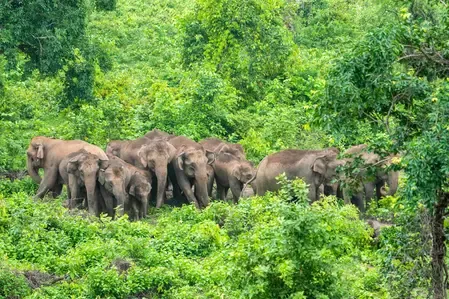
Karnataka's Forest Department is preparing to relocate 56 wild elephants from Hassan to Bhadra Reserve Forest , approximately 100 km away.
Trained elephants from Bikkodu and Sakrebailu Elephant Camps , led by Prashanth , will assist the operation.
BJP MP Kota Srinivasa Poojary and former MLA Jeevaraj have strongly opposed the relocation, demanding Forest Minister intervention.
Residents warn the operation coincides with peak arecanut and coffee harvest season , raising safety risks for plantation workers.
The BJP has threatened a formal agitation if the government does not withdraw the relocation order.
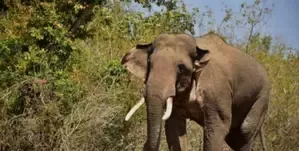
Karnataka's Forest Department is preparing to relocate 56 wild elephants from the Hassan region to Bhadra Reserve Forest in Chikkamagaluru district, following two fatal elephant attacks within three days in Belur taluk. The proposed operation has met with strong opposition from residents and political leaders in Chikkamagaluru, particularly those in the Sringeri Assembly constituency, who warn it will merely shift the problem rather than solve it.
Two Fatalities That Triggered the Operation
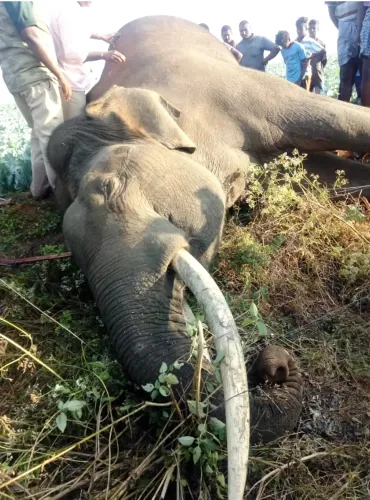
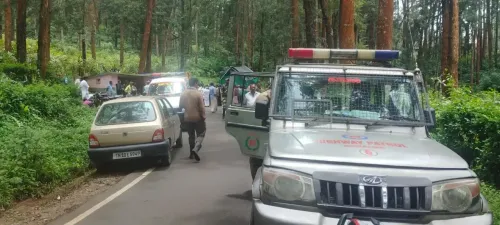
The crisis escalated after two separate elephant attacks claimed lives in rapid succession in Belur taluk, Hassan district. On Saturday, 15 November, a woman identified as Jayamma was killed in an elephant attack. Two days later, on Monday, 17 November, 55-year-old Hafeez-Ur-Rehman was fatally attacked by an elephant at Nagenahalli village while reportedly travelling to work at a coffee estate.
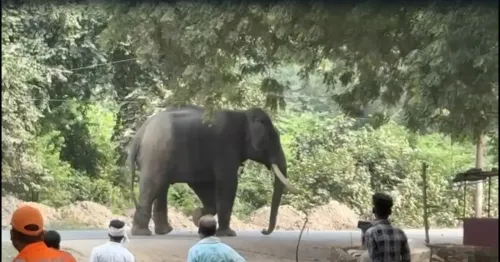
Both incidents triggered protests by villagers and farmers' organisations demanding a permanent resolution to the human-elephant conflict. Following the first fatality, the Forest Department had assured that elephants straying into residential areas would be driven back into forests — a promise that the second death rendered hollow, renewing public anger.
Operation Underway at Bikkodu Elephant Camp
Preparations for the relocation operation are being carried out at the Bikkodu Elephant Camp in Belur. A team of trained elephants will be deployed to assist, with tamed elephant Prashanth leading the effort. Eight additional trained elephants from the Sakrebailu Elephant Camp will also join the operation. Senior forest officials have already performed the customary worship of the trained elephants ahead of their deployment.
The operation follows a statement by Minister for Excise and Hassan District In-Charge Minister K.M. Shivalinge Gowda in Belur on Monday, confirming that orders had been issued to shift wild elephants from the Belur region to Bhadra Wildlife Sanctuary.
Chikkamagaluru Residents and Leaders Push Back
The announcement drew immediate pushback from Chikkamagaluru. Former BJP MLA Jeevaraj and local residents have demanded the government halt the proposed transfer. BJP MP Kota Srinivasa Poojary, who represents the Chikkamagaluru-Udupi Lok Sabha seat, questioned the rationale behind the move, noting that 50 to 60 elephants had reportedly already been shifted away from the region in the past.
'We do not know in what context Shivalinge Gowda made such a statement. The Forest Minister should intervene in this matter and take steps to protect the interests of the people of Chikkamagaluru district,' Poojary said.
Residents alleged that the Hassan district administration was attempting to transfer its elephant-related problems to Chikkamagaluru district to absolve itself of responsibility. They also questioned the logistical feasibility: 'Even cattle do not go where we ask them to, so how can we expect elephants to do so? The Bhadra Wildlife Sanctuary in Chikkamagaluru district is nearly 100 km from Belur. Is it a child's play to drive 50 elephants over a distance of 100 km?' they asked.
Harvest Season Heightens Safety Concerns
Residents of Mudigere taluk pointed out that the operation is planned during the peak harvesting season for arecanut and coffee, when thousands of plantation workers are active across the district. They questioned who would bear responsibility for any accidents involving the elephants during the relocation drive, and demanded that elephants be captured and relocated rather than simply driven toward Bhadra.
Residents of N.R. Pura taluk warned of serious consequences if the drive proceeds. The BJP has cautioned that it will launch a formal agitation if the government does not withdraw the relocation order.
Broader Context: A Recurring Human-Elephant Conflict
Karnataka's coffee and arecanut belt has long been a flashpoint for human-elephant conflict, with Bhadra Reserve Forest and its buffer zones home to one of South India's larger elephant populations. Relocating elephants within the same landscape corridor — rather than capturing and translocating them — has historically led to recurring encroachment, critics argue. This latest episode underscores the absence of a durable state policy on managing elephant movement in human-dominated landscapes.
The Forest Department's next steps — and whether the state's Forest Minister intervenes as demanded — are being closely watched by residents on both sides of the district boundary.
Point of View
And adding to that population without habitat expansion simply defers the next crisis. The political opposition, however, is also partly opportunistic — the BJP is amplifying local anxiety ahead of local body elections rather than offering an alternative policy. The state's Forest Ministry now faces a no-win optic: inaction in Hassan or agitation in Chikkamagaluru. What is missing from both sides of the debate is a credible, science-backed carrying-capacity assessment for the corridor.
NationPress
17 Nov 2026
Frequently Asked Questions
Why is Karnataka's Forest Department planning to relocate 56 elephants from Hassan?
The relocation is a response to two fatal elephant attacks in Belur taluk, Hassan district, within three days — the deaths of Jayamma on Saturday and Hafeez-Ur-Rehman on Monday. The Forest Department is facing intense public pressure to prevent further human-elephant conflict in the region.
Where are the elephants being shifted, and how far is it?
The plan is to move the 56 wild elephants from the Belur region to Bhadra Wildlife Sanctuary in Chikkamagaluru district, a distance of approximately 100 km. Residents have questioned whether driving elephants over such a distance is logistically feasible.
Why are Chikkamagaluru residents opposing the elephant relocation?
Residents argue the move will transfer Hassan's problem to their district rather than solving it. They are also concerned because the operation is planned during peak arecanut and coffee harvesting season, when thousands of workers are active in plantations, raising the risk of elephant-related accidents.
Who are the political figures opposing the relocation?
BJP MP Kota Srinivasa Poojary, who represents the Chikkamagaluru-Udupi Lok Sabha seat, and former BJP MLA Jeevaraj from the Sringeri Assembly constituency have both publicly opposed the plan. They have called on the state's Forest Minister to intervene and protect Chikkamagaluru's interests.
What is the BJP threatening if the relocation proceeds?
BJP leaders in Chikkamagaluru have warned they will launch a formal agitation against the proposed operation if the government does not withdraw its decision to shift the elephants to Bhadra Reserve Forest.