Disability threshold cut to 40%: Padma Shri activist Kanubhai Tailor backs NSAP extension

Synopsis
Padma Shri awardee Kanubhai Tailor has welcomed the lowering of India's disability eligibility threshold to 40 per cent — but said the government should have acted far sooner. The change comes as the Union Cabinet clears a ₹53,428 crore, five-year extension of the NSAP, which covers 3.2 crore elderly, widowed, and disabled beneficiaries across the country.
Key Takeaways
Kanubhai Tailor , Padma Shri awardee and founder-president of the Disabled Welfare Trust of India , has welcomed the reduction of the disability eligibility threshold to 40 per cent .
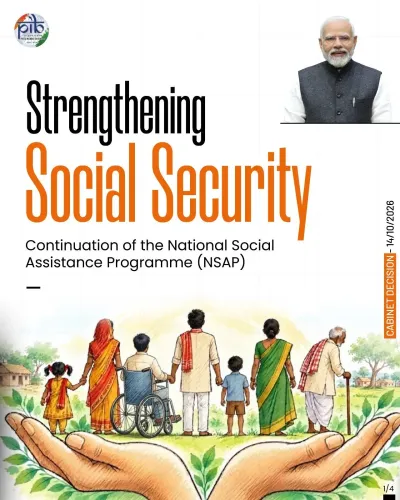
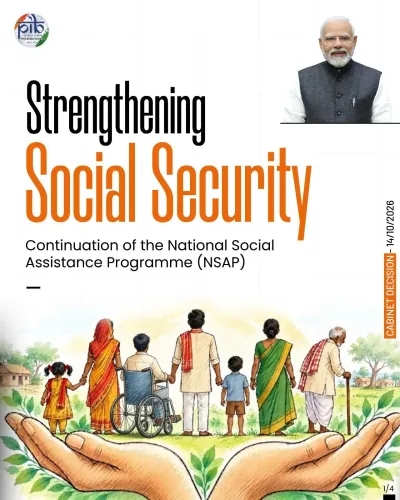
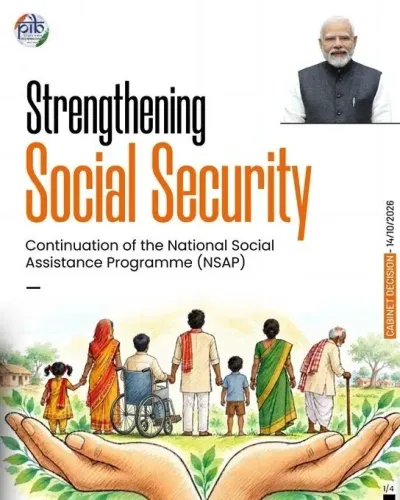
The Union Cabinet has approved a five-year extension of the National Social Assistance Programme (NSAP) with a ₹53,428 crore budget.
The programme is expected to benefit around 3.2 crore beneficiaries , including the elderly, widows, and persons with disabilities.
Tailor welcomed the move but noted it should have been introduced 'much earlier,' saying concerns of persons with disabilities had previously not received adequate attention.
The revised threshold broadens access for persons with moderate disabilities who were previously excluded from support under more restrictive criteria.
Padma Shri awardee and Disabled Welfare Trust of India founder-president Kanubhai Tailor has welcomed the Union government's decision to lower the disability eligibility threshold to 40 per cent, calling it a significant step that will allow more persons with disabilities to access state support and lead lives with dignity. His remarks came in the context of the Union Cabinet's approval to extend the National Social Assistance Programme (NSAP) for five more years, backed by a budgetary allocation of ₹53,428 crore.
What the NSAP Extension Covers
The NSAP provides financial assistance to vulnerable sections of society, including the elderly, widows, and persons with disabilities. According to the government, the programme's continuation is expected to benefit around 3.2 crore beneficiaries across the country. The revised eligibility threshold of 40 per cent disability — previously set at a more restrictive level — broadens the net of those who qualify for support under the scheme.
What Kanubhai Tailor Said
Tailor, speaking from Surat, praised the move as long overdue. 'By reducing the disability threshold to 40 per cent, the government has taken a significant step that will benefit many people with disabilities and help them lead more dignified lives,' he said.
He also called Prime Minister Narendra Modi a 'visionary leader of his era,' crediting him with sustained focus on disability welfare. However, Tailor did not hold back a pointed observation: 'I believe the Government of India should have taken this step much earlier, but unfortunately, no one paid attention to it until now.'
Why the Threshold Change Matters
Persons with disabilities frequently face barriers to formal employment, making access to state-provided financial assistance critical for day-to-day sustenance. Critics and welfare advocates have long argued that a high eligibility bar excluded a large segment of people with moderate disabilities from support systems. The reduction to 40 per cent aligns with international frameworks, including the United Nations Convention on the Rights of Persons with Disabilities (UNCRPD), to which India is a signatory.
Notably, this is not an isolated policy move — it forms part of a broader recalibration of the NSAP, which also reinforces pension provisions for elderly persons and widowed women. Tailor underlined the importance of these provisions, saying financial assistance helps beneficiaries meet everyday expenses and maintain their independence.
Broader Impact and What Comes Next
With the ₹53,428 crore outlay now cleared for the next five years, welfare agencies and civil society groups are expected to push for smoother implementation at the district level, where access gaps have historically been widest. Tailor's remarks signal that disability rights groups will continue to monitor whether the revised eligibility criteria translates into tangible improvement in coverage on the ground.
Point of View
But Tailor's own caveat — that it should have come far sooner — points to a pattern of delayed inclusion in India's social protection architecture. The NSAP has existed for decades, yet eligibility design lagged international norms. The ₹53,428 crore outlay is substantial, but the harder test will be last-mile delivery: whether district-level officials actually apply the revised criteria or continue to gatekeep access through procedural barriers. Civil society groups will need to watch implementation, not just announcement.
NationPress
14 Oct 2026
Frequently Asked Questions
What is the 40 per cent disability threshold change in India?
The Union government has reduced the eligibility threshold for disability benefits to 40 per cent, meaning persons with a disability assessed at 40 per cent or above can now qualify for support under schemes such as the NSAP. Previously, the criteria were more restrictive, excluding many with moderate disabilities from state assistance.
What is the National Social Assistance Programme (NSAP) and how long has it been extended?
The NSAP is a central government programme that provides financial assistance to vulnerable sections including the elderly, widows, and persons with disabilities. The Union Cabinet has approved its continuation for five more years with a budgetary allocation of ₹53,428 crore, benefiting around 3.2 crore beneficiaries.
Who is Kanubhai Tailor and why is his endorsement significant?
Kanubhai Tailor is a Padma Shri awardee and the founder-president of the Disabled Welfare Trust of India, making him one of the country's most recognised disability rights advocates. His endorsement of the threshold change carries weight in disability welfare circles, though he also used the occasion to note that the reform should have come much sooner.
Who benefits from the reduced disability eligibility threshold?
Persons with disabilities assessed at 40 per cent or above stand to benefit, particularly those with moderate disabilities who were previously ineligible for financial support. The change is expected to expand coverage across the 3.2 crore beneficiaries targeted under the NSAP.
What concerns remain about the disability welfare reforms?
Advocates, including Tailor, argue that the reforms are long overdue and that past inattention left many persons with disabilities without support. The key challenge going forward is ensuring the revised criteria are applied consistently at the district level, where implementation gaps have historically limited the programme's reach.