India-New Zealand FTA: Indian exporters must act early to unlock duty-free gains
Synopsis
India's free trade agreement with New Zealand entered force on 20 October 2026, eliminating duties of up to 10% on engineering goods, textiles, leather and footwear. CII's export committee chief is urging MSMEs to move immediately — engage buyers, verify rules of origin, and use the Export Promotion Mission — warning that early movers will capture the biggest gains as New Zealand also opens a door to Oceania and Pacific Island markets.
Key Takeaways
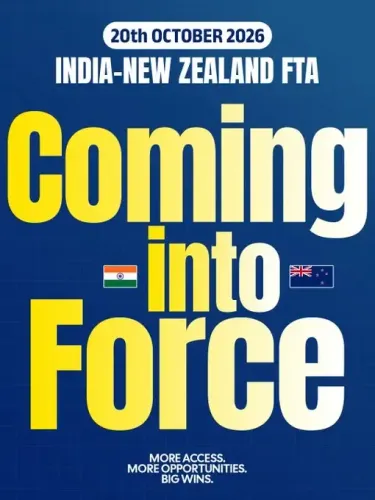
The India-New Zealand FTA came into force on 20 October 2026 , granting duty-free access across all tariff lines in New Zealand.
Duties of up to 10% on engineering goods , textiles , leather , and footwear have been eliminated.
CII Chairman Sanjay Budhia urged MSMEs to engage early with New Zealand buyers and use the Export Promotion Mission .
Indian customs has committed to releasing goods within 48 hours , and perishables within 24 hours .
CBIC and NZCS have signed a memorandum for advance electronic exchange of origin data to reduce compliance friction.
New Zealand is positioned as a gateway to broader Oceania and Pacific Island markets for Indian exporters.
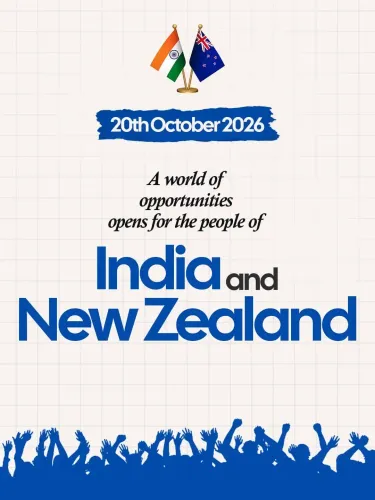
Indian exporters, including micro, small and medium enterprises (MSMEs), should engage proactively with New Zealand buyers and fully leverage government schemes such as the Export Promotion Mission to capitalise on the newly operational bilateral free trade agreement (FTA), the Confederation of Indian Industry (CII) said on 22 October 2026. The FTA came into force on 20 October 2026, granting Indian exporters duty-free access across all tariff lines in New Zealand.
Key Message from Industry
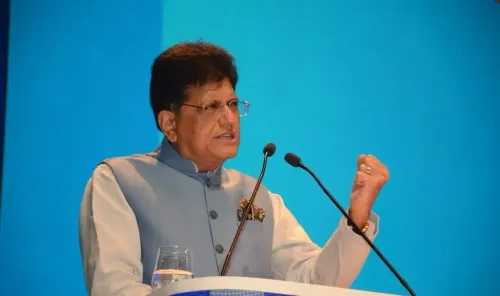
Sanjay Budhia, Chairman of CII National Committee on Exports and Managing Director of Patton International Ltd, urged exporters to check product-specific rules of origin before filing shipments. 'I urge exporters, especially MSMEs, to move early, engage with New Zealand buyers, check product-specific rules of origin, and make full use of schemes such as the Export Promotion Mission. New Zealand can also serve as a gateway to the wider Oceania and Pacific Island markets,' he said.
What the FTA Eliminates
The agreement wipes out duties of up to 10 per cent on key Indian export categories including engineering goods, textiles, leather, and footwear. Beyond these sectors, the pact is also set to benefit chemicals, plastics, electronics, pharmaceuticals, and processed foods, alongside labour-intensive industries. Streamlined Sanitary and Phytosanitary Measures (SPS) and Technical Barriers to Trade (TBT) procedures, electronic certification, and acceptance of Good Manufacturing Practices (GMP) and Good Clinical Practice (GCP) inspection reports are expected to cut compliance costs significantly.
Faster Customs Clearance
The benefits of the FTA extend well beyond tariff reductions. Indian customs authorities have committed to releasing goods within 48 hours, with an additional endeavour to clear perishable goods within 24 hours. The Central Board of Indirect Taxes and Customs (CBIC) and the New Zealand Customs Service (NZCS) have signed a memorandum to enable the advance electronic exchange of origin data for goods, a step that is expected to reduce information gaps and provide greater certainty to traders on both sides.
Strategic Opening for MSMEs
For India's large MSME ecosystem, the FTA represents a relatively rare opportunity to enter a high-income developed market with zero tariff friction. Notably, New Zealand's status as a gateway to the broader Oceania and Pacific Island markets adds a second-order dimension to the agreement's strategic value. This comes amid India's broader push to diversify export destinations beyond traditional markets in the US and Europe, where trade policy uncertainty has grown. Early movers among MSMEs stand to lock in buyer relationships before competition intensifies from other FTA signatories.
What Exporters Should Do Next
Industry experts recommend exporters immediately verify whether their products meet the rules of origin criteria specified in the agreement, register under the Export Promotion Mission, and initiate outreach to New Zealand distributors and buyers. The electronic origin data exchange mechanism between CBIC and NZCS is expected to significantly improve operational efficiency once fully rolled out. The full utilisation of SPS and TBT streamlining measures will be critical for food and pharmaceutical exporters in particular.
Point of View
But its strategic value lies in the gateway potential to Oceania and Pacific Island markets — a corridor Indian exporters have historically under-served. The CII's emphasis on MSMEs acting early is well-placed, but the real bottleneck is awareness: most smaller exporters lack in-house expertise to verify rules of origin or navigate SPS documentation, and no amount of duty elimination fixes that gap without targeted hand-holding from trade bodies and CBIC. The 48-hour customs commitment is also a benchmark worth watching — if it holds in practice, it sets a useful precedent for India's future FTA negotiations. The bigger question is whether the Export Promotion Mission has the bandwidth and last-mile reach to convert CII's advice into actual shipments.
NationPress
22 Oct 2026
Frequently Asked Questions
When did the India-New Zealand FTA come into force?
The India-New Zealand free trade agreement came into force on 20 October 2026, granting Indian exporters duty-free access across all tariff lines in New Zealand. It eliminates import duties of up to 10% on key categories including engineering goods, textiles, leather, and footwear.
Which Indian industries benefit most from the India-New Zealand FTA?
The agreement benefits a broad range of sectors including engineering goods, textiles, leather and footwear, chemicals, plastics, electronics, pharmaceuticals, and processed foods. Labour-intensive industries also stand to gain from duty elimination and streamlined compliance procedures.
What is the Export Promotion Mission and why is CII recommending it?
The Export Promotion Mission is a government scheme designed to support Indian exporters in accessing new international markets. CII's Sanjay Budhia has urged MSMEs especially to enrol in the scheme to fully leverage the tariff benefits opened up by the India-New Zealand FTA.
How will customs clearance work under the new FTA?
Indian customs has committed to releasing goods within 48 hours, with an endeavour to clear perishable goods within 24 hours. CBIC and NZCS have also signed a memorandum for advance electronic exchange of origin data to reduce information gaps and improve operational efficiency.
What are rules of origin and why do exporters need to check them?
Rules of origin are product-specific criteria that determine whether a good qualifies for the preferential duty rates under a trade agreement. Exporters must verify their products meet these criteria before claiming duty-free access under the India-New Zealand FTA, as failure to comply can result in duties being applied and potential penalties.