Indian Government Rejects Claims of US Seeking Permission for Iran Strikes
Synopsis
In a strong rebuttal to circulating rumors, the Indian government has dismissed claims suggesting the US sought permission for military operations against Iran from Indian territory. Authorities stress the importance of verifying information to combat misinformation.
Key Takeaways
Indian Government Denies US Military Operations Claims LEMOA Agreement Explained Tensions Rise in West Asia Following US-Iran Incidents UK's Conditional Support for US Operations Public Urged to Combat Misinformation
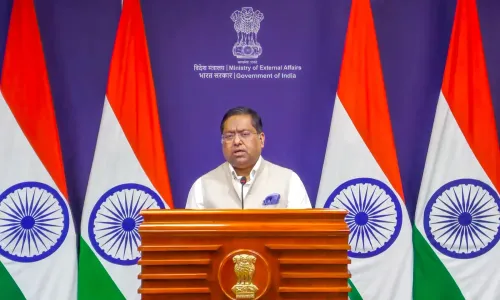
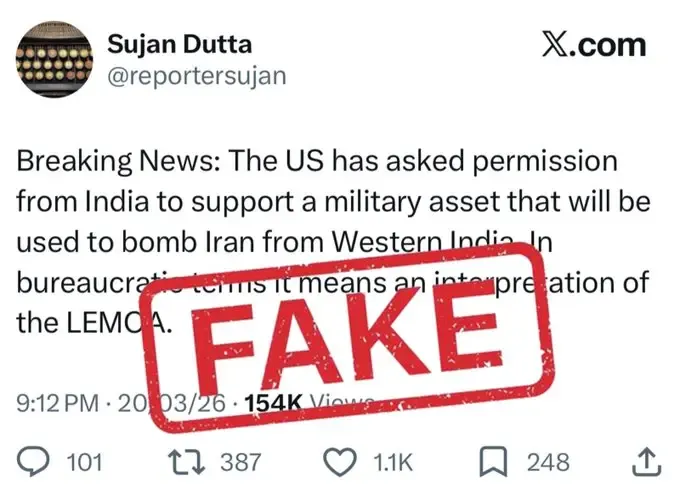
New Delhi, March 21 (NationPress) The Indian government on Saturday categorically dismissed what it termed as "unfounded allegations" circulating on social media, suggesting that the United States had requested approval from India under the LEMOA agreement to conduct bombing operations against Iran from its western regions.
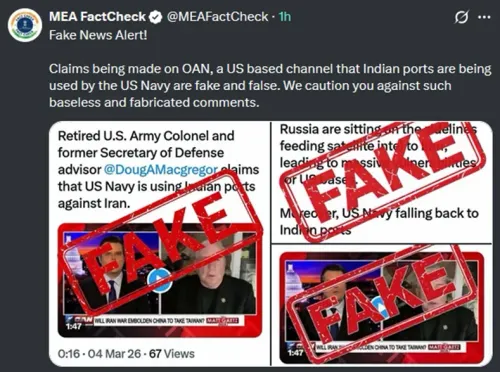
The Ministry of External Affairs urged the public to be vigilant against misinformation, warning in a post on X, "Be cautious of such false and unsubstantiated claims and posts on social media!"
Officials have consistently reiterated that these claims lack any factual support and have called on citizens to avoid disseminating unverified information, particularly regarding delicate geopolitical matters.
The Logistics Exchange Memorandum of Agreement (LEMOA), which was established between India and the US in 2016, permits the two nations to utilize each other's military resources for logistical support, including refueling and maintenance.
However, it explicitly prohibits either party from executing offensive military actions from the other's territory, a clarification that has been consistently reiterated by Indian officials.
This misleading narrative gained traction following recent events, including a US military operation that reportedly sank an Iranian warship off the coast of Sri Lanka, leading to speculation about India's potential involvement.
New Delhi has firmly denied any involvement, asserting that its ports and facilities were not utilized for such operations.
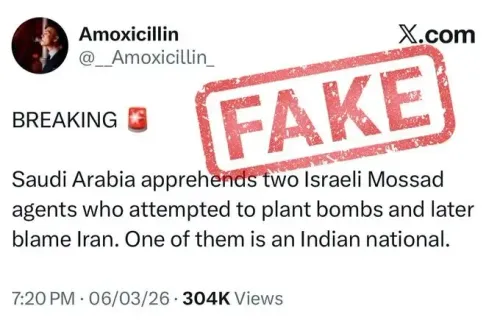
This controversy comes on the heels of similar instances where the government rejected claims regarding the use of Indian ports or airspace by US forces as "false and misleading", urging caution against the spread of fabricated information.
Tensions in the West Asia region escalated dramatically on February 28 when Israel and the United States conducted synchronized strikes on Tehran and various other Iranian cities, reportedly resulting in casualties, including Iran's Supreme Leader Ali Khamenei and several high-ranking military officials and civilians.
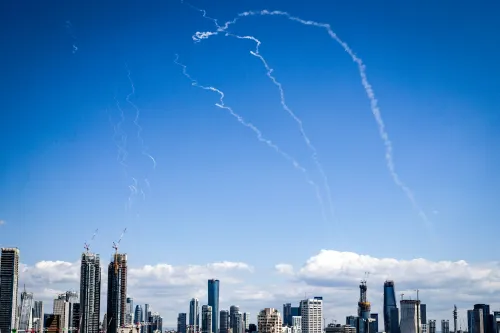
In retaliation, Iran launched multiple missile and drone strikes targeting both Israel and US military installations across the region, considerably heightening the conflict.
Amidst this escalation, the United States sought authorization from the United Kingdom to utilize its military bases for conducting operations against Iran.
The UK consented to allow the US to use British facilities for "operations aimed at degrading missile capabilities used to attack vessels in the Strait of Hormuz," according to a statement from Downing Street.
The UK government is coordinating with international allies to formulate "a feasible strategy to protect international shipping in the Strait of Hormuz," as revealed in a statement released on Friday (local time).
Despite this decision, the statement emphasized that the UK remains committed to "not being drawn into the larger conflict."
Iran's Foreign Minister Seyed Abbas Araghchi cautioned his British counterpart on Friday against supporting US and Israeli aggression against Iran, warning that such assistance would exacerbate further escalation, as reported by Xinhua news agency.
Meanwhile, UK Prime Minister Keir Starmer has reiterated that Britain does not seek a broader military engagement in the West Asia conflict.
Earlier this week, he stated that the UK would avoid getting embroiled in a wider war, even as it assesses possibilities to assist allies, which may include potential naval deployments to secure shipping routes in the strategically crucial Strait of Hormuz.
Point of View
It is crucial to highlight the Indian government's firm stance against misinformation regarding military operations with the US. This response showcases India's commitment to transparency and national sovereignty in the face of unverified claims that could potentially escalate geopolitical tensions.
NationPress
26 Sept 2026
Frequently Asked Questions
What is the LEMOA agreement?
The Logistics Exchange Memorandum of Agreement (LEMOA) allows India and the US to access each other's military facilities for logistical support, such as refueling and repairs, but does not permit offensive operations from either territory.
Why did the Indian government reject the claims?
The Indian government rejected the claims as baseless and unfounded, emphasizing the importance of verifying information to combat the spread of misinformation.
What recent events have heightened tensions in West Asia?
Tensions escalated sharply after coordinated strikes by Israel and the US on Iranian cities, which reportedly resulted in significant casualties, including high-ranking officials.
What is the UK's position regarding military involvement?
The UK has agreed to allow the US to use its military bases for operations against Iran but maintains that it does not seek to become involved in a broader conflict.
How should the public approach rumors on social media?
The public is urged to be vigilant and verify information before sharing, especially regarding sensitive geopolitical matters.