India's sea-based nukes outpace Pakistan with 4 SSBNs: Report
Synopsis
India has reportedly crossed the nuclear threshold that matters most — warheads at sea on submarines that cannot be targeted. With four SSBNs operational or imminent and SIPRI signalling a shift from shore-based to sea-based deployment, the strategic gap with Pakistan is not just widening; it is changing the nature of deterrence on the subcontinent entirely.
Key Takeaways
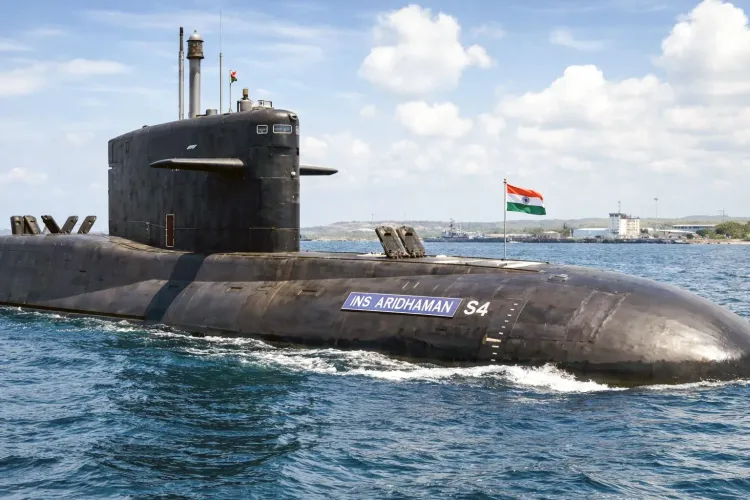
India operates three nuclear-armed SSBNs — INS Arihant , INS Arighaat (K-4 missile, 3,500 km range), and INS Aridhaman — with a fourth, INS Arisudan , expected by 2027 .
The SIPRI 2026 yearbook implies India has shifted from shore-based nuclear warhead storage to sea-based deployment on submarines.
Pakistan's sea-based nuclear option — the Babur-3 cruise missile on an Agosta-class diesel-electric submarine — is fundamentally less survivable than India's SSBN fleet.
Diesel-electric submarines must surface regularly to recharge, making them detectable; nuclear-powered SSBNs can remain submerged for months.
India has hardened its submarine base at INS Varsha and established a replenishment jetty at Agalega Island in the western Indian Ocean.
The report describes the capability gap as the most significant strategic development on the subcontinent since Pakistan's 1998 nuclear tests.
India has quietly crossed a strategic threshold by deploying nuclear warheads on submarines at sea, while Pakistan has no submarine capable of carrying nuclear ballistic missiles and no credible timeline for acquiring one, according to a report published in Modern Diplomacy. The assessment, dated 19 July, concludes that the deterrence architecture of the subcontinent is being fundamentally restructured in India's favour.
India's Growing SSBN Fleet
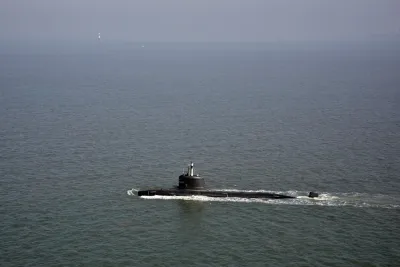
India now operates three Submersible Ship Ballistic Nuclear (SSBN) vessels — INS Arihant, commissioned over a decade ago; INS Arighaat, equipped with the K-4 missile carrying a range of 3,500 kilometres; and INS Aridhaman, which joined the fleet earlier this year. A fourth vessel, INS Arisudan, is anticipated to be operational by 2027.
The report notes that four SSBNs allow a standard rotation cycle: one on active patrol, one in transit, one under maintenance, and one in training — the minimum needed to sustain a year-round nuclear deterrent at sea. India has also reportedly hardened its pre-emptive attack submarine base on its eastern coast at INS Varsha, and established an operational jetty at Agalega Island in the western Indian Ocean, enabling submarines to replenish without returning to the Indian coastline.
The SIPRI Signal India Did Not Make Official
The Stockholm International Peace Research Institute (SIPRI) 2026 yearbook implies a development India has not formally announced: a shift from storing nuclear warheads ashore to deploying them on submarines at sea. The significance of this shift is considerable. As the Modern Diplomacy report states, 'A submarine on continuous patrol, armed with nuclear-tipped missiles, somewhere in the Indian Ocean is not targetable by definition. Its location is unknown. Its warheads are already mated to its missiles.'
The patrol area of such a vessel can extend from the Bay of Bengal to waters near Agalega Island, spanning millions of square kilometres — a geometry that, the report argues, makes a disarming first strike against India's nuclear force effectively impossible regardless of an adversary's missile inventory.
Pakistan's Sea-Based Nuclear Limitations
Pakistan's sea-based nuclear posture, by contrast, rests on the Babur-3 cruise missile, which is believed to carry potential nuclear capability and may be deployed on an Agosta-class diesel-electric submarine — reportedly as early as 2027. The report draws a sharp distinction between this capability and India's SSBN fleet.
Diesel-electric submarines must surface or snorkel regularly to recharge their batteries, making them detectable. Their endurance is measured in weeks, not months, and they cannot sustain the continuous long-range patrols necessary for credible second-strike survivability. Surface ships, fixed underwater sensors, and maritime patrol aircraft — tools available to any opponent — are of limited use against a nuclear-powered SSBN that can remain submerged for months, but remain effective against conventional submarines.
Strategic Implications for the Subcontinent
The report argues that the gap between India and Pakistan in submarine-based nuclear capability 'is widening in a way that is restructuring the entire deterrence architecture of the subcontinent.' It describes the divergence as 'the most important strategic development on the subcontinent since Islamabad tested its first bomb in 1998.'
India's deliberate opacity around its submarine operations — location, weapons load, and authorisation status kept unknown to adversaries — is characterised in the report as a strategic asset rather than an information gap. A submarine that cannot be located cannot be targeted in a first strike, which is precisely the logic underpinning a credible second-strike capability. With INS Arisudan expected by 2027, India's undersea nuclear posture is set to deepen further.
Point of View
The strategic calculus for Pakistan changes in ways that cannot be offset by more missiles or more warheads. A sea-based deterrent that cannot be located cannot be neutralised in a first strike — and Pakistan has no near-term answer to that logic. The Babur-3 on a diesel-electric submarine is not a comparable capability; it is a stopgap that highlights the gap. What mainstream coverage underweights is the Agalega Island jetty — an Indian operational footprint in the western Indian Ocean that extends the patrol range of its SSBNs far beyond the Bay of Bengal, fundamentally altering the geography of deterrence in the region.
NationPress
19 Oct 2026
Frequently Asked Questions
What is India's current sea-based nuclear capability?
India operates three nuclear-armed submarines — INS Arihant, INS Arighaat, and INS Aridhaman — with a fourth, INS Arisudan, expected by 2027. The SIPRI 2026 yearbook implies India has shifted from storing nuclear warheads ashore to deploying them on these submarines at sea.
Why does Pakistan lack a comparable sea-based nuclear deterrent?
Pakistan's sea-based nuclear option relies on the Babur-3 cruise missile, potentially deployed on an Agosta-class diesel-electric submarine. Unlike India's nuclear-powered SSBNs, diesel-electric submarines must surface or snorkel regularly to recharge batteries, making them detectable and limiting their patrol endurance to weeks rather than months.
What is an SSBN and why does it matter for nuclear deterrence?
An SSBN is a nuclear-powered submarine capable of carrying ballistic missiles with nuclear warheads. Its significance lies in survivability — because its location is unknown, it cannot be destroyed in a first strike, guaranteeing a retaliatory second strike and thereby strengthening deterrence.
What role does Agalega Island play in India's nuclear strategy?
India has established an operational jetty at Agalega Island in the western Indian Ocean, allowing its submarines to replenish without returning to the Indian coastline. This extends the effective patrol range of India's SSBN fleet across a much larger area of the Indian Ocean.
What does the SIPRI 2026 report say about India's nuclear posture?
The Stockholm International Peace Research Institute's 2026 yearbook implies, without a formal Indian announcement, that India has moved from shore-based nuclear warhead storage to deploying warheads on submarines at sea — a significant shift in its nuclear posture that enhances second-strike survivability.