US Energy Secretary Predicts Rapid Resolution of Iran Conflict and Limited Oil Market Impact

Synopsis
The US anticipates a swift resolution to the Iran conflict, with Energy Secretary Chris Wright assuring that its economic impact on oil markets will be minimal. Despite temporary price spikes, the strong US economy is well-positioned to handle external shocks.
Key Takeaways
US anticipates a quick resolution of the Iran conflict.
Energy Secretary assures limited impact on oil markets.
Temporary price spikes expected but manageable.
Proactive measures include a $400 million oil reserve release.
Strong domestic energy production supports allies.
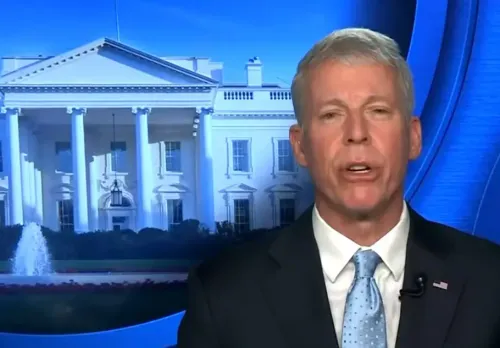
Washington, April 16 (NationPress) The United States anticipates that the current conflict involving Iran will subside within weeks, with the Energy Secretary expressing optimism that the economic repercussions, especially on oil markets, will remain minimal.
During a discussion hosted by the Wall Street Journal, US Energy Secretary Chris Wright stated that the situation is unlikely to lead to long-term economic distress, despite a temporary increase in fuel prices.
"I believe the conflict will reach a resolution in the next few weeks," Wright remarked, adding that the US economy entered this situation "in a very robust position."
He asserted that present fuel prices are manageable compared to recent trends. "Currently, we’re slightly above $4 per gallon for gasoline… we experienced $5 gasoline… four years ago," he noted.
Wright emphasized that strong domestic investment and manufacturing activity would mitigate any external disruptions. "There is significant economic momentum in this nation that remains largely unaffected by this situation," he pointed out.
On the supply side, the US has already initiated a substantial collaborative response with international partners. Wright mentioned a "$400 million coordinated release" of oil reserves aimed at stabilizing markets, although he clarified that the disruption is more about supply chain issues than overall volume.
He noted that this release will take months to fully implement, but "before that release is completed, the conflict will be long resolved."
The Secretary also highlighted the resilience of US energy production, asserting that the country is the largest global producer and exporter of oil and natural gas. This capability, he said, enables Washington to assist allies facing shortages.
"One of the key points is how the United States can help alleviate this on a global scale… by exporting products and… accelerating American production," Wright stated.
He indicated that Iranian oil exports could decline sharply if the blockade persists. "You will not see further Iranian oil… exiting the Gulf anymore," he said, suggesting that Iran may halt production due to limited storage capacity.
Simultaneously, alternative supplies are beginning to surface. Wright pointed out a significant uptick in Venezuelan output, which has increased by approximately 25 percent in recent months, aiding in meeting global demand.
"World demand… grows by about a million barrels a day annually… we’ve already compensated for that demand with the incremental Venezuelan production," he said.
He described Venezuelan crude as highly compatible with US refineries, labeling it as "excellent oil for American refineries."
Looking beyond the immediate crisis, Wright stressed the strategic importance of US liquefied natural gas (LNG) exports, particularly for Europe and Asia. He mentioned that LNG sent abroad fetches prices significantly higher than domestic gas, fostering strong incentives for continued expansion.
"It’s challenging to overstate the vastness of American natural gas reserves," he stated.
These comments come as global markets remain sensitive to disruptions in the Gulf region, which is a vital route for energy supplies. Any extended conflict could tighten supply chains and increase costs for major importers, including India.
India, which relies on imports for over 80 percent of its crude oil needs, is particularly vulnerable to fluctuations in West Asian energy supplies. Previous disruptions in this region have led to inflationary pressures and challenged fiscal stability in New Delhi.
However, heightened US exports and diversified supply sources, including from Latin America, have provided some buffer against sudden shocks in global oil markets.
Point of View
It's crucial to highlight the optimistic outlook from US officials regarding the Iran conflict. While potential disruptions loom, the proactive measures taken by the US and the resilience of its energy sector suggest a manageable situation for both the economy and global oil markets.
NationPress
13 Oct 2026
Frequently Asked Questions
What is the current status of the Iran conflict?
The US expects the conflict involving Iran to ease within a matter of weeks.
How will the Iran conflict affect oil prices?
The Energy Secretary believes that while there may be temporary spikes in fuel prices, the overall economic impact on oil markets will be limited.
What measures is the US taking to stabilize oil markets?
The US is coordinating a $400 million release of oil reserves with global partners to stabilize markets.
How does the US position in energy production affect its allies?
As the largest producer and exporter of oil and natural gas, the US is well-equipped to support allies facing energy shortages.
What role does Venezuelan oil play in the global market?
Venezuelan crude production has increased significantly, helping to offset global demand growth.