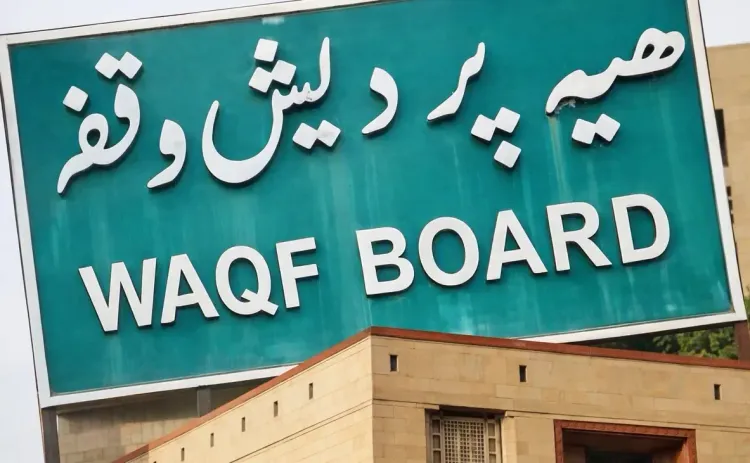
Kerala Waqf Board reconstituted: Muslim League's M.C. Mayin Haji named chairman amid High Court challenge
Synopsis
Kerala has replaced its Waqf Board barely months after forming it, installing a Muslim League leader as chairman while a court petition from the outgoing head sits unresolved. The reconstitution reshuffles Muslim political representation in the state — bringing in Jamaat-e-Islami for the first time and sidelining the Kanthapuram-led Sunni faction — with the High Court's next move set to determine whether the new board can function at all.
Key Takeaways
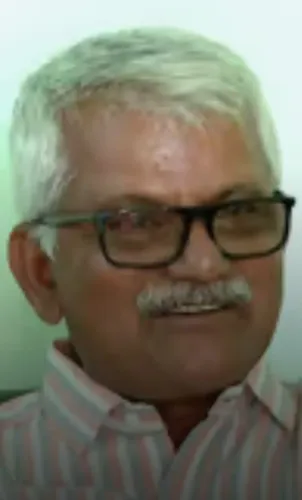
The Kerala government reconstituted the State Waqf Board on 17 October 2026 , appointing IUML state vice-president M.C.
Mayin Haji as chairman.
The nine-member board replaces the K.S.
Hamsa -led committee formed in March 2026 , with over four and a half years left in its term.
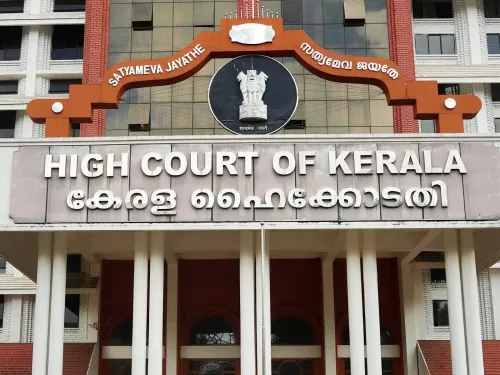
Hamsa's petition challenging the dissolution is pending before the Kerala High Court , putting the new board's authority in legal question.
Jamaat-e-Islami has secured board representation for the first time; the Kanthapuram A.P.
Aboobacker Musliyar -led A.P.
Sunni faction has not.
Appointment of two non-Muslim members has been deferred pending a Supreme Court ruling on their eligibility.
The inclusion of expelled Samastha E.K. faction member Musthafal Faizy is expected to stir internal debate within Samastha.
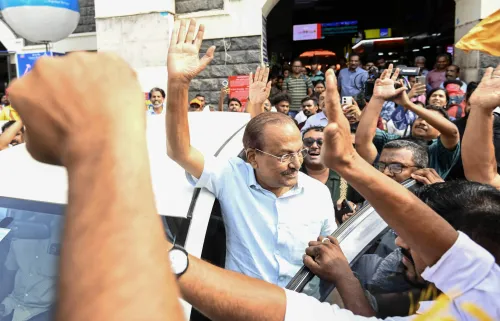
The Kerala government has reconstituted the State Waqf Board, naming Indian Union Muslim League (IUML) state vice-president M.C. Mayin Haji as chairman in a politically loaded move on 17 October 2026 — even as a petition challenging the board's dissolution remains pending before the Kerala High Court. The nine-member board replaces the committee headed by K.S. Hamsa, which was appointed by the Left Democratic Front (LDF) government as recently as March 2026.
Why the board was dissolved early
The Waqf Board had more than four and a half years remaining in its term when the government moved to dissolve it. Authorities had previously informed the Kerala High Court that reconstitution was necessary, citing alleged lack of prescribed qualifications among several sitting members. The court had consequently imposed restrictions on the existing board from taking policy decisions — a constraint that, the government argued, had paralysed the body's functioning. Critics, however, question whether this justification warrants replacing an entire board within months of its formation.
Who is on the new board
M.C. Mayin Haji, a senior Muslim League leader with prior experience as a Waqf Board member, is widely seen as a figure acceptable to the League leadership. His elevation is expected to help the government ease friction with sections of the Muslim political establishment over the board's administration. Kurukkoli Moideen MLA will represent legislators on the new board, which also includes representatives from different Muslim organisations across the state.
Among the more politically consequential inclusions is Musthafal Faizy, who was recently expelled from the Mushawara of the Samastha E.K. faction. His appointment is likely to reignite internal debate within Samastha over the representation of dissenting voices in a state body. Notably, Jamaat-e-Islami has secured board representation for the first time, while the A.P. Sunni faction led by Kanthapuram A.P. Aboobacker Musliyar has reportedly not found a place.
Political undercurrents and omissions
The government was reportedly dissatisfied with former board member Umar Faizi Mukkam, the mutawallis' representative, over his public expressions of Left political affinity and policy differences with the administration. His exclusion from the reconstituted board is being read as a direct signal. The appointment of two non-Muslim members has been deferred, pending the Supreme Court's ruling in a connected case concerning their representation on Waqf boards.
Legal and political risks ahead
K.S. Hamsa's petition challenging the dissolution of his board remains live before the Kerala High Court, making the new board's mandate legally fragile from the outset. The court's response could determine whether the reconstituted body can operate with full authority or faces further restrictions. This comes amid a broader national debate over Waqf administration, adding another layer of scrutiny to the Kerala government's move. The reconstitution has thus simultaneously opened a fresh legal front and reshuffled the state's Muslim political equations — the full consequences of which are yet to unfold.
Point of View
But replacing an entire board mid-term while that argument is still before the High Court is an unusual sequence. The real story is the rebalancing of Muslim political representation: Jamaat-e-Islami's first entry into the board, the Kanthapuram faction's exclusion, and the sidelining of a member seen as too publicly Left-aligned all point to a calibrated sectoral negotiation. The unanswered question is whether the High Court will let the new board govern, or whether Kerala will find itself with yet another paralysed Waqf administration.
NationPress
17 Oct 2026
Frequently Asked Questions
Why has the Kerala government reconstituted the State Waqf Board?
The Kerala government reconstituted the State Waqf Board citing alleged lack of prescribed qualifications among several members of the earlier board. The Kerala High Court had already restricted the previous board from taking policy decisions, which the government said had impaired its functioning.
Who is M.C. Mayin Haji and why was he appointed Waqf Board chairman?
M.C. Mayin Haji is the state vice-president of the Indian Union Muslim League (IUML) and a former Waqf Board member. His appointment is seen as a choice acceptable to the League leadership and is expected to ease the government's relations with sections of the Muslim political establishment in Kerala.
What is the legal challenge facing the new Waqf Board?
Former chairman K.S. Hamsa has filed a petition before the Kerala High Court challenging the dissolution of his board. The court's ruling on that petition could restrict or even void the reconstituted board's authority to govern Waqf properties and take policy decisions.
Which Muslim organisations have gained or lost representation on the new board?
Jamaat-e-Islami has secured representation on the Kerala Waqf Board for the first time. The A.P. Sunni faction led by Kanthapuram A.P. Aboobacker Musliyar has reportedly not found a place, while expelled Samastha E.K. member Musthafal Faizy has been included — a decision likely to trigger debate within Samastha.
Why has the appointment of non-Muslim members been deferred?
The inclusion of two non-Muslim members has been put on hold pending the Supreme Court's decision in a case specifically concerning the representation of non-Muslims on Waqf boards. Until that verdict is delivered, those seats will remain vacant.