South Korea's Lee raises energy supply chain resilience at G7 Summit in Evian
Synopsis
South Korean President Lee Jae Myung used his G7 platform in Evian-les-Bains to flag a pointed concern: the Middle East conflict has exposed how fragile Asia-Pacific energy supply chains are compared to the rest of the world. His call for the IEA to take a bigger role in Asian energy resilience — and his AI-inclusive-growth pitch at the leaders' lunch — signal Seoul is leveraging consecutive G7 invitations to shape global governance agendas, not just attend them.
Key Takeaways
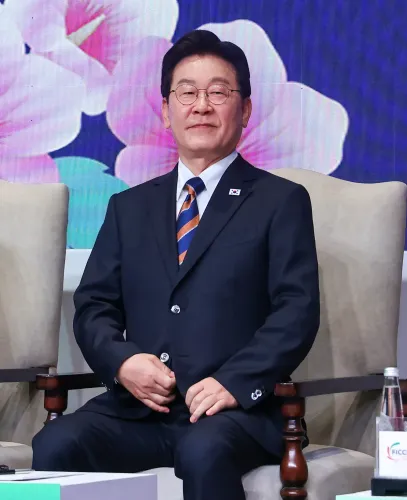
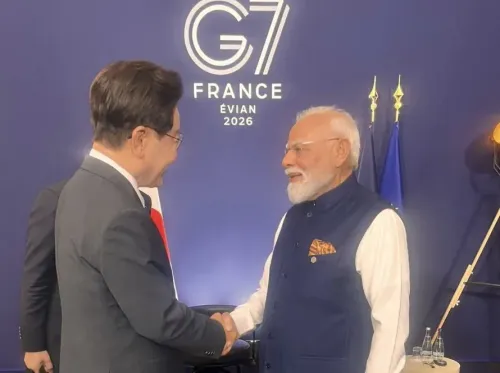
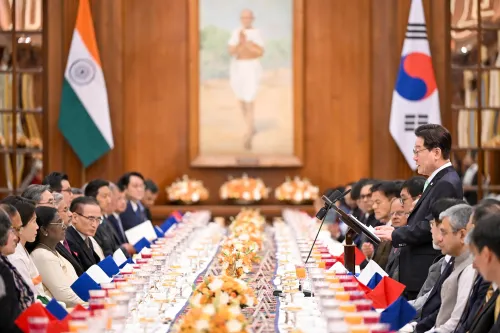
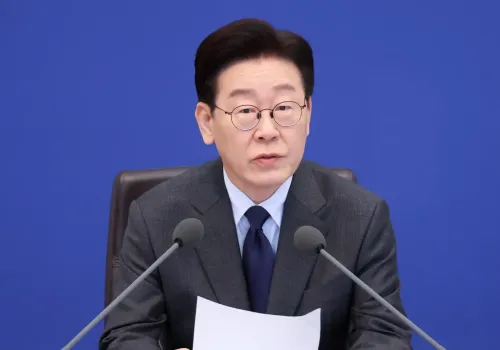
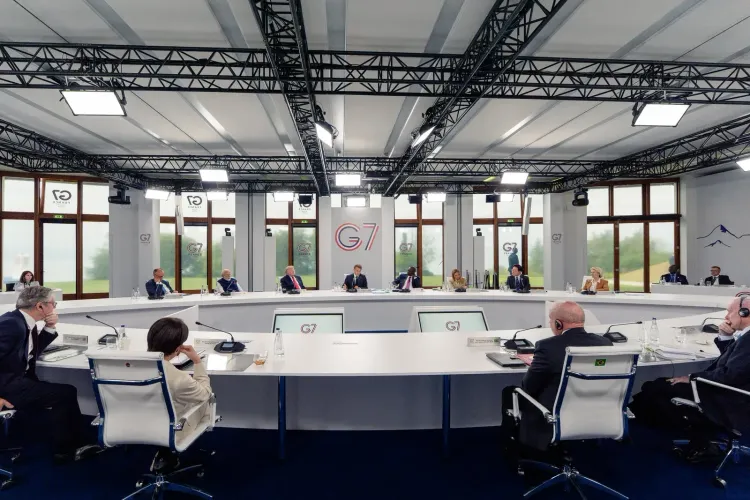
President Lee Jae Myung addressed the expanded session of the 2026 G7 Summit in Evian-les-Bains, France on 17 June 2026 .
Lee warned that the Middle East conflict has exposed significant energy supply chain vulnerabilities in the Asia-Pacific region.
South Korea pledged support for the International Energy Agency (IEA) to play a greater role in restoring energy resilience across Asia.
Lee also called for coordinated global action to address economic imbalances and secure stable supply chains.
At a working lunch with major AI company chiefs, Lee argued that AI must be a tool for inclusive growth , not a privilege for the few.
This marks the second consecutive year South Korea has been invited to the G7 Summit.
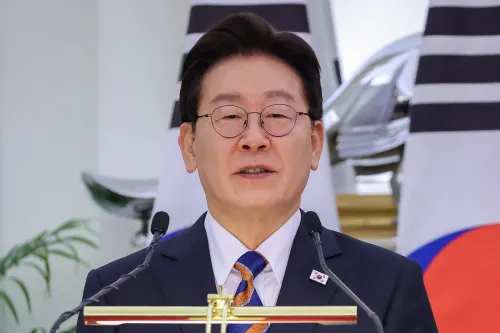
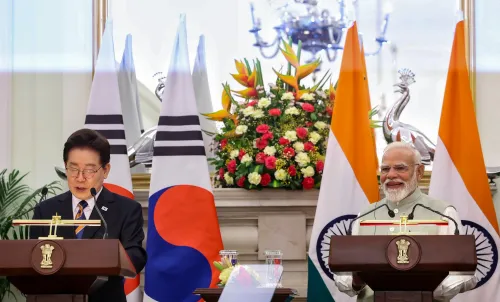
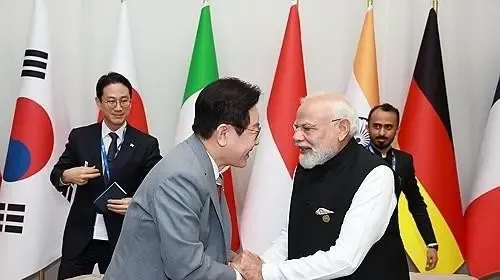
South Korean President Lee Jae Myung on Wednesday, 17 June 2026 called for stronger international cooperation to bolster the resilience of energy supply chains during an expanded session of the Group of Seven (G7) Summit in Evian-les-Bains, France. Lee's remarks came as the second expanded session of the 2026 G7 Summit brought together leaders of G7 member nations, invited partner countries, and the International Monetary Fund (IMF).
Energy Supply Chain Vulnerabilities in Focus
President Lee drew attention to how the ongoing conflict in the Middle East has exposed significant vulnerabilities in the Asia-Pacific region's energy supply chains relative to other parts of the world. He argued that these structural weaknesses demand a coordinated international response rather than fragmented national fixes, according to the presidential office.
Lee pledged South Korea's support for the International Energy Agency (IEA) in taking on a greater role in restoring supply chain resilience across the Asian region — a signal that Seoul is positioning itself as an active stakeholder in global energy governance, not merely a recipient of G7-led frameworks.
Addressing Global Economic Imbalances
Beyond energy, Lee also highlighted economic imbalances confronting the international community, calling for coordinated global efforts to narrow disparities. He reiterated South Korea's commitment to joining international initiatives aimed at securing stable supply chains more broadly — reflecting a dual-track agenda of energy security and economic equity.
AI, Cybersecurity and Inclusive Growth
Later on Wednesday, President Lee joined a working lunch attended by the chiefs of major AI companies to discuss cybersecurity and the protection of minors online. During the session, he was expected to stress that artificial intelligence should not remain a privilege for a select few, but must function as a tool for inclusive growth accessible to all, his office said.
South Korea's Expanding G7 Role
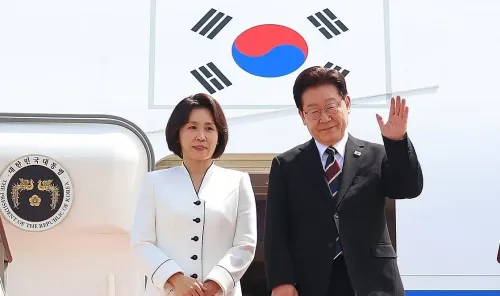
President Lee had arrived in Evian-les-Bains on Tuesday to participate in the summit as a partner country. The G7 — comprising France, Germany, the United States, Canada, Italy, Japan, and Britain — has now invited South Korea for the second consecutive year, underscoring Seoul's growing stature in multilateral economic and security forums. The Evian-les-Bains stop is the final leg of Lee's European tour, which previously included visits to Belgium and Italy.
South Korea's back-to-back G7 invitations suggest a deliberate effort by host nations to integrate major Asian economies into discussions on energy, AI governance, and global supply chain stability — issues where Seoul's industrial footprint makes it a consequential voice.
Point of View
Battery, and energy infrastructure footprint makes it indispensable to supply chain conversations. Lee's decision to lead with Middle East-linked Asia-Pacific vulnerabilities is pointed: it implicitly asks G7 members, most of whom have more diversified energy access, to treat Asian supply chain fragility as a shared problem rather than a regional one. The IEA pledge is significant because it pushes a Western-headquartered institution toward greater Asian mandate — a quiet but meaningful norm shift. Whether the G7 communiqué translates Lee's framing into binding commitments or polite language will be the real test.
NationPress
16 Sept 2026
Frequently Asked Questions
What did South Korea's President Lee Jae Myung say at the G7 Summit?
President Lee Jae Myung called for stronger international cooperation to enhance the resilience of energy supply chains, warning that the Middle East conflict has exposed significant vulnerabilities in the Asia-Pacific region. He also pledged South Korea's support for the International Energy Agency to take a greater role in Asian energy security.
Where and when was the 2026 G7 Summit held?
The 2026 G7 Summit took place in Evian-les-Bains, France. South Korea's President Lee attended the expanded session on Wednesday, 17 June 2026, as a partner country.
Why is South Korea attending the G7 Summit?
South Korea was invited as a partner country — not a full member — for the second consecutive year. The G7's seven permanent members are France, Germany, the United States, Canada, Italy, Japan, and Britain. Seoul's growing role in global supply chains and technology makes it a frequent invitee.
What did President Lee say about artificial intelligence at the G7?
At a working lunch with chiefs of major AI companies, President Lee was expected to argue that artificial intelligence should not be a privilege for a limited group but must serve as a tool for inclusive growth accessible to all, according to his presidential office.
What is South Korea's position on the International Energy Agency?
President Lee pledged South Korea's support for the International Energy Agency (IEA) to assume a greater role in restoring energy supply chain resilience specifically in the Asian region — a call to expand the IEA's mandate beyond its traditionally Western-centric focus.