Maharashtra STP model to become national benchmark: Dy CM Shinde
Synopsis
Maharashtra's Sewage Treatment Plant model is being pitched as a national blueprint at the Swachh Bharat Mission Urban 2.0 review — a significant endorsement of the state's Zero Waste and Waste-to-Energy push. With Union Minister Khattar calling for inter-state best-practice sharing, Maharashtra's PPP-driven sanitation framework could shape urban waste policy across India.
Key Takeaways
Deputy CM Eknath Shinde represented Maharashtra at the National Review Meeting of Swachh Bharat Mission Urban 2.0 on 21 May in New Delhi .
Maharashtra's Sewage Treatment Plant (STP) model is set to be developed as an 'ideal model' at the national level.
The state is advancing 'Zero Waste' , 'Waste-to-Energy' , and Compressed Biogas (CBG) projects through Public-Private Partnership (PPP) models.
Union Minister Manohar Lal Khattar urged states to adopt each other's best practices under 'Swachh Survekshan' and 'Swachh City Pairing' initiatives.
The meeting emphasised inter-state coordination and accelerating sustainable urban waste management systems nationwide.
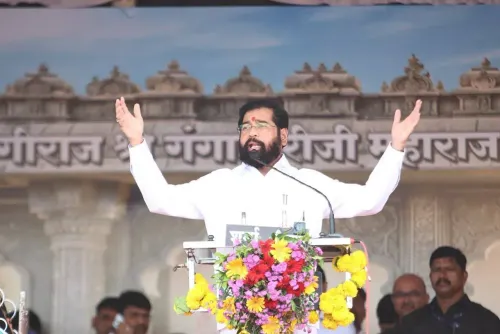
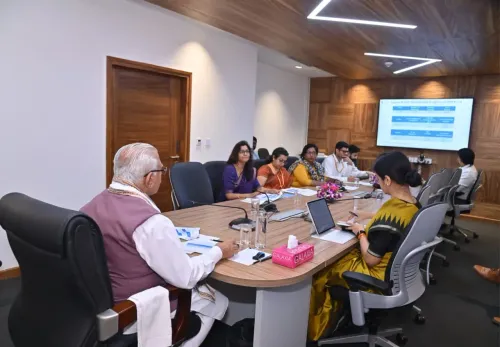
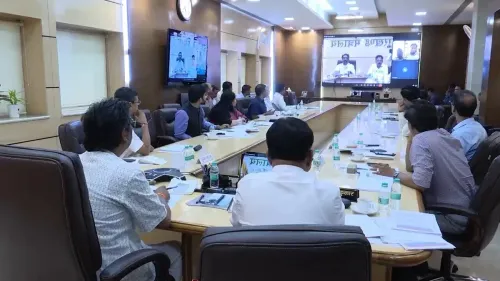
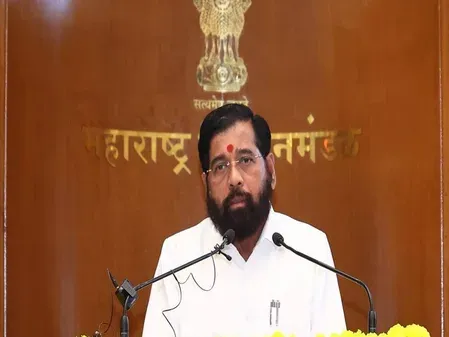
Maharashtra Deputy Chief Minister Eknath Shinde on Thursday, 21 May declared that the state's Sewage Treatment Plant (STP) model has proved highly effective and will soon be developed into an 'ideal model' for adoption at the national level. The announcement came during the National Review Meeting of Swachh Bharat Mission Urban 2.0, organised by the Union Ministry of Housing and Urban Affairs in New Delhi.
Maharashtra's Case at the National Meeting
Deputy CM Shinde represented Maharashtra at the review meeting, delivering a detailed presentation on the state's ongoing cleanliness campaigns and urban waste management projects. He assured that key guidelines and suggestions provided by the Central Government during the session would be implemented effectively across the state.
Calling the STP model a matter of pride for Maharashtra, Shinde said the state government was taking concrete steps towards realising the concepts of 'Zero Waste' and 'Waste-to-Energy'.
Waste-to-Wealth and Green Policy Initiatives
'The Swachh Bharat Mission is no longer merely a government campaign, but has transformed into a major public movement in Maharashtra,' Shinde said. He added that through the effective implementation of 'Waste-to-Wealth' initiatives, Compressed Biogas (CBG) projects, and the state's Green Policy, 'waste is rapidly being converted into valuable resources.'
The Maharashtra government is actively promoting these initiatives through Public-Private Partnership (PPP) models to accelerate sustainable waste management practices, according to the statement issued by the Deputy Chief Minister's Office.
Behavioural Change as the Core Goal
Deputy CM Shinde also highlighted the broader philosophy driving the mission, stating that the ultimate objective of cleanliness initiatives was not merely to clean surroundings, but to bring about positive behavioural changes in citizens' mindsets and habits. He said Maharashtra was witnessing encouraging results due to growing public awareness and participation.
Expressing confidence in the mission's future, Shinde said that active public participation, adoption of modern technology, and innovative administrative practices would help the country achieve new milestones in urban sanitation and waste management.
What the Centre Said
Union Minister Manohar Lal Khattar emphasised during the meeting that states should adopt one another's best practices under the 'Swachh Survekshan' and 'Swachh City Pairing' initiatives. 'Cleanliness is not just an administrative programme; it is a collective responsibility linked to public health, human dignity and the overall quality of life of citizens,' Khattar said, urging all states to intensify their cleanliness efforts.
The meeting also focused on strengthening inter-state coordination, sharing successful urban sanitation models, and accelerating the implementation of sustainable waste management systems across the country. Maharashtra's STP framework now stands as a frontrunner for replication at the national scale.
Point of View
But the proof will be in the replication. State-level sanitation successes in India have historically struggled to scale due to uneven urban local body capacity and funding gaps. The Centre's Swachh Survekshan rankings incentivise optics as much as outcomes — and PPP models in waste management have a mixed track record outside large metros. Whether Maharashtra's framework translates into verifiable improvement in smaller cities, or remains a conference presentation, is the question mainstream coverage is not yet asking.
NationPress
15 Sept 2026
Frequently Asked Questions
What is Maharashtra's STP model that is set to become a national benchmark?
Maharashtra's Sewage Treatment Plant (STP) model is an urban waste management framework that integrates Zero Waste principles, Waste-to-Energy conversion, and Compressed Biogas projects, promoted through Public-Private Partnership models. Deputy CM Eknath Shinde presented it at the Swachh Bharat Mission Urban 2.0 national review on 21 May as a replicable model for other states.
What is the Swachh Bharat Mission Urban 2.0 national review meeting?
It is a review meeting organised by the Union Ministry of Housing and Urban Affairs to assess state-level progress under Swachh Bharat Mission Urban 2.0, India's flagship urban sanitation programme. The meeting focuses on sharing best practices, inter-state coordination, and accelerating sustainable waste management.
What did Union Minister Manohar Lal Khattar say at the meeting?
Khattar urged all states to adopt each other's best practices under the Swachh Survekshan and Swachh City Pairing initiatives. He described cleanliness as 'a collective responsibility linked to public health, human dignity and the overall quality of life of citizens.'
How is Maharashtra promoting its waste management initiatives?
Maharashtra is advancing its waste management goals through Public-Private Partnership (PPP) models, Compressed Biogas (CBG) projects, a state Green Policy, and Waste-to-Wealth initiatives. Deputy CM Shinde said these efforts are converting waste into valuable resources at an accelerating pace.
Why does Maharashtra's sanitation model matter for the rest of India?
With the Centre actively encouraging inter-state sharing of urban sanitation best practices, Maharashtra's STP framework could serve as a template for cities struggling with sewage treatment and solid waste management. Its potential national adoption signals a shift toward standardising high-performing state models under Swachh Bharat Mission Urban 2.0.