How Modi's Dual Strategy Defeated Maoist Insurgency in India
Synopsis
Explore how the combination of strict measures and development initiatives under Modi's leadership has transformed India's battle against Maoist insurgency, leading to a significant decline in affected areas and casualties.
Key Takeaways
Modi's government adopted a dual strategy combining enforcement and development.
Significant reduction in Maoist-affected districts from 126 in 2014 to just 2 in 2026.
Over 20,000 lives lost during the insurgency, including many security personnel.
Innovative surrender policy incentivized Naxals to reintegrate into society.
Conclusive data challenges the narrative that poverty drives Maoism.
New Delhi, March 31 (NationPress) Over the years, despite having claimed limited resources, Maoist insurgents successfully cultivated a narrative supporting their "armed revolution against the state.” The NDA government asserts this movement had backing from the previous Congress administration and segments of the urban elite.
It was often argued that extreme poverty in rural areas, particularly among tribal communities, fueled the rise of Maoism, with the insurgents allegedly providing assistance to those in distress.
However, data shared by Union Home Minister Amit Shah during a parliamentary session debunked this misconception.
Statistics from the 1960s reveal that Naxalbari had a higher per capita income than regions like Saharsa in Bihar, indicating that ideology, rather than poverty, primarily drove the movement, as highlighted from various documents.
The ideological groundwork laid by Mao Zedong's principles was evident in Naxalbari, situated in the Siliguri subdivision of West Bengal's Darjeeling district.
In 1967, around Nepal's Terai region, radical Left leaders rallied tribal farmers against oppressive landlords to demand land rights.
Inspired by Mao Zedong’s assertion that “political power comes from the barrel of a gun,” the movement aimed to dismantle feudal systems and create a fairer society. Yet, the ultimate goal was to establish a “People's Democratic Republic” through armed rebellion.
This uprising marked the inception of a wider Maoist insurgency in India. Although it was quelled, it sparked similar movements nationwide, leading to the broader Naxalite insurgency.
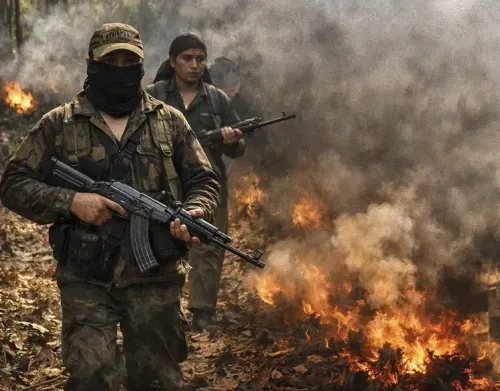
As the Home Minister noted, the 'Red Corridor' stretched across 12 states, impacting 70 percent of the nation and affecting 200 million citizens. In this period, more than 20,000 lives were lost in the violence, including over 5,000 security personnel.
Refuting another common belief, Shah emphasized that investigations indicated the Naxals were extracting an annual “tax” of Rs. 240 crore from local residents.
Witnesses in affected areas reported roads being dug up and massive trees being cut down as a defense against security operations.
Concurrently, these tactics obstructed all development efforts, welfare initiatives, and state assistance from reaching the communities.
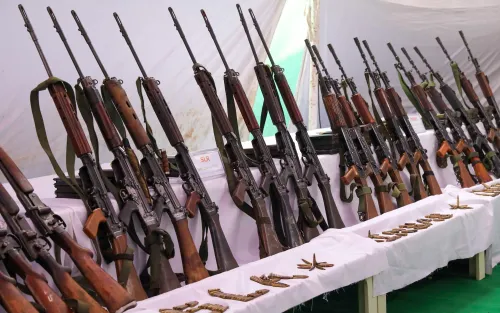
Moreover, bomb blasts and sporadic armed assaults on industrial sites instilled widespread fear. Home Minister Shah stated that nearly 92 percent of the weaponry used by the Naxals was not imported, as previously claimed, but rather looted from police stations and armories.
To amplify their intimidation tactics, frequent raids were conducted. Notably, in 2005, 1,000 armed Naxals attacked a CRPF camp and a jail in Bihar’s Jehanabad, liberating 389 inmates, as pointed out by Shah.
Simultaneously, the National Advisory Council (NAC) and various urban intellectuals, referred to as “Urban Naxals,” provided the insurgents with both legal and policy support.
Ironically, the NAC, an extra-constitutional advisory body, was formed in 2004 to counsel the Prime Minister on social, economic, and developmental policies under the leadership of Sonia Gandhi. However, since the Narendra Modi-led government took office in 2014, a combination of an iron fist and a velvet glove approach has transformed India into a Naxal-free nation “as of March 31, 2026, ending a 56-year-long conflict,” asserted Shah.
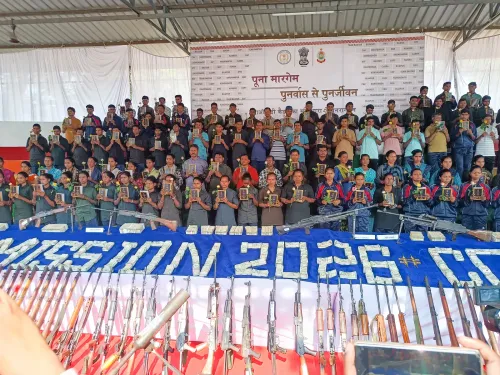
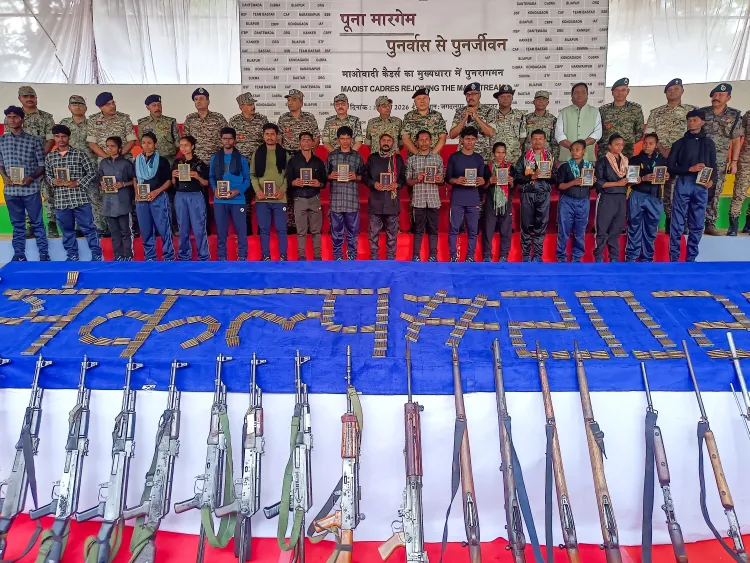
The number of 'affected' districts plummeted from 126 in 2014 to just 2 in 2026, while 'most affected' districts diminished from 35 to none, with the entire top leadership neutralized or having surrendered. A strict policy against “Urban Naxals” and an appealing surrender scheme—where surrendering Naxals receive Rs. 50,000 as immediate aid, monthly financial support for 36 months, educational assistance for children until class 12, and housing under PM Awas Yojana—served as the velvet glove.
As Shah articulated, the transition from bullets to ballots was achieved through a combination of ‘goli ka jawab goli (bullet for bullet)’ and ‘development for all’ that reinstated the rule of law. Notably, rewards are doubled for collective surrenders, with any Panchayat that becomes Naxal-free receiving Rs. 1 crore.
Ultimately, it was the government's unwavering determination, meticulous planning, and effective execution that enabled both the iron fist and the velvet glove to neutralize threats to democracy.
Point of View
Emphasizing a nation-first approach to restoring peace and development.
NationPress
29 Sept 2026
Frequently Asked Questions
What led to the rise of Maoist insurgency in India?
The Maoist insurgency in India was fueled by ideological beliefs rather than purely economic factors, despite claims of poverty driving the movement. Historical events like the Naxalbari uprising in the 1960s set the stage for broader Maoist activities.
What strategies did the Modi government implement against Maoism?
The Modi government adopted a dual approach of strong enforcement measures combined with development initiatives, leading to a significant decrease in Maoist-affected districts and casualties.
How effective were the government's policies in reducing Maoist violence?
The government's policies proved effective, as evidenced by the drastic reduction of affected districts from 126 in 2014 to just 2 in 2026, along with a substantial decrease in violence-related fatalities.
What role did the National Advisory Council play in the insurgency?
The National Advisory Council, formed in 2004, provided legal and policy support to insurgents, complicating the government's efforts to combat Maoism until a shift in policy occurred under the Modi administration.
What incentives were offered to Naxals to surrender?
The government introduced a lucrative surrender policy, offering immediate financial aid, monthly stipends, educational support for children, and housing assistance to incentivize Naxals to abandon their insurgent activities.