Moradabad Posters Warn Sanatanis Against Selling Homes to Muslims
Synopsis
Residents of Moradabad's Shriram Society have put up posters declaring it an 'exclusively Hindu Sanatani' zone, urging fellow residents not to sell homes to Muslims. Over two dozen families joined the campaign, citing demographic fears and concerns over a Ram temple in the locality. Legal experts say such bans are unenforceable under Indian law.
Key Takeaways
More than two dozen residents of Shriram Society, Lajpat Nagar, Moradabad have erected posters urging Hindu Sanatanis not to sell homes to Muslim community members .
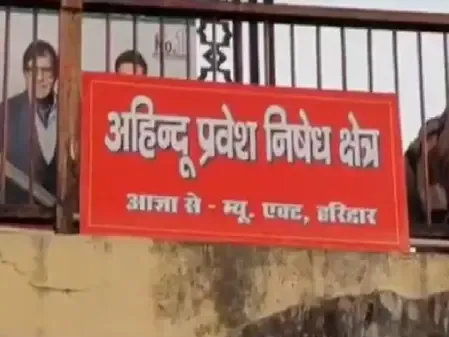
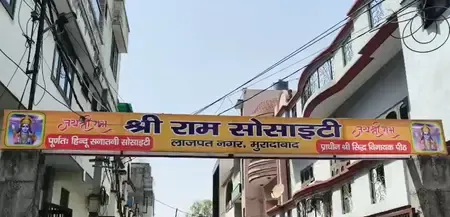
A large signboard reading "Hindu Society" has been installed at the main entrance of the residential complex, alongside posters featuring Lord Shri Ram's images .
Resident Sunil Rastogi alleged that Muslim buyers are offering above-market prices to acquire homes in the society, and demanded government legislation to address this.
Resident Neeraj Agarwal claimed more than half the properties in surrounding outskirts have already been bought by members of the minority community .
Legal experts note that community-level bans on property sales based on religion are not legally enforceable under Indian law and may violate constitutional rights.
As of April 26, 2025 , no FIR or administrative action has been reported in connection with the poster campaign.
Moradabad, Uttar Pradesh, April 26: Residents of Shriram Society in the Lajpat Nagar locality of Moradabad district, Uttar Pradesh, have erected large posters and signboards urging fellow Hindu Sanatani residents not to sell their homes to members of other communities — specifically the Muslim community — citing fears of rapid demographic shifts in their neighbourhood.
What the Posters Say and Who Put Them Up
More than two dozen residents of Shriram Society have jointly displayed large posters outside their homes, explicitly declaring the locality an "exclusively Hindu Sanatani" society. The posters, which feature images of Lord Shri Ram, warn members of other religious communities against attempting to purchase or rent property within the residential complex.
A large signboard reading "Hindu Society" has also been installed at the main entrance of the complex. Residents say the initiative is a collective effort to preserve the religious and social character of the neighbourhood.
Residents Cite Temple, Safety, and Demographic Concerns
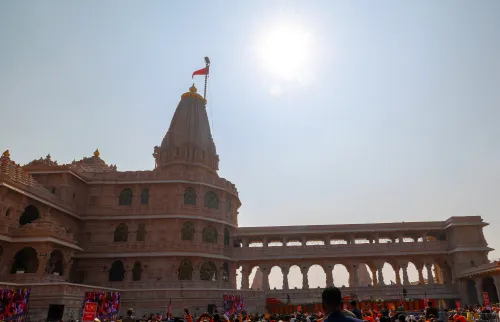
Several residents explained that a temple dedicated to Lord Shri Ram is located within the society's park, where daily prayers and aarti are conducted. They fear that the arrival of residents from other faiths could disrupt these religious practices.
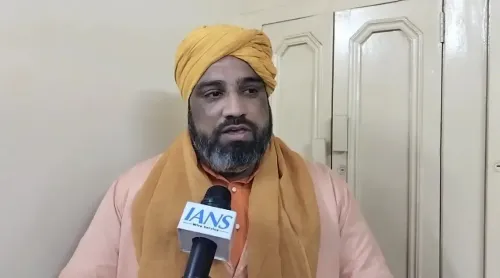
A resident named Soni told reporters that society members are particularly concerned about the safety of women and children, and that vigilance is essential in the current climate. She appealed to Hindu families to refrain from selling their properties to members of other communities.
Another resident, Sunil Rastogi, alleged that individuals from the Muslim community are actively attempting to purchase homes in the society by offering prices above market rates. He called upon the government to legislate measures that would allow communities to regulate such transactions in the interest of social peace and security.
Neeraj Agarwal, a local resident, stated that putting up posters had become a necessity. He claimed that more than half the properties in the surrounding outskirts have already been purchased by members of the minority community, and described the poster campaign as a symbolic yet firm message against what he called an imbalance in the social fabric.
Broader Context: A Pattern Across Uttar Pradesh
This incident in Moradabad is not isolated. Similar poster campaigns and community-level declarations of "Hindu-only" residential zones have been reported in several towns across Uttar Pradesh and other states in recent years, reflecting a growing trend of communal self-segregation driven by fears of demographic change.
Critics and civil society groups argue that such campaigns, while framed as community self-protection, can deepen communal polarisation, violate constitutional principles of equality and non-discrimination, and potentially contravene property rights guaranteed under Indian law. Legal experts note that no individual or community group has the legal authority to restrict property transactions on the basis of religion.
This comes amid a broader national debate over demographic anxieties, Love Jihad narratives, and calls for legislation to regulate inter-community property sales — demands that have gained traction in certain political quarters but have not yet been codified into law at the central level.
Legal and Constitutional Implications
Under Article 19(1)(f) — historically — and current property law frameworks, every Indian citizen holds the right to acquire, hold, and dispose of property without religious discrimination. Legal experts point out that community-level bans on property sales to specific religious groups are not legally enforceable and could expose organisers to action under laws prohibiting promotion of enmity between groups.
No police action or FIR has been reported in connection with the posters as of the time of this report. Local administration has not issued any official statement on the matter.
What Happens Next
The Moradabad district administration and Uttar Pradesh Police are yet to respond publicly to the poster campaign. Civil rights organisations may seek legal intervention if the campaign escalates or leads to harassment of prospective buyers from minority communities. The incident is likely to reignite political debate over communal harmony, housing rights, and the role of the state in regulating community-level exclusion in India's increasingly polarised social landscape.
Point of View
Accelerating trend — the weaponisation of demographic anxiety to enforce informal segregation in Indian neighbourhoods, outside the bounds of law or constitutional morality. What makes this particularly alarming is not the posters themselves, but the silence of local administration, which sends an implicit signal of tolerance for exclusionary practices. No community group in India holds the legal right to restrict property transactions by religion — yet these campaigns are proliferating with near-impunity across Uttar Pradesh. If the state continues to look away, it risks normalising a parallel, extrajudicial social order that fundamentally contradicts the constitutional promise of equality.
NationPress
20 Sept 2026
Frequently Asked Questions
What is happening at Shriram Society in Moradabad?
Residents of Shriram Society in Lajpat Nagar, Moradabad have put up posters urging Hindu Sanatani residents not to sell their homes to members of the Muslim community. The campaign cites fears of demographic change and the desire to protect the religious character of the locality.
Is it legal to ban property sales to a specific religious community in India?
No, such bans are not legally enforceable under Indian law. Every citizen has the right to acquire and dispose of property without religious discrimination, and community-level restrictions based on religion could violate constitutional provisions and laws against promoting communal enmity.
Why are Moradabad residents putting up 'Hindu Society' posters?
Residents say they fear demographic shifts in their neighbourhood, with members of the Muslim community allegedly purchasing properties at above-market prices. They also cite the presence of a Ram temple in the society park and concerns about the safety of women and children.
Has the Uttar Pradesh government or police taken any action over the Moradabad posters?
As of April 26, 2025, no FIR has been registered and the local administration has not issued any official statement regarding the poster campaign at Shriram Society in Moradabad.
Is this the first such incident in Uttar Pradesh?
No, similar campaigns declaring residential areas as Hindu-only zones have been reported in multiple towns across Uttar Pradesh and other states in recent years. The Moradabad incident is part of a broader pattern of communal self-segregation linked to demographic anxiety narratives.