Taslima Nasreen urges Bangladesh PM to halt Hindu attacks

Synopsis
Exiled author Taslima Nasreen has gone directly to Bangladesh’s prime minister, naming three Hindu men arrested after blasphemy accusations — while their alleged attackers faced no charges. Her open letter frames the incidents not as isolated events but as a systematic campaign to empty Bangladesh of its Hindu population, and puts Tarique Rahman’s equality pledges squarely on the record.
Key Takeaways
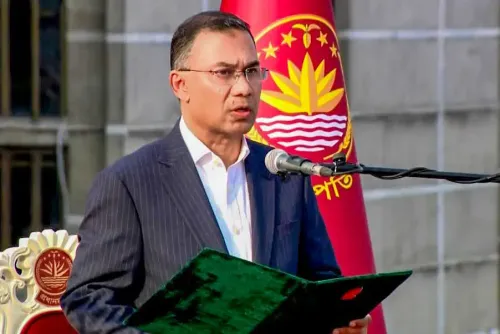
Exiled activist Taslima Nasreen wrote to Bangladesh PM Tarique Rahman on 23 May urging protection for the country’s Hindu minority .
On 19 May , Hindu schoolteacher Gouranga Sarkar was detained in Satkhira and Shaon Chandra Das was arrested in Gouripur over blasphemy allegations.
Islamist group Towhidi Janata reportedly held protest marches demanding capital punishment for Das before his arrest.
Nasreen described the incidents as part of a ‘terrifying conspiracy’ to make Bangladesh ‘devoid of Hindus’, citing earlier cases involving Rasaraj Das , Titu Roy , Utsab Mondal , and Dipu Das .
She questioned why police arrested victims rather than attackers, and called blasphemy accusations a tool to suppress dissent and persecute minorities .
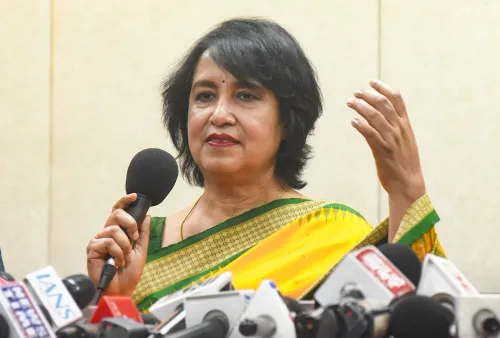
Exiled Bangladeshi author and human rights activist Taslima Nasreen has written an open letter to Bangladesh Prime Minister Tarique Rahman, urging him to act decisively against escalating attacks on Hindus in Bangladesh. The letter, shared on 23 May via her social media account on X, calls on the prime minister to protect minorities, uphold freedom of expression, and take a firm stand against what she described as “fanaticism and mob terror” carried out in the name of religion.
What Nasreen Said
Nasreen directly challenged the prime minister on his stated commitments. “You had said that equal rights for all citizens, regardless of religion or ethnicity, would be ensured in Bangladesh. But in reality, we are once again witnessing attacks on Hindus, the grabbing of their land, and the destruction of their lives on the basis of rumours and allegations,” she wrote.
She named three specific victims: Gouranga Sarkar, a schoolteacher from Satkhira; Mithu Mondal, a computer lab operator from a school in Gopalganj; and Shaon Chandra Das of Gouripur College in Mymensingh district — all allegedly targeted by extremist groups over accusations of ‘insulting Islam’. “Instead of taking action against the attackers, the police arrested the victims themselves,” Nasreen stated.
Documented Incidents on 19 May
According to local media reports, police on 19 May detained Hindu schoolteacher Gouranga Sarkar in Satkhira district after allegations that remarks made during a classroom lecture had hurt Muslim religious sentiments. On the same day, Shaon Chandra Das was arrested in Gouripur upazila over accusations of insulting an Islamic religious text. Prior to his arrest, an Islamist group identifying itself as “Towhidi Janata” reportedly staged protest marches in Gauripur municipality, demanding what it described as capital punishment for Das.
Nasreen argued that these are not isolated incidents but part of what she called a “terrifying conspiracy” to systematically render “Bangladesh devoid of Hindus.” She cited earlier cases — involving individuals named Rasaraj Das, Titu Roy, Utsab Mondal, and Dipu Das — as evidence of a recurring pattern in which blasphemy rumours are used to incite mob attacks, burn homes, vandalise temples, and force minorities to flee.
The Broader Pattern of Minority Persecution
Nasreen questioned whether authorities had taken any real action against those inciting anti-Hindu hatred, noting what she described as little visible effort to halt “filthy communal politics.” She argued that allegations of ‘blasphemy’ have become a tool to suppress dissent, persecute minorities, and spread social terror. “If the state does not take a firm stand against those who want to gradually turn Bangladesh into a Hindu-free country, then that silence only encourages them,” she wrote.
This comes amid broader concerns about the safety of religious minorities in Bangladesh, which have drawn periodic attention from international human rights organisations. Critics argue that law enforcement agencies have repeatedly failed to protect Hindu communities from mob violence, and that the legal system has at times been used against victims rather than perpetrators.
What Happens Next
Nasreen questioned the future of those detained, asking how individuals who have lost their jobs, faced social ostracism, and live in extreme insecurity are expected to survive after release. The letter has drawn attention to the condition of Bangladesh’s Hindu minority, which reportedly comprises roughly 8–9% of the country’s population and has faced documented episodes of communal violence over successive political transitions. Whether the Rahman administration responds formally to Nasreen’s appeal remains to be seen.
Point of View
Effectively outsourcing communal policing to extremist groups. Tarique Rahman came to power with pledges of equal rights; Nasreen is holding that promise up against a very specific, named reality. The international community has largely treated Bangladesh’s minority situation as a secondary concern; letters like this, from a figure with global visibility, make that position harder to sustain. The deeper question is whether the Rahman administration has the political will to confront the religious constituency that blasphemy prosecutions implicitly appease.
NationPress
6 Oct 2026
Frequently Asked Questions
Why did Taslima Nasreen write to Bangladesh PM Tarique Rahman?
Taslima Nasreen wrote to Prime Minister Tarique Rahman on 23 May to urge him to protect Bangladesh’s Hindu minority from escalating mob attacks and blasphemy-related arrests. She cited three recent cases in which Hindu men were detained by police following accusations of insulting Islam, while their alleged attackers faced no action.
Who are the Hindu victims named in Nasreen’s letter?
Nasreen named schoolteacher Gouranga Sarkar of Satkhira, computer lab operator Mithu Mondal of a school in Gopalganj, and Shaon Chandra Das of Gouripur College in Mymensingh district. All three were reportedly targeted by extremist groups over accusations of ‘insulting Islam’ and were subsequently arrested by police.
What happened to Shaon Chandra Das in Gouripur?
Shaon Chandra Das was arrested on 19 May in Gouripur upazila, Mymensingh district, on accusations of insulting an Islamic religious text. Before his arrest, an Islamist group called ‘Towhidi Janata’ reportedly staged protest marches demanding capital punishment for him.
What is Taslima Nasreen’s broader argument about Hindu persecution in Bangladesh?
Nasreen argues that attacks on Hindus are not isolated incidents but part of a systematic conspiracy to make Bangladesh free of Hindus. She cited earlier victims including Rasaraj Das, Titu Roy, Utsab Mondal, and Dipu Das, and said blasphemy allegations have become a recurring weapon to incite mob violence, burn homes, and force minorities to flee.
What is the status of the Hindu minority in Bangladesh?
Bangladesh’s Hindu community reportedly comprises roughly 8–9% of the country’s population and has faced documented episodes of communal violence across successive political transitions. Human rights groups have periodically raised concerns about the community’s safety and the state’s response to mob attacks targeting minorities.