Nepal's Bhote Koshi flood wiped out key river-monitoring stations
Synopsis
A government assessment has revealed that the catastrophic August 26 Bhote Koshi-Trishuli flood didn't just devastate communities — it wiped out Nepal's own eyes on the river. With monitoring stations gone and the flood wave clocked at 188 km/h, Nepal is now managing one of its most dangerous river corridors effectively blind, raising urgent questions about how the country will respond to the next extreme event.
Key Takeaways
The 26 August 2025 Bhote Koshi-Trishuli flood destroyed or disabled hydrological monitoring stations at Rasuwagadhi , Syaphru Besi , Betrawati , and Phurke Khola .
The flood wave travelled 22 km to the Rasuwagadhi border in approximately seven minutes at an average speed of 188 km per hour .
Nepal is currently without an adequate flood-warning system on both the Bhote Koshi and Trishuli rivers, according to hydrologist Sauharda Joshi .
An interim CCTV camera has been installed at Timure, Rasuwagadhi ; new monitoring systems are being planned for Betrawati and Phurke Khola .
Authorities are considering a dual-station model — one at riverbank level and one at a higher elevation — to prevent total monitoring failure during future floods.
The assessment was prepared by the Centre of Hydrology and Water Resources Research (CHWRR) under Nepal's Water and Energy Commission Secretariat .
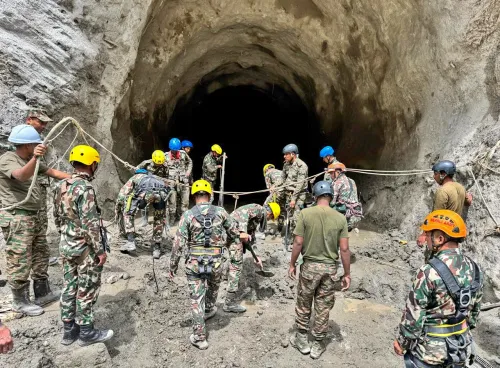
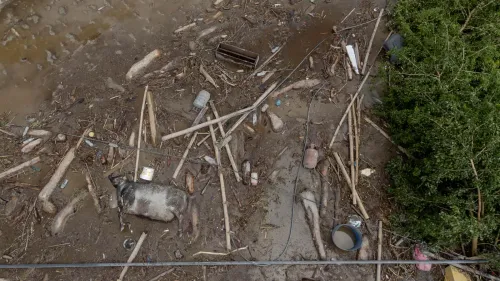
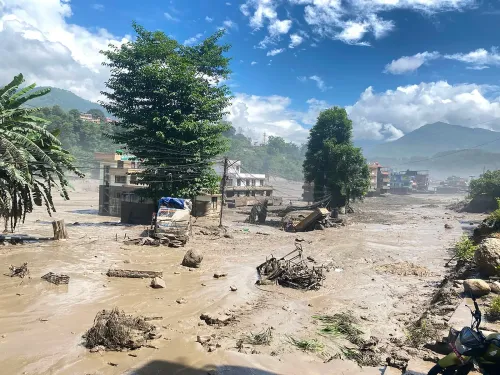
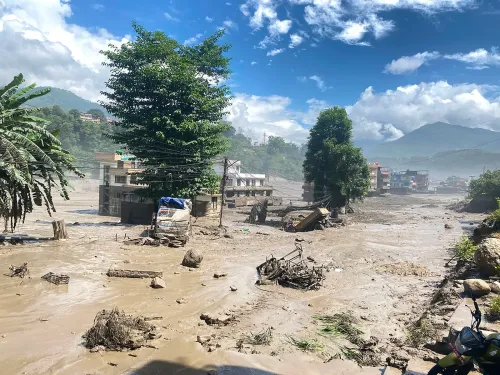
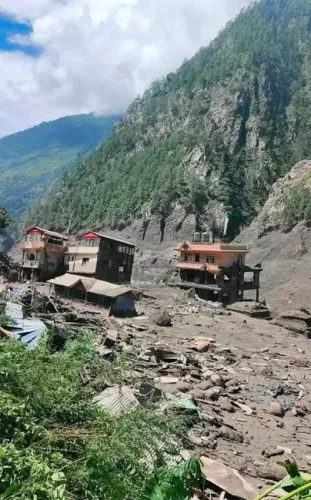
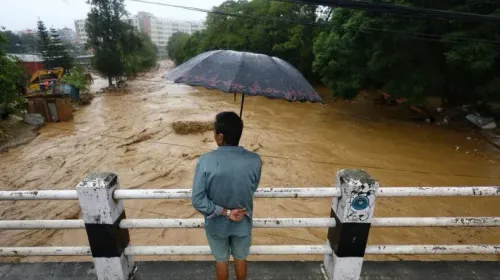
Nepal lost several critical hydrological monitoring stations during the catastrophic Bhote Koshi-Trishuli flood on 26 August 2025, severely undermining real-time river surveillance as an extreme flood wave tore downstream at unprecedented speed, according to a government assessment. The loss has left the Bhote Koshi and Trishuli river corridors without an adequate flood-warning system at a time of heightened seasonal risk.
Stations Destroyed or Disabled
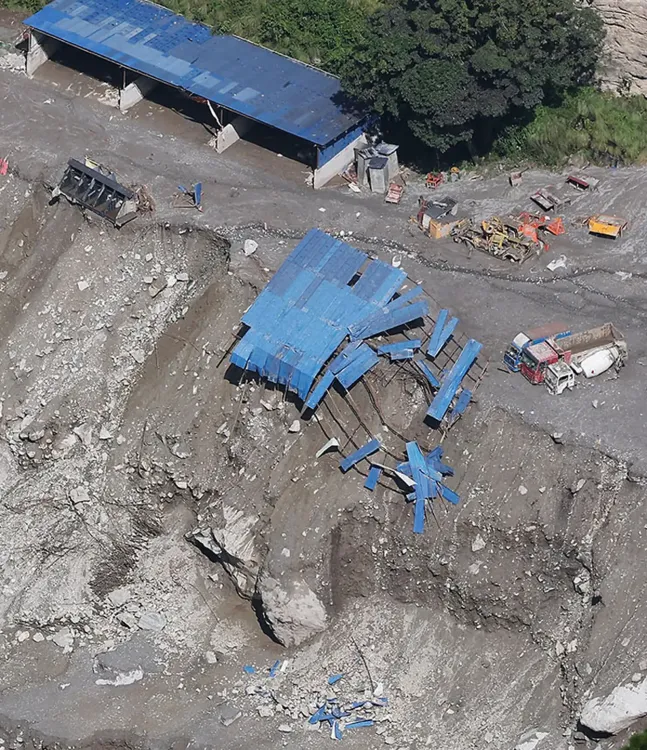
The Assessment Report II, prepared by the Centre of Hydrology and Water Resources Research (CHWRR) under Nepal's Water and Energy Commission Secretariat, confirmed that the flood was severe enough to destroy or disable several key monitoring stations along the Bhote Koshi-Trishuli corridor. The affected sites included stations at Rasuwagadhi, Syaphru Besi, Betrawati, and Phurke Khola in Malekhu — all strategically located along the flood-hit river system.
At Rasuwagadhi (Timure), data transmission ceased at 8:40 a.m. with the final recorded water level at 3.8 metres, after which the station was washed away. At Syaphru Besi, transmission stopped at 8:50 a.m. when the last reading stood at 1.62 metres before the station was swept away. The Betrawati station on the Trishuli River went offline at 9:20 a.m. after recording 3.55 metres, and the Phurke Khola station at Malekhu in Dhading district was destroyed at 11:43 a.m. after water levels exceeded the danger threshold — taking an associated bridge with it.
Flood Wave Speed: A Monitoring Nightmare
The assessment underscores why conventional monitoring struggled: the flood wave travelled approximately 22 km from its source to the Rasuwagadhi border in roughly seven minutes, at an average speed of about 188 km per hour. This extraordinarily rapid propagation left virtually no warning lead time for downstream communities or operators.
Sauharda Joshi, a hydrologist at Nepal's Department of Hydrology and Meteorology and one of the officials who prepared the report, said the stations 'were unable to capture the exact flood levels because the massive flood washed them away on 26 August.' He attributed the destruction to the 'massive flood that flowed at too high a velocity.' The report described the losses as highlighting 'the extreme nature of the flood event.'
A Dangerous Monitoring Gap
With the stations gone, Nepal is currently operating without a functional flood-warning network on both the Bhote Koshi and Trishuli rivers, Joshi said. 'The immediate risk is that we are without a flood-warning system in the Bhote Koshi and Trishuli,' he noted. The Bhote Koshi is a transboundary river shared between Nepal and China, adding a cross-border dimension to the monitoring challenge.
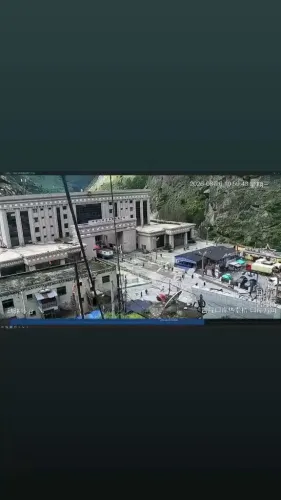
As an interim measure, Nepal has installed a CCTV camera at Timure, Rasuwagadhi for visual river monitoring. Authorities have also initiated the process of installing flood-monitoring systems at Betrawati and Phurke Khola, with locations identified following field visits, according to Joshi.
Long-Term Fix Under Discussion
Officials are currently deliberating a dual-station model — one monitoring system installed along the riverbank and a second at a higher elevation — so that if a bank-level station is damaged, the elevated station can continue transmitting flood data. Joshi acknowledged, however, that there are 'currently not enough flood-monitoring systems in place following the latest disaster.'
The destruction of Nepal's monitoring network raises urgent questions about infrastructure resilience in the face of increasingly extreme Himalayan flood events. With monsoon season ongoing and the affected corridors still vulnerable, the timeline for restoring a robust early-warning system will be closely watched by disaster management authorities and downstream communities alike.
Point of View
Not a solution. Nepal — and by extension India, which lies downstream — needs a rethink of monitoring architecture that places sensors at flood-safe elevations with redundant data links, not just on vulnerable riverbanks. The transboundary dimension of the Bhote Koshi adds another layer of urgency: upstream data-sharing with China is essential for any meaningful early warning, and that conversation needs to happen well before the next monsoon.
NationPress
14 Sept 2026
Frequently Asked Questions
Which flood-monitoring stations did Nepal lose in the Bhote Koshi disaster?
Nepal lost or had disabled four key hydrological monitoring stations: Rasuwagadhi, Syaphru Besi, Betrawati, and Phurke Khola in Malekhu. All were located along the Bhote Koshi and Trishuli river corridors and were destroyed by the 26 August 2025 flood.
How fast did the Bhote Koshi flood wave travel?
According to the government's Assessment Report II, the flood wave travelled approximately 22 km from its source to the Rasuwagadhi border in about seven minutes, at an average speed of 188 km per hour. This exceptionally rapid propagation left almost no warning lead time.
Is Nepal currently without a flood-warning system on the Bhote Koshi and Trishuli?
Yes. Hydrologist Sauharda Joshi of Nepal's Department of Hydrology and Meteorology has confirmed that there are currently not enough flood-monitoring systems in place following the disaster. An interim CCTV camera has been installed at Timure, Rasuwagadhi, but a full early-warning network is yet to be restored.
What replacement monitoring measures is Nepal putting in place?
Nepal has installed a CCTV camera at Timure, Rasuwagadhi for visual monitoring. Authorities have also initiated the installation of flood-monitoring systems at Betrawati and Phurke Khola following field visits. Officials are also evaluating a dual-station model — one at riverbank level and one at a higher elevation — to ensure monitoring continues even if a lower station is destroyed.
Why is the Bhote Koshi river particularly difficult to monitor?
The Bhote Koshi is a high-gradient transboundary river shared between Nepal and China, prone to extremely rapid and powerful flash floods. The August 26 event demonstrated that flood waves can reach speeds of around 188 km/h, making conventional riverbank-level monitoring stations vulnerable to destruction before they can fully record peak conditions.