Omar Abdullah pushes value-based tourism model for J&K at Srinagar conclave
Synopsis
J&K CM Omar Abdullah used a high-level tourism conclave in Srinagar to make a pointed argument: chasing tourist numbers is a trap. Citing the Pahalgam incident as proof of how a single event can hollow out an entire season, he called for carrying-capacity limits, scientific waste management, and a premium-experience model — a direct challenge to the volume-first approach that has defined J&K tourism for three decades.
Key Takeaways
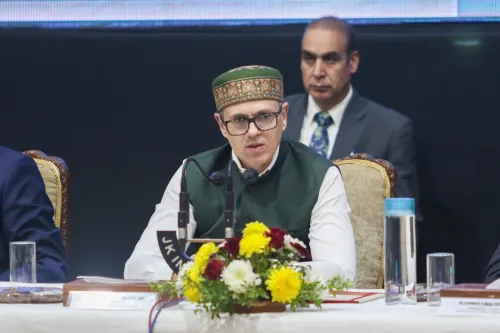
Omar Abdullah on 9 July called for a shift from volume-based to value-based tourism at the Conclave on Sustainable Tourism Planning at SKICC, Srinagar .
He cited the Pahalgam incident as a reminder of how a single event can devastate an entire tourist season in J&K.
The CM stressed scientific assessment of carrying capacity for each destination, rejecting a one-size-fits-all approach for sites like Gulmarg , Gurez , and Srinagar .
Key priorities outlined include traffic regulation, waste management, water conservation, building regulation enforcement, and community participation.
The government is preparing tourism master plans for destinations across J&K using a tier-based categorisation approach.
Abdullah cautioned against unplanned regulatory measures, urging thorough stakeholder consultation before every intervention.
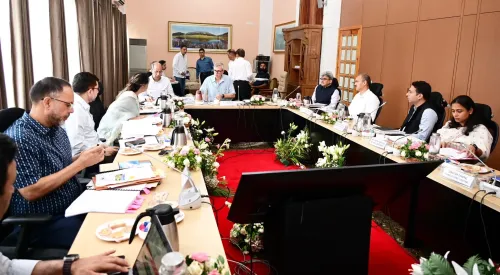
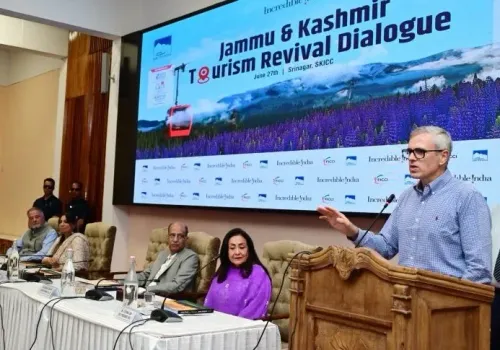
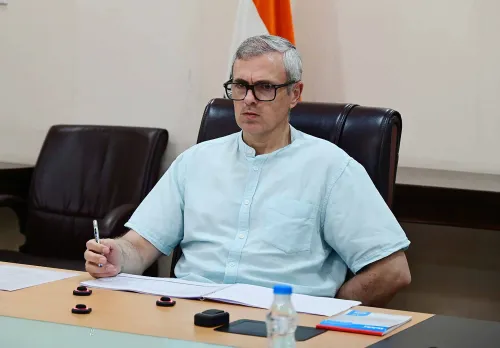
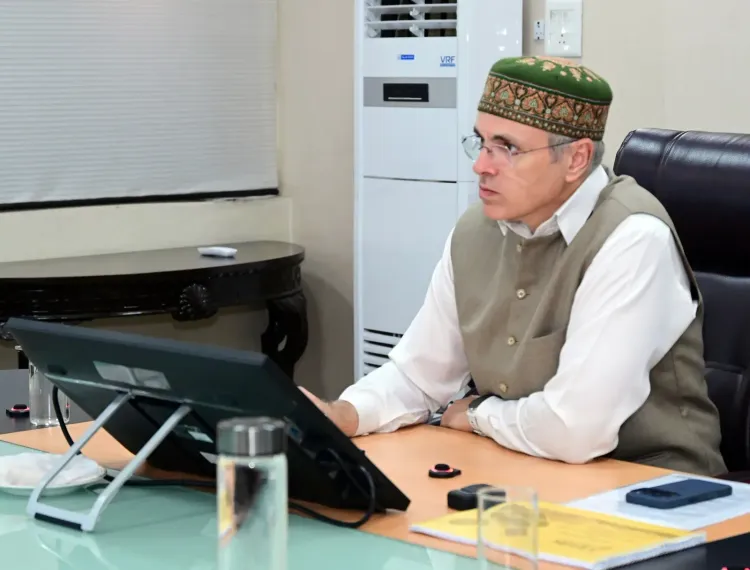
Jammu and Kashmir Chief Minister Omar Abdullah on Thursday, 9 July called for a fundamental reorientation of the region's tourism strategy at the Conclave on Sustainable Tourism Planning held at SKICC, Srinagar, urging policymakers, industry stakeholders, and local communities to move decisively away from volume-driven tourism toward a value-based, ecologically sustainable model. The conclave, organised by the Department of Tourism, J&K, was themed 'Designing Tourism for Tomorrow'.
The Core Argument: Quality Over Quantity
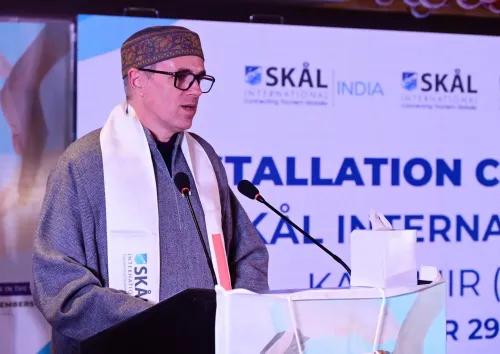
In his keynote address, Abdullah framed the choice facing J&K's tourism planners in stark terms. 'We have to decide whether we wish to earn by charging one hundred tourists one rupee each or by creating an experience where one tourist is willing to pay one hundred rupees. The answer to that question must shape all our future tourism master plans,' he said.
The Chief Minister was unequivocal on the cost of ignoring sustainability. 'Tourism without sustainability is an unqualified disaster. It may survive for a few years, but it cannot endure in the long run unless sustainability is built into its very foundation,' he said. He added that sustainable tourism is 'no longer a choice, but an imperative' for preserving J&K's environment and securing its most vital economic sector.
Pahalgam Incident and the Fragility of J&K Tourism
Abdullah drew directly from recent experience to illustrate the sector's vulnerability. He noted that before the Pahalgam incident, the region was grappling with severe traffic congestion from a massive tourist influx — only to see hotels and destinations turn empty shortly after. 'This reminds us how fragile tourism can be in Jammu and Kashmir, where a single incident can affect the whole season,' he observed.
He acknowledged that over the past three decades, J&K had understandably pursued a volume-based approach to demonstrate normalcy after years of conflict. However, he argued that the recent fluctuations in arrivals had once again exposed the vulnerability of the tourism ecosystem, making a strategic pivot unavoidable.
Key Issues: Traffic, Waste, Water, and Carrying Capacity
The Chief Minister outlined a comprehensive set of challenges that sustainable tourism planning must address: traffic regulation, parking infrastructure, waste management, water conservation, building regulations, carrying capacity, and community participation.
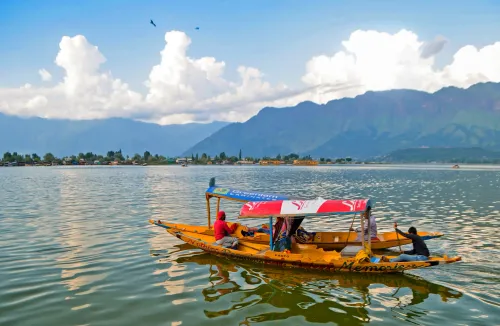
On waste, he pointed to ongoing removal efforts at Dal Lake, noting that a significant portion of the waste originates from local habitations — not tourists alone — and stressed the need to eliminate single-use plastic. 'Government has a responsibility to manage waste, but citizens too have an equal responsibility. Unless we begin treating Gulmarg, Pahalgam, Sonmarg and Dal Lake as we treat our own homes, sustainability will remain elusive,' he said.
On carrying capacity, Abdullah argued that a uniform approach cannot work across ecologically diverse destinations. 'Srinagar may comfortably accommodate far more visitors than ecologically fragile destinations such as Gulmarg or Gurez. We cannot adopt a uniform approach for every destination,' he said. He also cautioned against 'knee-jerk' regulatory interventions without stakeholder consultation, citing instances where traffic management decisions had adversely affected tourists and transport operators.
Tourism Master Plans and Outside Vehicles
The Chief Minister stressed that master plans are only as effective as their implementation. 'Selective enforcement breeds resentment and weakens public confidence. Tourism planning cannot be confined to offices; it must be prepared in consultation with local communities who have lived in these destinations for generations,' he said.
He also flagged the growing influx of tourist vehicles from outside J&K. While acknowledging that their arrival had helped restore confidence about Kashmir's reopening as a destination, he said such trends placed additional pressure on local infrastructure and adversely affected the livelihoods of local transport operators. 'We have to ensure that tourism generates greater benefits for our own people,' he said.
What Officials Said
Nasir Aslam Wani, Advisor to the Chief Minister, and the Chief Secretary also addressed the conclave, underscoring the need for master planning of tourist destinations, development of new destinations, environmental protection, and strengthening of Tourism Development Authorities. The Additional Chief Secretary, Tourism, presented the government's new initiative to prepare tourism master plans across J&K, outlining a tier-based categorisation approach for destinations based on ecological sensitivity, tourism potential, and infrastructure requirements.
Abdullah expressed hope that the conclave's deliberations would contribute to framing a long-term sustainable tourism roadmap for J&K. With master plan guidelines now in motion, the next test will be whether the policy intent translates into enforceable, community-backed implementation on the ground.
Point of View
Yet unchecked numbers degrade the very assets that draw tourists. The real test is whether the master plans being drafted will include enforceable carrying-capacity limits and independent oversight, or whether they will remain consultancy documents gathering dust. J&K has announced tourism reforms before; what's different this time is the explicit acknowledgement that the volume model has failed — and that acknowledgement, coming from the Chief Minister himself, is at least a start.
NationPress
8 Oct 2026
Frequently Asked Questions
What did Omar Abdullah say at the Srinagar tourism conclave?
Chief Minister Omar Abdullah called for a shift from volume-driven to value-based, sustainable tourism in J&K, arguing that chasing tourist numbers without sustainability planning leads to long-term decline. He spoke at the Conclave on Sustainable Tourism Planning at SKICC, Srinagar, on 9 July.
Why is J&K shifting its tourism strategy?
Recent fluctuations in tourist arrivals — including the sharp drop following the Pahalgam incident — exposed how fragile J&K's tourism ecosystem is. Abdullah said the region can no longer rely on volume alone and must build a model that protects ecology, local livelihoods, and visitor experience simultaneously.
What is the carrying capacity approach Abdullah mentioned?
Abdullah called for a scientific assessment of how many visitors each destination can sustainably absorb, based on its ecological sensitivity. He noted that Srinagar can handle far more visitors than fragile sites like Gulmarg or Gurez, and said a uniform approach across all destinations is not viable.
What are the tourism master plans being prepared for J&K?
The J&K Department of Tourism is preparing master plans for destinations across the region using a tier-based categorisation system that factors in ecological sensitivity, tourism potential, and infrastructure needs. The Additional Chief Secretary, Tourism, presented this initiative at the conclave.
How does the Pahalgam incident relate to J&K's tourism rethink?
Abdullah cited the Pahalgam incident as a direct example of tourism fragility — the region went from severe traffic congestion due to high tourist inflows to empty hotels almost overnight. He said this volatility makes a sustainable, value-based model not just desirable but essential.