Is PM Modi Set to Transform Meerut's Infrastructure?
Synopsis
Prime Minister Narendra Modi's visit to Meerut promises to usher in a new era of infrastructure development. With significant investments aimed at enhancing connectivity and urban mobility, this event marks a pivotal moment for the National Capital Region. Find out what projects are set to revolutionize the region.
Key Takeaways
Prime Minister Modi's visit marks a significant investment in Meerut's infrastructure.
The Namo Bharat Corridor is India's first Regional Rapid Transit System.
Meerut Metro will operate on shared infrastructure with the Namo Bharat RRTS.
The projects are expected to enhance regional connectivity and urban mobility.
Environmental sustainability is a key focus of these initiatives.
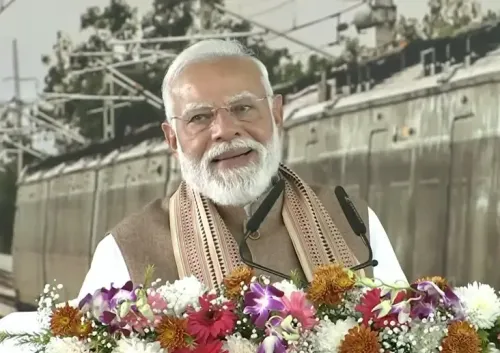
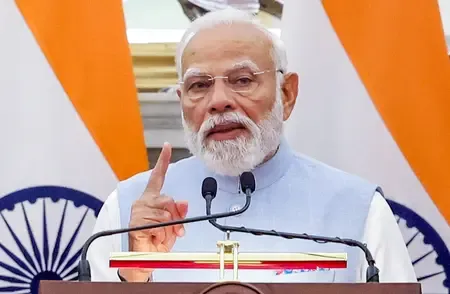
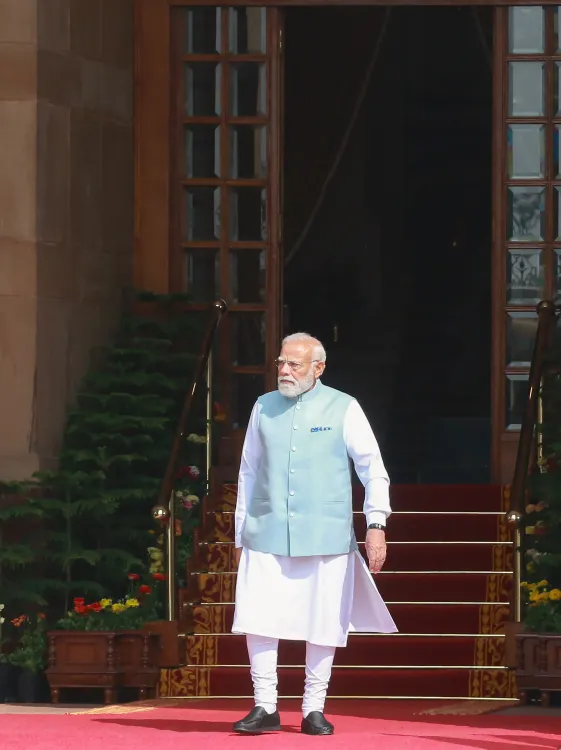
New Delhi, Feb 21 (NationPress) Prime Minister Narendra Modi is scheduled to arrive in Meerut, located in western Uttar Pradesh, this Sunday to launch and dedicate a range of significant infrastructure initiatives valued at approximately Rs 12,930 crore. These projects are designed to enhance regional connectivity and urban mobility within the National Capital Region (NCR).
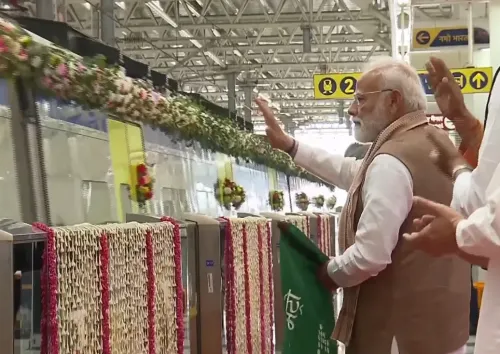
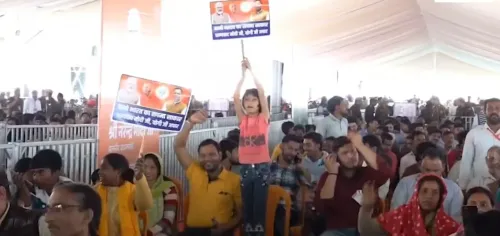
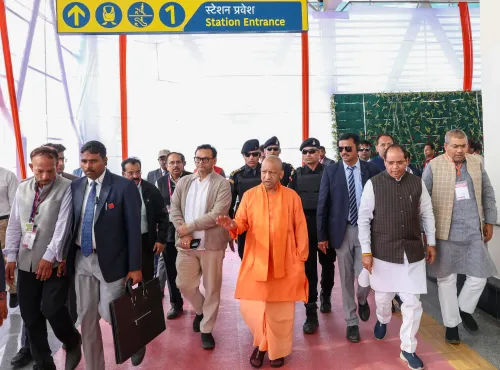
During his visit, the Prime Minister will officially inaugurate the Meerut Metro and the Namo Bharat train at Shatabdi Nagar Namo Bharat Station around 12:30 PM. Following this, he will embark on a Metro journey to Meerut South Station before addressing a public assembly at around 1 PM, as per an official announcement.
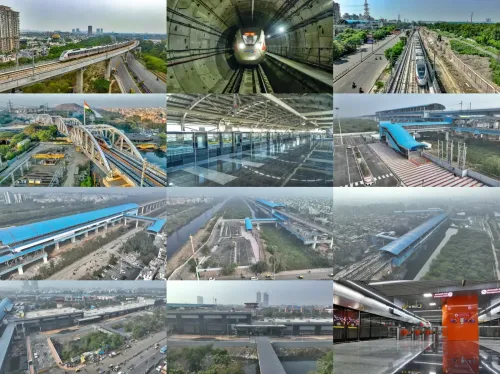
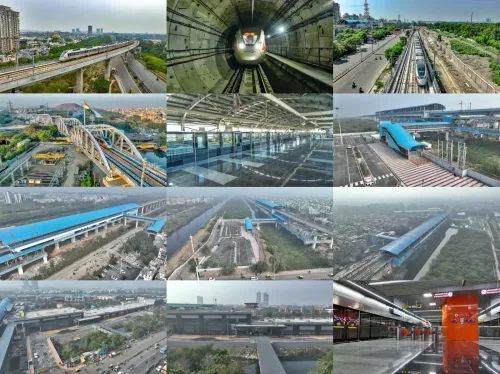
A major highlight of the visit will be the dedication of the complete 82-km Delhi–Meerut Namo Bharat Corridor, recognized as India’s first Regional Rapid Transit System (RRTS), to the nation. The Prime Minister will also inaugurate the remaining operational segments, including the 5-km stretch connecting Sarai Kale Khan and New Ashok Nagar in Delhi, alongside the 21-km stretch from Meerut South to Modipuram in Uttar Pradesh.
Engineered for velocities of up to 180 kmph, the Namo Bharat system is anticipated to drastically reduce travel duration between Delhi and key urban hubs such as Sahibabad, Ghaziabad, Modinagar, and Meerut.
The Sarai Kale Khan station, the starting point of the corridor, has been established as a significant multimodal hub, connecting Hazrat Nizamuddin Railway Station, the Delhi Metro’s Pink Line, Veer Haqeeqat Rai ISBT, and the Ring Road. Three additional stations—Shatabdi Nagar, Begumpul, and Modipuram—situated in Meerut will also be launched.
The Prime Minister will also inaugurate services for the Meerut Metro, which will operate between Meerut South and Modipuram. This unique initiative in India allows the Metro to function on the same infrastructure as the Namo Bharat RRTS. With a peak operational speed of about 120 kmph, it will be the fastest Metro system in the country, covering the distance in roughly 30 minutes with all scheduled stops.
Officials noted that the synchronized operation of regional rapid transit and urban Metro services on shared infrastructure establishes a new standard for multimodal public transport. These projects are expected to alleviate road congestion, lower vehicular emissions, and provide quicker, sustainable mobility across the region.
These initiatives are part of the government's wider effort to modernize public transport and improve the quality of life through effective, environmentally-friendly infrastructure.
Point of View
It is evident that Prime Minister Modi's visit to Meerut is a significant step towards enhancing infrastructure within the National Capital Region. The integration of rapid transit and metro services reflects a commitment to modernizing urban transport, which aligns with the government's dedication to improving the ease of living for citizens across the nation.
NationPress
26 Sept 2026
Frequently Asked Questions
What is the purpose of PM Modi's visit to Meerut?
PM Modi's visit aims to inaugurate and dedicate major infrastructure projects worth approximately Rs 12,930 crore, focused on improving regional connectivity and urban mobility in the National Capital Region.
What are the key projects being inaugurated?
The key projects include the Meerut Metro, the Namo Bharat train, and the entire 82-km Delhi–Meerut Namo Bharat Corridor, which is India's first Regional Rapid Transit System.
How will the Namo Bharat system impact travel times?
The Namo Bharat system is designed for speeds of up to 180 kmph, significantly reducing travel times between Delhi and major urban centers like Sahibabad, Ghaziabad, Modinagar, and Meerut.
What is unique about the Meerut Metro service?
The Meerut Metro will operate on the same infrastructure as the Namo Bharat RRTS, making it the fastest Metro system in India, with a maximum speed of around 120 kmph.
How do these projects contribute to environmental sustainability?
The integrated operation of rapid transit and metro services is expected to decongest road traffic, reduce vehicular emissions, and promote faster, sustainable mobility across the region.