PNS Hunain video: Pakistan Navy's narcotics op footage lacks verifiable proof
Synopsis
Pakistan Navy released a video to back its claim of a 2,800-kg narcotics bust in the Arabian Sea on 26 September — but the footage shows PNS Hunain only briefly, carries no date stamps or geolocation, and mirrors archive imagery from a nearly identical 2024 operation. The result is a public-affairs montage that raises more questions than it answers about what actually happened and when.
Key Takeaways
Pakistan Navy announced a counter-narcotics operation on 26 September 2026 , claiming PNS Hunain and PNS Yarmook seized more than 2,800 kg of narcotics worth approximately USD 750 million in the Arabian Sea .
The accompanying video lacks clear date-and-time stamps, geolocation references, and uninterrupted visual continuity linking the ship, boarding party, and seized narcotics.
Pakistan Navy previously released footage of PNS Hunain in a visually similar counter-narcotics operation dated 8 October 2024 , raising open-source questions about whether archive imagery was reused.
Open-source discussion has linked the imagery to the Ormara sector, but ISPR 's official account has not confirmed any specific location beyond the broad Arabian Sea designation.
Analysts argue that once an operation is concluded and publicly announced, basic non-sensitive details — date, approximate location, operational sequence — should be provided to enable independent verification.
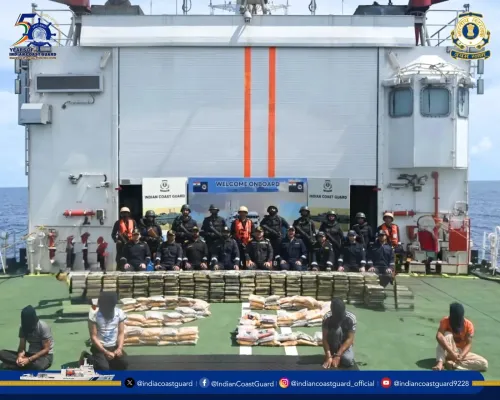
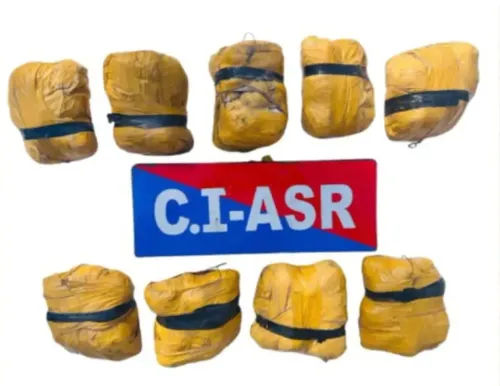
A video released by Pakistan Navy to substantiate its 26 September 2026 counter-narcotics operation in the Arabian Sea has drawn scrutiny for failing to provide independently verifiable evidence that PNS Hunain participated in the specific mission it is claimed to document. According to the Inter-Services Public Relations (ISPR), PNS Hunain and PNS Yarmook, while on routine patrol, intercepted a suspicious vessel, conducted a boarding operation, and recovered more than 2,800 kilogrammes of narcotics valued at approximately USD 750 million.
What the Video Shows — and What It Does Not
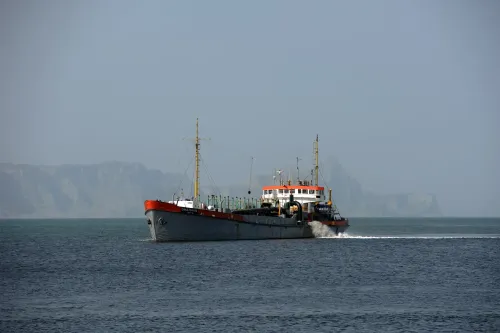
PNS Hunain appears only briefly in the publicly circulated footage. The remainder of the video does not provide sufficient visual continuity to link the ship, the intercepted vessel, the boarding party, and the recovered narcotics into a single, clearly identifiable operational sequence. The material functions, in effect, as a short public-affairs montage rather than an unbroken record of an interdiction.
Crucially, the footage lacks basic temporal and geographical markers. No clear date-and-time stamp, precise operational coordinates, or geolocation reference is visible in the sequences attributed to the Hunain operation. ISPR's written account identifies only the broad area as the Arabian Sea and describes the vessels as being on routine patrol, without specifying the position of the interception, the time of the boarding, or the identity of the intercepted craft.
The Archive Footage Problem
The provenance question is sharpened by the fact that Pakistan Navy has previously released footage of PNS Hunain conducting visually similar counter-narcotics missions. An official Pakistan Navy video published in October 2024 explicitly stated that on 8 October 2024, PNS Hunain participated in an intelligence-based counter-narcotics operation in the North Arabian Sea, seizing approximately 2,000 kg of hashish, 370 kg of 'ice', and 50 kg of heroin.
When a military organisation already holds archive footage of the same vessel conducting a visually similar mission, the appearance of Hunain in a new compilation cannot, by itself, be treated as conclusive evidence that the imagery is from the newly announced operation. Professional defence-media practice normally distinguishes clearly between current operational imagery and archive or illustrative material — a distinction absent from the current release.
The Ormara Reference and Open-Source Leads
In July 2026, Pakistan Navy publicly released information and video associated with a search-and-rescue mission east of Ormara, during which Hunain was diverted to assist a distressed cargo shipment. That official account clearly identified the location and operational circumstances of the deployment.
Some open-source discussion has associated the imagery in the new release with the Ormara sector. However, that location has not been confirmed in the current official announcement, which remains at the level of the Arabian Sea. The Ormara reference should therefore be treated as an unverified open-source lead rather than an established fact until the Navy provides further detail.
Strategic Communication vs. Operational Record
Military organisations increasingly operate in an environment where video serves not merely as documentation but as an instrument of strategic communication. A visually compelling clip can shape public understanding of an event well before independent analysts have an opportunity to verify its details. For a navy, this makes the distinction between operational reporting and narrative construction particularly consequential.
Nothing in the available footage proves the operation did not occur, nor does it establish that the video was fabricated. What it does demonstrate, according to analysts who have reviewed the material, is that the visual package is not sufficiently transparent to independently validate the central claim — that PNS Hunain itself conducted the operation depicted on 26 September 2026.
Operational security considerations are understood to preclude the disclosure of sensitive coordinates during live missions. However, once an event has concluded and authorities themselves choose to publicise it, providing non-sensitive contextual information — date, approximate location, and an uninterrupted operational sequence — is standard practice that would resolve most of the current ambiguity without compromising tactical capabilities.
What Pakistan Navy Has Been Asked to Clarify
The central question now before Pakistan Navy is whether it can clarify the date, location, operational context, and provenance of each clip used in the video. If PNS Hunain participated in the operation exactly as stated, analysts argue there should be little difficulty establishing that through properly contextualised imagery and basic operational details. Until those details are supplied, the most defensible assessment of the footage remains a sceptical one. In an era of contested maritime narratives, the distinction between showing a warship and proving its presence in a specific operation is fundamental.
Point of View
An approximate grid reference, a continuous boarding sequence — is not a minor omission; it is precisely the information that separates verifiable evidence from curated messaging. The existence of near-identical 2024 archive footage of the same vessel makes the provenance question unavoidable. What is most striking is that this scrutiny was entirely avoidable: if the operation occurred as stated, a few seconds of time-stamped, geolocated footage would have closed the debate. The choice not to provide it invites the scepticism it has received.
NationPress
1 Oct 2026
Frequently Asked Questions
What did Pakistan Navy claim about the PNS Hunain operation?
Pakistan Navy, through ISPR, claimed that on 26 September 2026, PNS Hunain and PNS Yarmook intercepted a suspicious vessel during routine patrol in the Arabian Sea and recovered more than 2,800 kg of narcotics valued at approximately USD 750 million. The announcement was echoed by Pakistan's civilian leadership and state media.
Why is the PNS Hunain video being questioned?
The video lacks date-and-time stamps, geolocation references, and a continuous visual sequence linking PNS Hunain to the boarding and narcotics recovery. Without these markers, analysts say the footage cannot independently verify that the imagery is from the specific 26 September 2026 operation rather than from an earlier mission.
Has PNS Hunain been involved in similar operations before?
Yes. Pakistan Navy released official footage in October 2024 showing PNS Hunain participating in a counter-narcotics operation in the North Arabian Sea on 8 October 2024, during which approximately 2,000 kg of hashish, 370 kg of 'ice', and 50 kg of heroin were seized. The existence of this archive material is central to the open-source verification challenge.
What is the significance of the Ormara reference in open-source discussion?
Some open-source analysts have associated the imagery in the new video with the Ormara sector off Pakistan's Makran coast. However, ISPR's official account does not confirm any specific location beyond the Arabian Sea, so the Ormara link remains an unverified lead rather than an established fact.
What information would resolve the ambiguity around the Hunain video?
Analysts say Pakistan Navy could resolve most of the uncertainty by releasing non-sensitive operational details including the date and approximate location of the interception, time-stamped footage, and an uninterrupted visual sequence of the boarding and narcotics recovery. Operational security does not preclude this level of disclosure once an operation has concluded and been publicly announced.