Rare Afro-Asian Sand Snake spotted at Kutch's Kala Dungar, only 2nd or 3rd Gujarat record
Synopsis
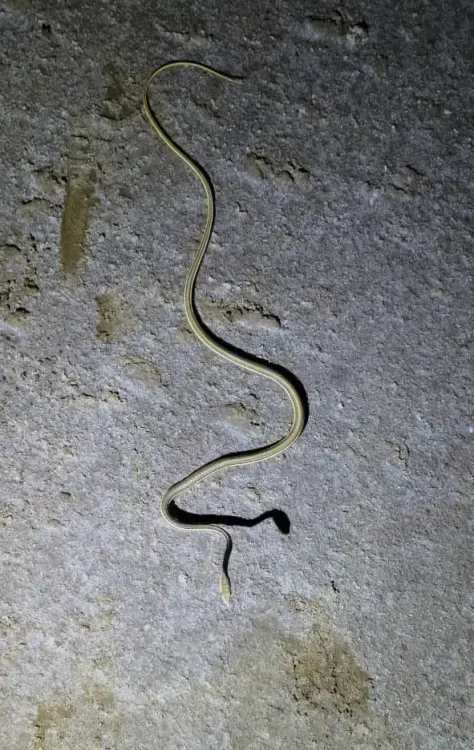
A routine evening patrol at Kutch's Kala Dungar has turned up what could be only the second or third confirmed sighting of the Afro-Asian Sand Snake in all of Gujarat — found alongside an equally rare Black-headed Royal Snake at the same spot. The double-rarity discovery highlights just how much undocumented biodiversity may still be hiding in India's arid desert landscapes.
Key Takeaways
Two rare snake species — the Black-headed Royal Snake and the Afro-Asian Sand Snake — were spotted together at Kala Dungar, Kutch during a forest patrol in September 2026 .
The Afro-Asian Sand Snake sighting is potentially only the second or third confirmed record of the species in Gujarat .
The sand snake was approximately 70 cm long and is classified as mildly venomous but not fatal to humans.
Kala Dungar is the highest peak in Kutch at 462 metres , with an arid ecosystem that supports desert-adapted wildlife.
The first photographic record of the species in Gujarat is documented in Sarp Sandarbh by snake expert Ajay Desai , recorded at Lodai in Kutch .
The Kutch East Forest Division observes 19 September as World Snakebite Awareness Day and has urged the public to protect rare wildlife.
Two rarely documented snake species were found together at Kala Dungar in Gujarat's Kutch district during an evening forest patrol in September 2026, with the sighting of the Afro-Asian Sand Snake (Psammophis schokari) potentially marking only the second or third confirmed record of the species in the state, according to the Kutch East Forest Division. The co-occurrence of two rare species at the same site has not been recorded at this location for several years.
The Sighting: When, Where, and Who
Forest staff spotted the pair at approximately 7:30 pm during a routine patrol by the Range Forest Officer and local staff of Juna Beat, Khavda Round, under the Bhuj North Range of the Kutch East Forest Division. Kala Dungar, the site of the discovery, stands at an elevation of 462 metres and is the highest peak in Kutch — a landscape defined by arid terrain and sparse vegetation that supports a distinctive desert-adapted ecosystem.
The Two Species: What Was Found
The first snake identified was the Black-headed Royal Snake (Spalerosophis atriceps), a non-venomous species that is itself seldom recorded in the district. The second was the Afro-Asian Sand Snake (Psammophis schokari), described by the Forest Department as mildly venomous, though its venom is not considered fatal to humans. The sand snake measured approximately 70 cm in length.
The department cited the reference work Sarp Sandarbh, authored by snake expert Ajay Desai, which documents the first photographic record of the Afro-Asian Sand Snake in Gujarat at Lodai in Kutch. The latest sighting at Kala Dungar could represent only the second or third recorded instance of the species in the state, although the department did not specify the precise total number of confirmed records.
Why Kutch Supports Such Rare Wildlife
The Forest Department attributed the presence of these rare species to Kutch's distinctive arid ecosystem, which provides a specialised habitat for desert-adapted fauna rarely found elsewhere in Gujarat. Notably, the co-sighting of two uncommon species at the same location underscores the biodiversity value of the region's seemingly inhospitable landscape. This is consistent with a broader pattern of rare wildlife documentation emerging from Kutch as forest monitoring efforts intensify.
Conservation Efforts and Public Advisory
The sighting comes amid the Kutch East Forest Division's ongoing campaign to raise awareness about snake conservation. The division observes 19 September each year as World Snakebite Awareness Day, running programmes that include awareness signboards, nature education camps, and wildlife outreach for local residents. The department has urged residents and tourists in the region to refrain from harming snakes or disturbing their natural habitat, calling collective conservation efforts essential to protecting Kutch's biodiversity.
Point of View
The gaps in our biodiversity baseline are likely far wider than official records suggest. Increased forest patrol coverage in Kutch appears to be delivering rare finds, but systematic, camera-trap-supported reptile surveys — not incidental sightings — are the only way to build a credible picture. Conservation policy built on sparse anecdotal records risks missing both threats and opportunities in one of India's most ecologically unusual districts.
NationPress
12 Oct 2026
Frequently Asked Questions
What snake was spotted at Kala Dungar in Kutch?
Two rare species were spotted together: the Black-headed Royal Snake (Spalerosophis atriceps), which is non-venomous, and the Afro-Asian Sand Snake (Psammophis schokari), which is mildly venomous but not fatal to humans. The sighting was made during a forest department patrol in September 2026.
Why is the Afro-Asian Sand Snake sighting significant?
The Afro-Asian Sand Snake is extremely rare in Gujarat, and this sighting at Kala Dungar could be only the second or third confirmed record of the species in the entire state. The first photographic record was documented at Lodai in Kutch, as cited in the reference book Sarp Sandarbh by snake expert Ajay Desai.
Where exactly were the snakes found in Kutch?
The snakes were found at Kala Dungar, the highest peak in Kutch at an elevation of 462 metres, specifically in the Juna Beat, Khavda Round area under the Bhuj North Range of the Kutch East Forest Division. The discovery was made at around 7:30 pm during an evening patrol.
Is the Afro-Asian Sand Snake dangerous to humans?
According to the Forest Department, the Afro-Asian Sand Snake is mildly venomous, but its venom is not considered fatal to humans. The Black-headed Royal Snake found alongside it is entirely non-venomous.
What conservation steps is the Kutch Forest Department taking?
The Kutch East Forest Division observes 19 September each year as World Snakebite Awareness Day, running awareness signboards, nature education camps, and wildlife outreach programmes. The department has urged residents and tourists to avoid harming snakes or disturbing their habitat, and has called for collective efforts to protect Kutch's biodiversity.