South Korea defends 'two-state' language in North Korea white paper
Synopsis
Seoul's Unification Ministry is defending some of the most explicit 'two-state' language to appear in a South Korean government document in years — insisting it is a peace strategy, not a constitutional breach. The distinction matters enormously: Article 3 of South Korea's Constitution still claims the entire Korean Peninsula, making any official nod toward North Korea's separate statehood legally and politically explosive.
Key Takeaways
South Korea's Unification Ministry released a white paper on 18 May outlining the Lee Jae Myung government's North Korea policy.
The paper acknowledges 'the reality that South and North Korea effectively exist as two states' while still pursuing eventual unification.
The ministry clarified the 'two-state' language does not constitute legal recognition of North Korea as a sovereign state.
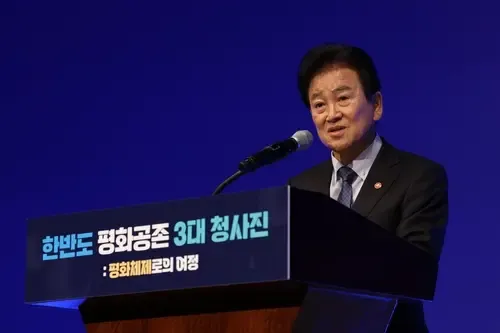
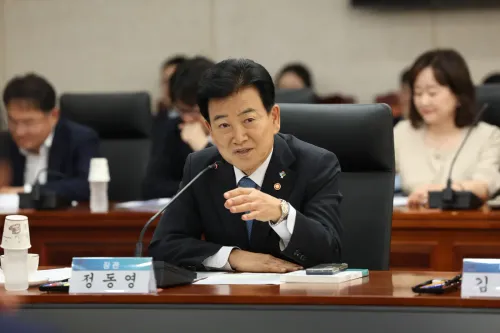
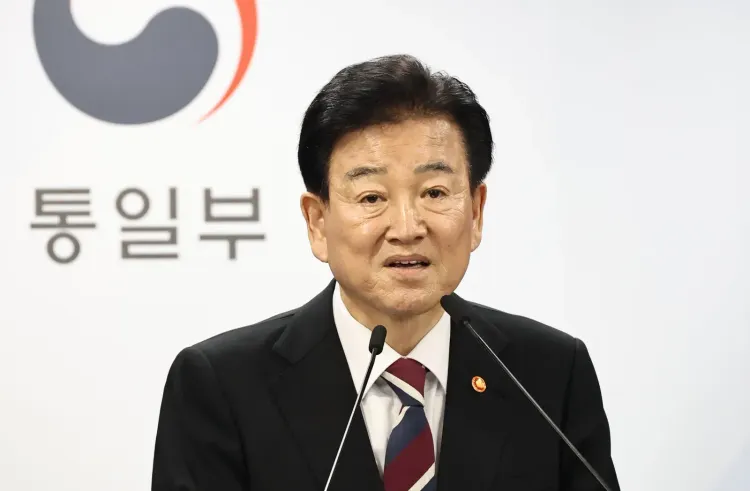
Unification Minister Chung Dong-young had previously shared the two-state concept, though officials said it reflects the ministry's view, not the entire government's.
Critics argue the language risks violating Article 3 of the Constitution, which claims the entire Korean Peninsula as South Korean territory.
The ministry acknowledged insufficient public debate and pledged to seek broader opinion going forward.
South Korea's Unification Ministry on Tuesday, 19 May pushed back against constitutional criticism of its newly released white paper, clarifying that the controversial 'two-state' language is an implementation strategy for peaceful coexistence on the Korean Peninsula — not a legal recognition of North Korea as a sovereign state.
What the Ministry Said
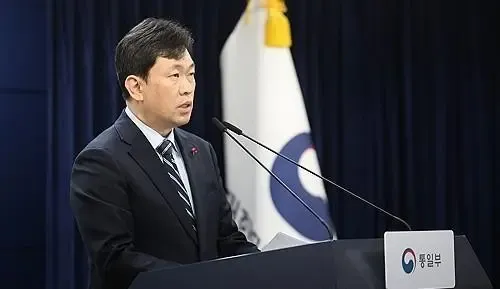
In a formal statement, the ministry described the concept as 'an implementation strategy to achieve the goal of the policy of peaceful coexistence on the Korean Peninsula — institutionalisation of peaceful coexistence between South and North Korea.' Officials stressed that the ministry, as the principal government body overseeing inter-Korean policy, is mandated to devise such strategies.
The statement came hours after a ministry official told reporters that the two-state concept had been shared by Unification Minister Chung Dong-young on prior occasions, while adding that it reflected the ministry's own policy vision and was not necessarily representative of the entire government's stance.
Key Distinctions in the White Paper
The ministry was careful to draw a line between de facto and legal recognition. 'The peaceful two-state concept refers to the two states that have simultaneously joined the United Nations under international law, and the two states under a Korean commonwealth of the National Community Unification Formula,' the statement said. 'It does not mean recognising North Korea as a legal state.'
The National Community Unification Formula, unveiled by South Korea in 1994, is a three-stage vision calling for reconciliation and cooperation, the creation of a Korean commonwealth, and eventual full unification.
What the White Paper Outlines
Released on Monday, 18 May, the white paper articulates the Lee Jae Myung government's North Korea policy around three core principles: Seoul respects North Korea's system, does not pursue unification by absorption, and will not engage in hostile activities. It acknowledges 'the reality that South and North Korea effectively exist as two states' while still aiming for eventual unification.
The paper also calls for transforming Pyongyang's 'hostile two-state policy' into a 'peaceful two-state' relationship oriented toward unification — a formulation that critics argue risks legitimising North Korea as a separate sovereign state.
The Constitutional Question
Article 3 of South Korea's Constitution stipulates that the territory of the Republic of Korea consists of the Korean Peninsula and its adjacent islands — a provision that legally precludes recognition of North Korea as a separate state. Critics contend the white paper's language, however nuanced, edges uncomfortably close to that boundary.
On concerns that such a sensitive formulation was included without adequate public debate, a ministry official acknowledged the gap and said the ministry would continue to solicit a wide range of opinions going forward.
Broader Context
This is not the first time inter-Korean policy language has triggered constitutional debate in Seoul. The tension between pragmatic engagement and the Constitution's territorial clause has long complicated South Korean governments' efforts to frame a workable coexistence policy. The Lee administration's framing represents one of the more explicit articulations of a two-state reality in recent official documents, making the political and legal scrutiny it now faces particularly significant.
Point of View
The Lee administration has made it a matter of government record, raising the stakes of any future reversal. The acknowledgement that even within the government the concept represents the ministry's view rather than a whole-of-government position suggests the policy has not been fully stress-tested internally. If Seoul is serious about a two-state coexistence framework, the constitutional conversation needs to happen openly — not as a footnote to a press briefing.
NationPress
2 Oct 2026
Frequently Asked Questions
What is South Korea's 'two-state' concept for North Korea?
It is a framing used in the Unification Ministry's May 2025 white paper that acknowledges South and North Korea 'effectively exist as two states' under international law and within the National Community Unification Formula. The ministry has clarified it does not mean legal recognition of North Korea as a sovereign state, but rather respects its de facto system and sovereignty while pursuing peaceful coexistence.
Why has the white paper drawn constitutional criticism?
Article 3 of South Korea's Constitution defines the territory of the Republic of Korea as the entire Korean Peninsula and its adjacent islands, effectively not recognising North Korea as a separate state. Critics argue that any official language acknowledging two states risks contradicting this constitutional provision, even if the government insists the framing is strategic rather than legal.
What is the National Community Unification Formula?
It is a three-stage unification vision unveiled by South Korea in 1994, calling first for reconciliation and cooperation, then the creation of a Korean commonwealth, and finally the completion of a unified country. The Unification Ministry cited it as the framework within which the two-state concept operates.
What are the three core principles of the Lee Jae Myung government's North Korea policy?
According to the white paper, the three principles are: Seoul respects North Korea's system, Seoul does not pursue unification by absorption, and Seoul will not engage in hostile activities against the North. The paper frames these as the basis for a peaceful coexistence approach.
Will there be more public debate on the two-state policy?
The ministry acknowledged that the sensitive formulation was included without sufficient prior public debate. Officials said the ministry would continue to seek a wide range of opinions going forward, though no specific consultation mechanism or timeline was announced.