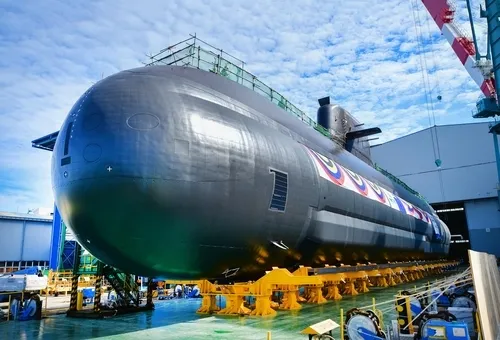
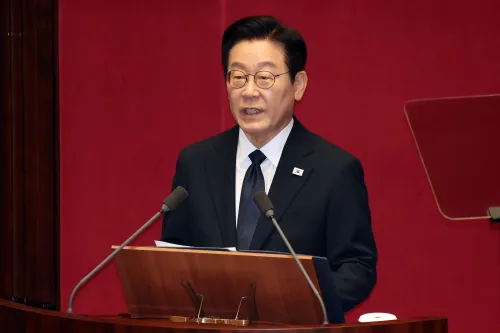
South Korea's Lee Jae Myung pushes nuclear submarine plan, eyes mid-2030s launch
Synopsis
South Korean President Lee Jae Myung has set a mid-2030s target to launch the country's first nuclear-powered submarines — a programme now backed by a formal US endorsement — while simultaneously pushing to reclaim wartime operational control of South Korean troops from Washington before his term ends in 2030. Both moves signal a deliberate pivot toward strategic self-reliance on the Korean Peninsula.
Key Takeaways
President Lee Jae Myung ordered accelerated acquisition of nuclear-powered submarines at a Cabinet meeting on 27 May 2025 .
Defence Minister Ahn Gyu-back outlined a timeline: first launch in the mid-2030s , operational service in the late 2030s or later .
The United States formally endorsed Seoul's nuclear-powered submarine programme and civilian uranium enrichment at a bilateral summit late last year.
Lee has pledged to complete the transfer of wartime OPCON from Washington to Seoul within his five-year term ending in 2030 .
A government-led 'public growth fund' aims to raise 150 trillion won (~US$99.5 billion) over five years for semiconductors, defence, and biotech.
A global maritime hub centred on Busan is being developed, with Arctic shipping route expansion as a stated goal.
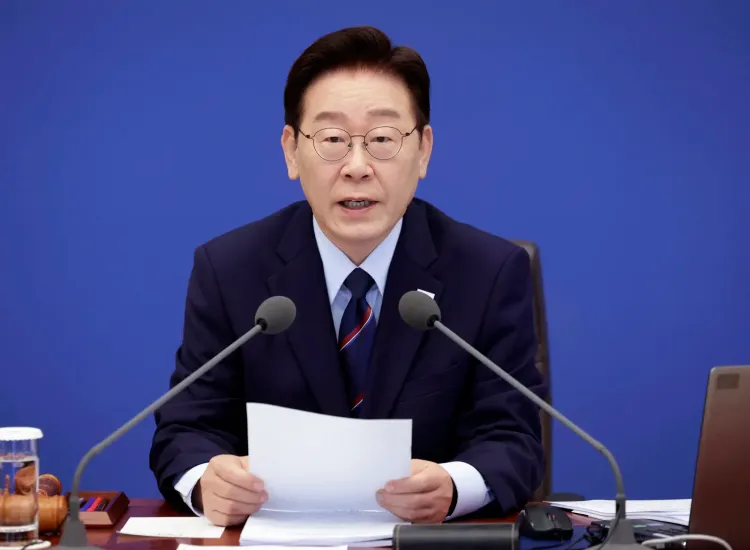
South Korean President Lee Jae Myung on Tuesday, 27 May 2025, directed officials to accelerate the country's programme to acquire nuclear-powered submarines, calling them a core strategic asset for future defence amid North Korea's expanding nuclear and missile capabilities. The directive came during a Cabinet meeting in Seoul, where Lee also pressed for a swift transfer of wartime operational control from Washington to Seoul.
The Submarine Programme
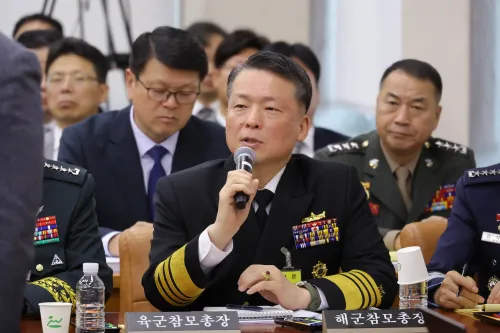
Defence Minister Ahn Gyu-back outlined Seoul's timeline during a defence strategy committee meeting held later in the day in South Gyeongsang Province: the first batch of nuclear-powered submarines is planned for launch in the mid-2030s, with full operational service expected in the late 2030s or beyond.
Lee described the envisioned vessels as 'a symbol of our will to take responsibility for peace and security on the Korean Peninsula on our own.' He also called for faster integration of artificial intelligence and drone technologies into the military alongside the submarine push.
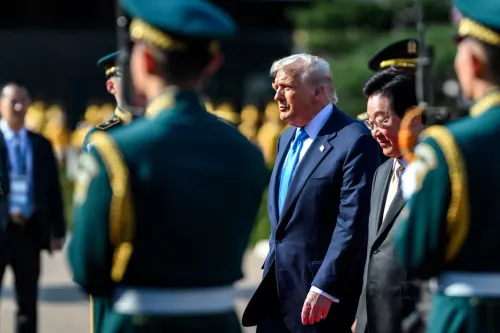
The programme has received a significant diplomatic endorsement: a fact sheet released after a South Korea-US summit late last year confirmed that Washington supports Seoul's plan to build nuclear-powered, conventionally armed attack submarines, as well as civilian uranium enrichment and spent fuel reprocessing for peaceful purposes.
Wartime OPCON Transfer
A parallel priority for Lee is the transfer of wartime operational control (OPCON) of South Korean troops from the United States to Seoul — a flagship policy pledge of his presidency. Lee has committed to completing the transfer within his five-year term ending in 2030.
South Korea handed operational control of its forces to the US-led UN Command during the 1950-53 Korean War. Control subsequently passed to the Combined Forces Command of South Korea and the United States when it was established in 1978. Seoul recovered only peacetime operational control in 1994. Wartime OPCON has remained with the US alliance structure ever since.
'Friends will respect us and alliances will be maintained more strongly when the country demonstrates its determination to defend itself,' Lee said, underscoring the urgency he attaches to the transfer.
Broader Defence Modernisation
At Tuesday's Cabinet meeting, Lee called for an all-out push to transform South Korea's military into a 'powerful, future-oriented and cutting-edge' force. He acknowledged that current defence capabilities are sufficient for self-defence but argued they must be reinforced given what he termed the 'harsh reality' of a global order where power takes precedence.
He also urged the strengthening of South Korea's 'K-defence' industry and the cultivation of new defence companies with a global footprint in robotics, drones, and the space sector. Multilateral diplomacy was flagged as equally critical, with Lee stressing the importance of building multilateral security networks to prevent conflict.
Maritime Hub and Public Growth Fund
Beyond defence, Lee used the Cabinet session to advance two economic initiatives. He called for accelerated development of a global maritime hub in South Korea's southeastern coastal region, centred on the port city of Busan. The oceans ministry has already relocated its headquarters to Busan as part of the initiative, along with several shipping firms, with a stated goal of expanding Arctic shipping routes.
Lee also urged the profitable operation of the government-led 'public growth fund', designed to raise 150 trillion won (approximately US$99.5 billion) from individual investors and state finances over five years. The fund targets advanced industries including semiconductors, defence manufacturing, and biotechnology. Lee noted that South Korea's shifting economic structure risks widening wealth and income gaps, expressing hope the fund could help moderate growing disparity.
With the submarine programme timeline set and OPCON transfer on the political agenda, the coming months will test whether Seoul can translate strategic ambition into concrete defence architecture.
Point of View
Buried in a summit fact sheet, is the more consequential development: Washington has rarely sanctioned allied nuclear propulsion programmes, and this one sets a precedent with implications beyond the Korean Peninsula. The mid-2030s timeline is ambitious given that South Korea has no prior experience building nuclear-propelled vessels, and the gap between political announcement and operational capability will be the real test. Meanwhile, linking OPCON transfer to a fixed presidential term introduces political pressure into what has historically been a conditions-based military process — a tension that Seoul and Washington will need to manage carefully.
NationPress
10 Oct 2026
Frequently Asked Questions
What is South Korea's nuclear-powered submarine plan?
South Korea plans to build nuclear-powered, conventionally armed attack submarines, with the first batch targeted for launch in the mid-2030s and full operational service expected in the late 2030s or later. The programme received formal US backing at a bilateral summit late last year.
Why does South Korea want nuclear-powered submarines?
President Lee Jae Myung has cited North Korea's growing nuclear and missile threats as the primary driver, calling the submarines 'core strategic assets for future defence capabilities.' Nuclear propulsion gives submarines far greater endurance and stealth than conventional diesel-electric vessels.
What is wartime OPCON and why does Lee want it transferred?
Wartime operational control (OPCON) refers to command authority over South Korean troops during armed conflict, which has been held by the US-led alliance structure since the Korean War. Lee has made its return to Seoul a flagship pledge, arguing it is essential for genuine defence self-reliance, and aims to complete the transfer before his term ends in 2030.
What is South Korea's 'public growth fund'?
The public growth fund is a government-led investment vehicle targeting 150 trillion won (approximately US$99.5 billion) raised from individual investors and state finances over five years. It is designed to channel capital into advanced industries such as semiconductors, defence manufacturing, and biotechnology.
What is the Busan maritime hub initiative?
South Korea's oceans ministry is developing Busan, the country's largest port city, into a global maritime hub with expanded sea and air infrastructure, aiming to grow Arctic shipping routes and compete for regional maritime leadership. Several shipping firms and the ministry itself have already relocated headquarters to Busan as part of the initiative.