Why Diversification is Essential for the Future of Punjab's Agriculture
Synopsis
Punjab's farming faces significant challenges as traditional practices become unsustainable. Discover how farmers like Gurnam Singh are embracing diversification to secure their livelihoods and adapt to changing conditions.
Key Takeaways
Diversification is essential for sustainable farming in Punjab.
Farmers are encouraged to adopt integrated systems combining various agricultural activities.
Success stories like Gurnam Singh's demonstrate the benefits of innovation .
Interconnected farming practices can help lower costs and improve productivity.
Small farmers must adapt to ensure long-term viability .
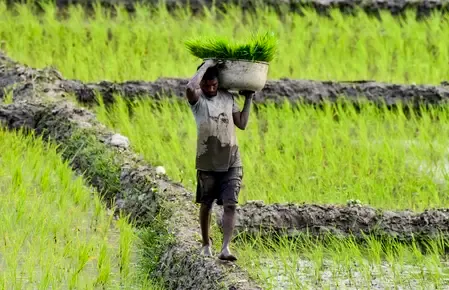
Chandigarh, March 30 (NationPress) For many years, the agricultural framework of Punjab has adhered to a predictable rhythm — cultivating wheat in winter and paddy in summer. Although this cycle once significantly contributed to the nation’s food security, it is now facing numerous challenges.
Issues such as decreasing landholdings, escalating input costs, falling groundwater levels, and erratic weather patterns have rendered monoculture increasingly unviable, particularly for small and marginal farmers.
In light of these difficulties, agricultural institutions like Punjab Agricultural University and its network of Krishi Vigyan Kendras (KVKs) are urging farmers to embrace diversified and integrated farming systems. This strategy focuses on merging traditional crops with supplementary activities such as dairy farming, poultry, goat rearing, fisheries, and beekeeping to establish more secure and sustainable income sources.
A report by Khalsa Vox showcases a remarkable transformation in Abalkhair village within the Gurdaspur district, where farmer Gurnam Singh has successfully converted his modest two-acre ancestral land into a flourishing integrated farming model. By moving away from the traditional wheat-paddy cycle, Singh has developed a system that guarantees multiple income streams, thereby decreasing reliance on variable market conditions.
His journey commenced in 2016 after he received training at a local KVK, which motivated him to explore new avenues. A year later, he ventured into dairy farming, and today, his farm houses 26 animals, including Murrah buffaloes, heifers, and calves, yielding over a quintal of milk daily.
By selling milk directly to nearby households, he not only secures greater profits but also fosters enduring connections with his customers.
Dairy farming is merely one facet of his diversified approach. Singh has also embraced poultry farming, raising around 150 indigenous chickens, with consistent demand for their eggs and meat, particularly in winter, ensuring a reliable income. Moreover, he introduced Beetal goats, prized for both milk and meat, adding yet another trustworthy revenue stream.
What truly sets Singh’s strategy apart is the cohesive integration of all farm activities. Waste from one operation is repurposed in another, cattle feed is produced on-site, and animal welfare is prioritized through adequate housing and clean water facilities. This interlinked system aids in reducing costs while enhancing overall productivity.
His pioneering efforts were recognized when he received the Progressive Farmer Award at a Kisan Mela in 2023. However, more than just accolades, his model conveys an essential message: Diversification is now an imperative rather than a choice for the future of farming in Punjab.
Experts concur that his model offers valuable insights for Punjab’s agricultural future. As small farmers face uncertainty, integrated farming presents a practical roadmap, transforming limited land into a source of diverse and reliable income.
In a state that is seeking its next agricultural narrative, farmers like Gurnam Singh are quietly authoring it.
Point of View
The ongoing shifts in Punjab's agricultural practices underscore the urgency for farmers to diversify their methods. This transition is crucial not only for individual farmer sustainability but also for the overall resilience of the agricultural sector in the face of modern challenges.
NationPress
15 Oct 2026
Frequently Asked Questions
What is the main challenge facing Punjab's agriculture?
The primary challenge is the sustainability of the traditional wheat-paddy cycle, which is under pressure from factors like shrinking landholdings, rising costs, and declining groundwater levels.
How can farmers adapt to these challenges?
Farmers can adapt by adopting diversified and integrated farming systems that incorporate a variety of crops and allied activities such as dairy, poultry, and goat rearing.
What is an example of successful diversification in Punjab?
An example is Gurnam Singh from Abalkhair village, who transformed his farm by integrating dairy, poultry, and goat farming, creating multiple income streams.
What are the benefits of integrated farming?
Integrated farming promotes sustainability by maximizing resource use, reducing waste, and increasing profitability through diverse income sources.
Why is diversification crucial for small farmers?
Diversification is crucial for small farmers as it mitigates risks associated with market fluctuations and provides a more stable income.