How Can TN's Textile Sector Ensure Growth Amid Budget Reforms?
Synopsis
Chennai's textile industry has largely welcomed the Union Budget's focus on infrastructure and skills but warns that the continued 11% import duty on cotton may undermine these efforts. Industry leaders stress the need for competitive prices and access to quality cotton to maintain export commitments and employment.
Key Takeaways
Retention of the 11% import duty on cotton could undermine budget reforms.
Access to quality cotton at competitive prices is crucial for exports.
Industry employs nearly 35 million people in Tamil Nadu.
Support for local farmers is essential through Minimum Support Price .
Structural reforms must accompany raw material cost rationalization.
Chennai, Feb 2 (NationPress) The textile sector in Tamil Nadu, which significantly contributes to India's textile and apparel exports, has largely embraced the Union Budget's focus on infrastructure development, skill enhancement, and export support. However, they have expressed concerns that maintaining the 11 percent import duty on cotton could weaken the effectiveness of these reforms.
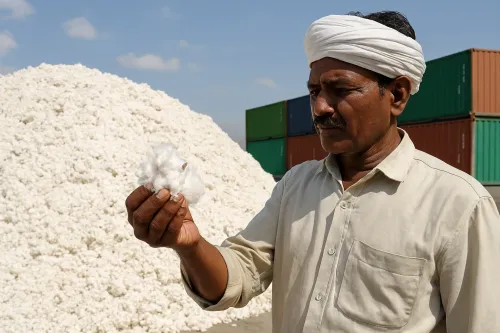
Industry leaders from Tamil Nadu and other key manufacturing regions emphasize that timely access to high-quality cotton at prices competitive on a global scale is vital to meet export commitments and preserve jobs throughout the supply chain.
Stakeholders have praised initiatives like the National Fibre Scheme, the creation of large textile parks, and the launch of Samarth 2.0 aimed at modernizing and upgrading the textile skill development framework. Nonetheless, they stressed that structural reforms in manufacturing and skill development need to be supported by a rationalization of raw material costs to keep the sector competitive internationally.
Durai Palanisamy, chairman of the Southern India Mills Association, stated that abolishing the 11 percent import duty on all types of cotton is crucial to addressing the shortage of quality cotton and fulfilling export orders.
He highlighted that domestic cotton prices have surged by about 5 percent compared to international rates and are approximately 15 percent higher than Brazilian cotton prices.
“This price disparity is expected to grow in the upcoming months, severely jeopardizing the financial sustainability of the entire textile value chain,” he remarked.
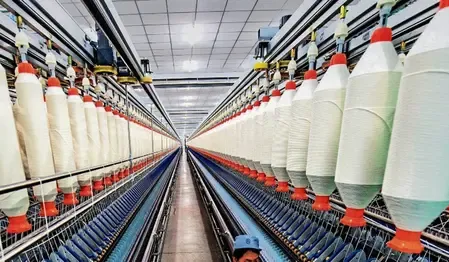
Durai pointed out that the textile and apparel industry directly employs close to 35 million individuals and represents around 75 percent of India's total textile and clothing exports, with Tamil Nadu being a key player in yarn, fabric, and garment production.
He also mentioned that cotton farmers receive adequate protection through the Minimum Support Price (MSP), which is nearly 20 percent higher than international prices. “Importing cotton has never harmed farmers. India can export between 30 to 100 lakh bales during the season and import cotton during the off-season, creating a balanced and beneficial strategy for all parties involved,” he added.
Supporting these views, M Jayapal, chairman of the Recycled Textile Federation, remarked that the persistent import duty has limited access to raw materials at competitive global prices.
He also expressed disappointment over the retention of the GST on job-work units at 18 percent instead of reducing it to 5 percent, labeling it a setback for the entire textile value chain.
Meanwhile, exporters have welcomed the budget's focus on liquidity and trade facilitation. A. Sakthivel, chairman of the Apparel Export Promotion Council, remarked that reforms related to customs and simplified documentation would lower transaction costs and enhance operational efficiency. He added that aligning these measures with a review of cotton duties is essential for bolstering Tamil Nadu's and India's status as reliable global textile sourcing hubs.
Point of View
It's essential to recognize the nuanced landscape of the Tamil Nadu textile industry. While the Union Budget presents opportunities for growth through infrastructure and skill development, the challenges posed by import duties on cotton cannot be overlooked. A balanced approach that supports both local farmers and the competitive needs of the textile sector is crucial for sustainable growth.
NationPress
2 Oct 2026
Frequently Asked Questions
What is the main concern of Tamil Nadu's textile industry regarding the Union Budget?
The primary concern is the retention of the 11% import duty on cotton , which industry leaders believe could weaken the impact of budget reforms aimed at enhancing infrastructure and export facilitation.
How does the Tamil Nadu textile sector contribute to employment?
The textile and apparel sector in Tamil Nadu employs nearly 35 million people , making it a significant contributor to the local economy and a vital part of India's employment landscape.
What initiatives have stakeholders appreciated in the Union Budget?
Stakeholders have welcomed initiatives like the National Fibre Scheme , the establishment of mega textile parks, and the rollout of Samarth 2.0 to modernize the textile skilling ecosystem.
What does the Southern India Mills Association recommend?
The Southern India Mills Association recommends abolishing the 11% import duty on all varieties of cotton to address quality shortages and fulfill export orders.
What are the implications of the GST on job-work units for the textile sector?
The decision to retain GST on job-work units at 18% rather than reducing it to 5% has been viewed as a setback for the entire textile value chain, limiting competitiveness.