US-Iran peace deal set for Sunday signing, Hormuz Strait to reopen: Trump
Synopsis
Trump publicly named a date — Sunday — for a US-Iran peace deal and declared the Strait of Hormuz would reopen immediately after signing. But Iran’s Foreign Ministry has already denied a Sunday MoU, calling any framework merely a basis for 60 more days of talks. The gap between Washington’s announcement and Tehran’s rebuttal is the story — and global energy markets are watching every word.
Key Takeaways
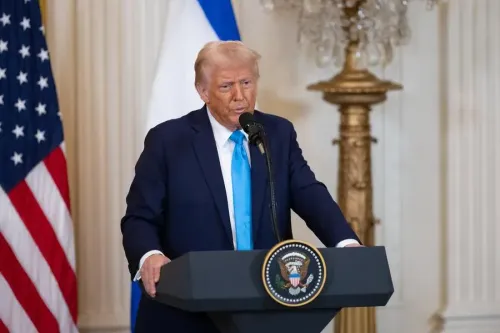
US President Donald Trump announced on 14 June that a peace deal with Iran is set to be signed on Sunday .
Trump stated the Strait of Hormuz will reopen to all shipping immediately after the deal is signed.
He claimed Iran “no longer wants a Nuclear Weapon” and that enriched uranium will be removed at an “appropriate time.” Trump stressed no money will change hands, contrasting the deal with the Obama -era accord and its reported $1.7 billion cash payment.
Iranian Foreign Ministry spokesperson Esmaeil Baqaei reportedly denied a Sunday signing, citing US hesitation, and said any MoU would only be a framework for 60 more days of talks.
India , a major crude oil importer, stands to benefit significantly if the Hormuz Strait reopens fully.
US President Donald Trump announced on Saturday, 14 June that a peace deal with Iran is scheduled to be signed on Sunday, and that the Strait of Hormuz will reopen to all shipping immediately after the agreement is formalised. The announcement, made via his Truth Social platform, marks a potentially historic turn in decades of fraught US-Iran relations — though Tehran has already pushed back on the timeline.
What Trump Announced
In his post, Trump wrote: “The Deal is scheduled to get signed tomorrow, and immediately after it is signed, the Hormuz Strait is OPEN TO ALL.” He claimed that Iran “no longer wants a Nuclear Weapon” and indicated that the United States would work with Iran to remove enriched uranium at an “appropriate time.”
Trump also sought to contrast the proposed agreement with the Obama-era nuclear accord, stressing that no financial transfers would be involved. “Unlike Obama’s Hundreds of Billions of Dollars in payments to them, including 1.7 Billion Dollars in green, cold cash, no money will exchange hands,” he wrote. He added that nuclear material remaining in Iran would eventually be removed and destroyed.
Iran Disputes the Timeline
Iranian Foreign Ministry spokesperson Esmaeil Baqaei reportedly denied that any memorandum of understanding (MoU) between the two countries would be signed on Sunday, citing what he described as “the other side’s hesitation.”
Baqaei stressed that any potential MoU “would merely serve as a framework for continuing talks” and should not be regarded as “a final agreement.” He added, according to Iranian state media, that discussions on the nuclear issue are expected to continue over a 60-day period. The conflicting signals from Washington and Tehran leave the status of Sunday’s reported signing in significant doubt.
Why the Strait of Hormuz Matters
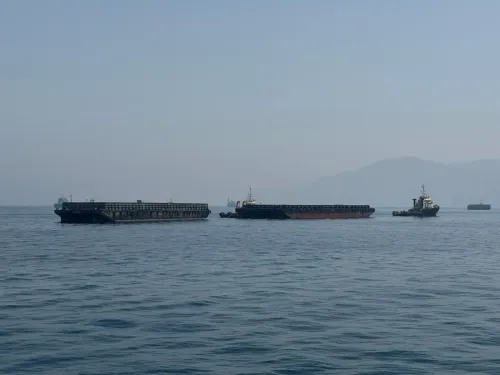
The Strait of Hormuz is one of the world’s most critical energy transit chokepoints, carrying a substantial share of internationally traded crude oil and liquefied natural gas. Any disruption to shipping through the strait has an outsized impact on global energy prices.
India, one of the world’s largest importers of crude oil, closely monitors developments in the Gulf region given their direct bearing on energy security and shipping costs. A reopening of the strait, if confirmed, would be a significant positive for Indian import economics.
The Broader Context
Trump’s announcement comes against a backdrop of prolonged tensions between Washington and Tehran, including sanctions, proxy conflicts, and repeated failures to revive the 2015 Joint Comprehensive Plan of Action (JCPOA). The President warned that “we have the ultimate alternative” unless the process moves forward “quickly, easily and smoothly,” signalling that the diplomatic window remains conditional.
Notably, this is the first time a sitting US president has publicly named a specific date for a formal agreement with Iran. Whether Sunday’s reported signing materialises — given Tehran’s denial — will be closely watched by energy markets, Gulf nations, and nuclear non-proliferation watchdogs alike.
Point of View
And one that carries real downside risk if Sunday passes without a signature. More substantively, the framework appears to defer the hardest question — verified uranium removal — to an undefined ‘appropriate time,’ which is precisely the ambiguity that doomed prior agreements. Global energy markets will price in optimism; the harder question is whether this announcement survives contact with Iranian domestic politics and the 60-day negotiating window Tehran says it still needs.
NationPress
20 Sept 2026
Frequently Asked Questions
What is the US-Iran peace deal Trump announced?
US President Donald Trump announced on 14 June that a peace deal with Iran is scheduled to be signed on Sunday, after which the Strait of Hormuz would reopen to all shipping. Trump also stated that Iran no longer seeks a nuclear weapon and that enriched uranium would eventually be removed and destroyed.
Has Iran confirmed the Sunday signing of the deal?
No. Iranian Foreign Ministry spokesperson Esmaeil Baqaei reportedly denied that an MoU would be signed on Sunday, attributing the delay to what he called ‘the other side’s hesitation.’ He clarified that any MoU would only be a framework for continuing talks, not a final agreement, and that nuclear discussions are expected to span a further 60 days.
Why does the Strait of Hormuz matter for global markets?
The Strait of Hormuz is one of the world’s most critical energy transit chokepoints, carrying a large share of globally traded crude oil and liquefied natural gas. Any closure or reopening of the strait has an immediate impact on global oil prices and shipping costs.
How does this deal differ from the Obama-era Iran nuclear agreement?
Trump explicitly stated that unlike the Obama-era deal — which he claimed involved hundreds of billions of dollars in payments, including a reported $1.7 billion in cash — no money will change hands under the proposed new agreement. The current framework also reportedly includes provisions for the eventual removal and destruction of nuclear material in Iran.
What does this mean for India?
India is one of the world’s largest importers of crude oil and closely monitors Gulf shipping routes. A confirmed reopening of the Strait of Hormuz would ease energy supply concerns and potentially reduce shipping costs for Indian importers, with positive implications for India’s energy security and import bill.