Is Trump Pressuring Iran to Negotiate as US Armada Approaches?
Synopsis
In a significant escalation, President Trump has urged Iran to engage in negotiations as a formidable U.S. naval fleet approaches the region. With tensions in the Middle East on the rise, Trump warns of dire consequences if Iran fails to act swiftly. This diplomatic pressure coincides with broader security concerns involving Israel and global conflicts.
Key Takeaways
Trump has urged Iran to negotiate promptly amidst rising tensions.
A significant U.S. naval fleet is approaching Iran, led by the Abraham Lincoln .
Trump warned of severe consequences if negotiations fail.
The situation ties into broader security concerns, especially regarding Israel .
This deployment reflects Trump's approach of using military strength to drive diplomatic efforts.
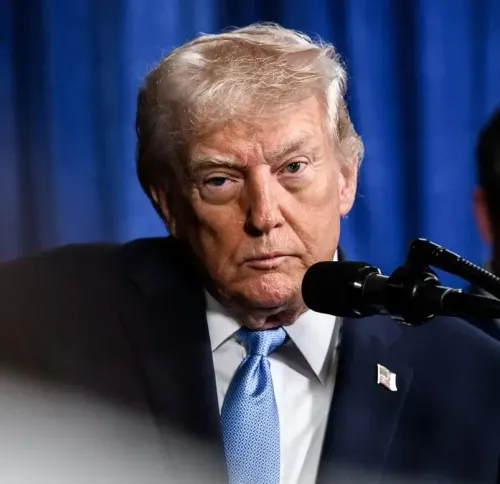
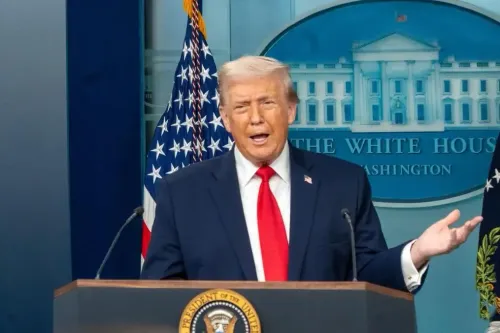
Washington, Jan 28 (NationPress) President Donald Trump urged Iran to swiftly engage in negotiations as a significant U.S. naval fleet approaches the region, intensifying pressure on Tehran amidst escalating tensions in the Middle East.
In a radio discussion with WABC host Sid Rosenberg, Trump stated, “We have a substantial armada heading over there right now,” characterizing it as “very formidable” and exceeding a recent deployment related to Venezuela. He expressed hope that military action would not be necessary, saying, “Hopefully, we won’t have to use it.”
Trump later reiterated this warning on his Truth Social platform, declaring, “A massive Armada is heading to Iran. It is moving swiftly, with great strength, enthusiasm, and purpose.” He noted that the fleet, led by the aircraft carrier Abraham Lincoln, is “larger than that sent to Venezuela.”
The president emphasized that the force is “ready, willing, and able to rapidly fulfill its mission, with speed and violence, if necessary.” He called on Tehran to negotiate, stating, “Hopefully Iran will quickly ‘Come to the Table’ and negotiate a fair and equitable deal — NO NUCLEAR WEAPONS — one that is beneficial for all involved.”
“Time is running out; it is truly of the essence!” Trump added.
He cautioned of severe repercussions if negotiations fail, recalling past U.S. military actions. “As I told Iran once before, MAKE A DEAL!” he wrote. “They didn’t, and there was ‘Operation Midnight Hammer,’ a significant destruction of Iran. The next attack will be far worse!”
During the radio interview, Trump linked this deployment to broader regional security concerns, particularly regarding Israel. He stated that Iran continues to pose threats to Israel, and U.S. support has helped prevent escalation, referencing recent tensions that led to Israel temporarily closing its airspace.
Trump also mentioned his administration’s success in securing the return of hostages, claiming, “We got the last of the hostages back.” He described this effort as something many thought was impossible.
He framed the move regarding Iran as part of a larger foreign policy strategy predicated on military strength and direct negotiations. He asserted that U.S. power is intended to prevent war rather than incite it, though he emphasized that force remains a viable option.
Trump positioned the Iran standoff alongside other global conflicts, including the ongoing war in Ukraine, which he described as a “bloodbath.” He expressed a desire for the fighting to cease, asserting that progress is achievable through direct discussions.
This deployment highlights Trump’s foreign policy approach, relying heavily on pressure and deterrence to compel negotiations. His message to Tehran was clear: negotiate now or prepare for significantly worse consequences.
Point of View
It is imperative to emphasize that the current tensions surrounding Iran and the U.S. naval deployment exemplify a critical moment in international relations. This approach, while rooted in national security, raises concerns about potential escalation and the need for diplomatic solutions.
NationPress
5 Oct 2026
Frequently Asked Questions
What prompted Trump's warning to Iran?
Trump's warning was prompted by the deployment of a significant U.S. naval fleet to the region, raising tensions and signaling a call for negotiations with Iran.
What are the potential consequences if Iran does not negotiate?
Trump warned of severe repercussions, referencing past military actions and emphasizing that failure to negotiate could lead to much harsher consequences.
How does this situation affect U.S. relations with Israel?
The U.S. backing of Israel is crucial in deterring Iranian threats, with recent tensions highlighting the interconnectedness of regional security.
What is the significance of the naval deployment?
The significant U.S. naval deployment serves as a deterrent to Iran while also pressuring them to negotiate, demonstrating U.S. military readiness.
What is Trump's broader foreign policy strategy?
Trump's foreign policy strategy emphasizes military strength, deterrence, and direct negotiations to prevent conflict and ensure security.